

@handcashapp : badr ———————- #BSV Apps👇 @handcashapp @Rockwallet @orangegatewayx .My opinions are my own.
Somewhere 🌍
Joined January 2022
- Tweets9.7K
- Following934
- Followers858
- Likes51.6K






Pinned Tweet
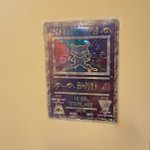
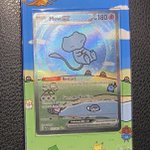
When you like Pokemon, Naruto and Hot Wheels. Hand painted cars, custom made one of one. 1/1
Bubble Mew, Naruto, Itachi, Kakashi.

1
6
364
Mr. B retweeted

🔥 Update Alert 🔥
Introducing the Twetch Trade Portal!
Trade your NFT for another user's NFT atomically. Just click "propose trade" on the NFT you want and watch the magic happen.
Now live on Twetch.com


Mr. B retweeted

New Listing Alert on #WEEX🔔
We're excited to announce the PreListing of $BSV @BSVAssociation on WEEX!
🔹Listing Time:TBD
🔹Register on WEEX:weex.com/events/welcome-even…
🔹Read More Details:weex.com/help/articles/qn4h0…
#PreListing #BSV

Mr. B retweeted

Hiroyuki Sanada has been cast as Hiruzen Sarutobi in the live-action ‘NARUTO’ movie.
Directed by Destin Daniel Cretton.
(Source: Deadline)


Mr. B retweeted
We just performed the first ever on chain NFT-for-NFT atomic swap.
Time to clean up the ui before release.
twetch.com/t/9a260ed507fa455…


Mr. B retweeted

BSV: I Don't Care Whether You HODL. Build Something.
I genuinely do not give a shit whether you speculate on BSV.
Buy it. Sell it. Hold it. Don't hold it.
Your choice. Your money. Your risk.
What interests me is whether anyone is actually using it.
Are you building applications? Processing transactions? Creating services? Developing markets? Solving commercial problems? Generating economic activity?
Because that is what matters.
Bitcoin was designed as an economic system, not a retirement scheme for people who bought some coins and decided the world consequently owes them a fortune.
And here's something that apparently needs explaining.
Holding BSV does not entitle you to anything.
Not profits. Not appreciation. Not preferential treatment. Not an obligation for developers, miners or businesses to make you wealthy.
You bought a commodity. Congratulations.
Now what?
If your entire contribution consists of sitting on coins, complaining about the price and demanding that everyone else work harder to increase your investment, perhaps you've misunderstood the arrangement.
A functioning commodity economy depends on use, exchange, production and demand.
It does not depend on everyone sitting around waiting for number go up.
I want people building businesses that need transactions. I want applications generating millions of payments. I want commercial demand arising because the infrastructure does something economically useful.
Usage creates the reason for a market to exist. Speculation merely bets on what that market might become.
So speculate if you wish. I couldn't care less.
But don't mistake owning BSV for contributing to Bitcoin.
And certainly don't imagine that holding a few coins means the people doing the actual work owe you a return.
Build something. Use it. Create value.
Or sit there HODLing and waiting for someone else to do it.
Just don't send me the bill when your expectations aren't met.
Mr. B retweeted

BTC vs BSV: HODLing Doesn't Help Bitcoin. It Doesn't Even Help BTC.
I'm sorry to disappoint the HODL cult, but sitting on your coins is not contributing to Bitcoin.
You're not processing transactions. You're not generating transaction fees. You're not creating commercial demand. You're not paying miners to provide services.
You're doing precisely nothing.
Let's examine the economics.
Bitcoin miners earn revenue from two sources: block subsidies and transaction fees.
When you actually transact, you pay fees. Those fees contribute directly to miner revenue and help finance the infrastructure securing the network.
When you HODL, you generate precisely zero transaction fees.
You might support the market price by withholding coins from sale. But that is an indirect speculative effect, not payment for mining services. And it certainly doesn't guarantee that prices will rise.
A higher speculative price can temporarily increase the value of block subsidies. It does not create a sustainable transaction-fee economy.
This distinction becomes increasingly important with every halving.
Block subsidies decline. Eventually, miners must depend predominantly on transaction fees.
Where are those fees supposed to come from if everyone celebrates never spending their coins?
From the next generation of HODLers?
From inspirational podcasts?
From Michael Saylor buying another billion dollars of BTC?
None of those activities generates transaction-processing revenue.
And this is the fundamental difference between BTC's HODL culture and what I want BSV to become.
I don't care whether people hold BSV.
I care whether businesses use it.
A million transactions paying small fees can collectively generate meaningful revenue for miners.
A million people sitting on coins generate no transaction fees whatsoever.
Of course, people can save money. Savings have an economic role. But saving is not the same activity as purchasing transaction-processing services, and owning an asset does not entitle you to claim that you're financing its infrastructure.
Bitcoin needs economic activity, not religious devotion to an account balance.
Applications. Payments. Contracts. Digital goods. Micropayments. Commercial services.
Real transactions supporting real businesses and generating real revenue.
That is how a sustainable transaction-processing industry develops.
BTC has spent years convincing people that refusing to use their coins is somehow the greatest contribution they can make.
Imagine a railway company telling its customers that the best way to support the railway is never to buy a ticket.
Or an electricity network celebrating customers who never consume electricity.
The infrastructure still has to be paid for.
HODLing is an investment decision. It is not a productive contribution to Bitcoin.
Buy BSV. Sell BSV. Save BSV. Spend BSV.
I genuinely don't care which you choose.
But if you want to contribute to Bitcoin's economic future, build something people need and generate transactions worth processing.
Because the miners cannot pay their electricity bills with your conviction.
And the blockchain doesn't receive a penny in transaction fees from your diamond hands.
Mr. B retweeted
We like the Beanies. Get ready for the Holiday season on Wednesday at 9AM Eastern.
twetch.com/launchpad/rare-be…

Mr. B retweeted
BTC: The Rollercoaster May Have a Final Resting Place. Around $13,000.
I suspect BTC won't simply collapse straight to zero. Markets rarely provide such convenient entertainment.
There is likely to be a holding point, and my expectation is that it will be somewhere around the previous four-year low of approximately $13,000.
Why?
Because speculative markets develop psychological anchors. Previous lows become reference points, bargain hunters emerge, and investors convince themselves that an asset must be cheap simply because it was once considerably more expensive.
At $13,000, I suspect BTC could stabilise for a year or longer.
There will be trading. There will be rallies. There will undoubtedly be influencers announcing that the next bull market has begun.
But here's the rather unpleasant economic problem.
Stability is not growth.
An asset that sits at $13,000 for a year produces no capital appreciation. Inflation continues eroding purchasing power. Investors incur opportunity costs, and speculative enthusiasm gradually loses its most important ingredient: rising prices.
BTC's greatest marketing achievement has always been persuading people that tomorrow's buyer will pay more than today's.
Remove that expectation and the economic proposition becomes considerably less attractive.
A prolonged period of stagnation could therefore be more damaging to BTC's speculative appeal than another spectacular crash.
The rollercoaster doesn't necessarily need to plunge directly into the ground.
It can simply stop.
The passengers sit there, waiting for another climb. The operators continue collecting fees. And the faithful insist that remaining stationary is actually bullish.
My prediction? A possible floor around $13,000, followed by prolonged stagnation, perhaps for a year or more.
Not an immediate disappearance. A slow erosion of the speculative investment case.
And that, economically, may be the more interesting route towards eventual failure.
After all, the worst thing that can happen to a rollercoaster isn't necessarily a crash.
It's discovering that nobody wants to buy another ticket.
Mr. B retweeted
BSV Starts Mattering When People Finally Understand That It Is a Commodity.
One of the most ridiculous ideas to emerge from cryptocurrency is HODL.
Imagine applying that philosophy to an actual commodity market.
A natural gas trader buys gas before winter because demand is expected to increase. Prices reflect storage, transportation, supply constraints, weather forecasts and anticipated consumption.
When circumstances change, the trader sells.
When demand falls, inventories rise or forecasts change, prices adjust.
That's how commodity markets work.
Now imagine a natural gas trader announcing that he will never sell his gas because selling represents a betrayal of the gas community.
He doesn't care about demand. He doesn't care about storage costs. He doesn't care whether anyone needs the gas.
He simply believes that gas must always increase in price.
We would quite reasonably conclude that he has absolutely no understanding of commodity economics.
Yet cryptocurrency has managed to turn precisely this behaviour into an investment philosophy.
Commodities are acquired because they have uses. Their value emerges from demand, supply and the economics of consumption.
There are commodity speculators, certainly. There are inventories, hedging arrangements and long-term positions.
But none of these requires a religious commitment to never selling.
And this is where BSV needs to be understood differently.
BSV becomes economically relevant when people acquire it because they need to use the network.
Businesses purchase transaction capacity. Applications consume it. Service providers price their offerings. Miners compete to supply processing capacity.
Demand should arise from actual economic activity, not from convincing the next buyer that the price must rise forever.
There will be periods of higher demand and lower demand. There will be seasonal patterns, business cycles and changing transaction volumes.
Prices should respond accordingly.
The objective is not to make everyone hold BSV. It is to make BSV useful enough that people continually need to acquire and spend it.
That is a fundamentally different economic model from BTC.
BTC enthusiasts celebrate coins that never move.
A functioning commodity economy depends on exchange, production and consumption.
A commodity that nobody uses is not demonstrating extraordinary scarcity. It is demonstrating an absence of demand.
And an economy in which everyone refuses to sell eventually discovers that it has no market.
BSV will matter when people stop treating it as a lottery ticket and start treating it as an economic input.
Buy what you need. Use what you buy. Sell what you don't need.
Let supply and demand establish the price.
That is how commodity markets develop.
HODL is not an economic theory.
It is what happens when speculation replaces economics and nobody wants to admit that the entire business model depends on finding someone willing to pay more tomorrow.
Mr. B retweeted
Well, isn't this delightful?
BTC has managed a magnificent 4.59% nominal return over five years. Adjust for inflation, and its purchasing power has actually declined.
Five years of volatility, speculation, institutional hype and endless promises of generational wealth, only to end up poorer in real terms.
Do the “number go up” enthusiasts actually understand the difference between nominal and real returns?
If your investment rises by less than inflation, you haven't become wealthier. You've lost purchasing power.
The elves have been trading, the unicorns have been predicting a million dollars, and the faithful have been chanting “coin go up!”
Five years later, inflation has beaten Bitcoin.
The great “number go up” religion has encountered its oldest enemy: arithmetic.


