

Ibn Arabi | Proclus | Guenon | Suhrawardi
Joined November 2022
- Tweets8K
- Following404
- Followers4.8K
- Likes8.9K







Pinned Tweet
“Never have I dealt with anything more difficult than my own soul, which sometimes helps me and sometimes opposes me.”
~ Imam Al-Ghazaliرض
Muhaqqiq ʿAbd al-Ḥaqq al-Dehlawī on that Muhammad ﷺ is hāzir-o nāzir (Present & Witnessing):
"Despite the numerous differences and many sects among the scholars of the Ummah, there is no disagreement on this matter: that the Prophet ﷺ is established in true life and living.


Muhammad ﷺ is hāzir-o nāzir (Present & Witnessing).
When this statement is posited, some dreadful beings stand in protest against it and ask that how could a dead man be present in and witnessing of cosmic affairs? The question is then merited that what are these dreadful

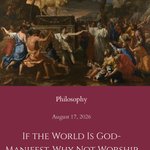
Since my essay If the World is God-Manifest, Why Not Worship Everything? Bahr al-ʿUlūm Mullā ʿAbd al-ʿAlī Farangī Mahallī’s Resolution reached and helped many people, I decided to get it published on @TraversingTrad as well. You can read it on their blog/website. Link below:


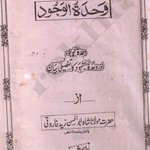
This Risalah Wahdat al-Wujūd was originally written in persian by Mulla Bahr al-Ulūm Farangi Mahalli ق. It is brilliantly translated in urdu by Shah Abu al-Hassan Zaid Farūqi. If you know urdu, this can probably be the best source for you on Shaykh e Akbar’s Ontology.


New Essay - If the World Is the Manifestation of God, Why not worship everything? Bahr al-‘Ulūm Mullā 'Abd al-'Alī Farangī Mahallī’s Resolution.
open.substack.com/pub/rafeyj…

Absolutely correct. The “orthodox” hog-monkeys, the enemies of intellectuality, with their simpleton reductionist minds cannot even read Dara Shikoh’s illuminating treatises in persian. Dara ق was the disciple of Prime Qādrī Saint Miān Mīr ق. Dara writes that on a

This quoted post is unavailable.
You will be totally immersed in Parhārwī’s works such as ‘al-Nibrās Sharh, Sharh al-Aqā’id’ and ‘Marām al-Kalām’, when a sudden realization hits you that this man died at about 33 years of age, and that in his oeuvre are not *merely* these two works but many many more with no

Qaysarī ق writes: “What we mentioned is confirmed by the statement of Amīr al-Muʾminīn, God’s saint on the earths, the Pole of the monotheists, ʿAlī b. Abī Ṭālib, peace be upon him, in a sermon he was delivering to the people, “I am the dot under the bāʾ of bismillah,


New essay - What is Time? Pt. 1 The Islamic Peripatetic Account and 'Abd al-Azīz Parhārwī on the Illuminationist (Ishrāqī) View.
open.substack.com/pub/rafeyj…


ARISTOTLE WAS A WAHHABI
It seems that his God endures eternal duration. Lloyd P. Gerson rightly states that it is far from certain that Aristotle makes a distinction b/w 1. that which is in time & 2. that which is not is time; & that he attributes the latter to Divine Intellect.


The Great Straw Man: A Response to @oasis_wisdom (@the_qadrii & @dmontetheno1)
You can read the article, by opening the link below:


The Historical-Critical Method and Why Muslims Should Use It: Response to @MuslimPhil
By @the_qadrii & I
The first article for the @oasis_wisdom Substack is officially out!
(Link below)


Regarding Marwanids [Marwaniyya], Imam Shah Abdul Aziz Muhaddith Dehlavi ق writes in Tohfa Ithna Ashari, that this group, i.e., Marwani Nawāsib use their advocacy/partisanship for Uthman رضی اللہ عنہ as a pretext for impudence against Ali رضی اللہ عنہ and his progency. He writes:


Ibn Taymiyyah writes::
“Yes, with Mu’awiya, there was a large group of Marwanids and others, such as those who fought alongside him and their followers after them. They say that he was rightfully engaged in battle based on his independent reasoning, and that Ali and his supporters were either oppressors or mistaken in their independent reasoning.
Books were written for them on this matter, such as Al-Marwaniyyah, authored by Al-Jahiz. A group even fabricated virtues for Mu’awiya and narrated hadiths from the Prophet (saw) about it, all of which are false. They have lengthy arguments on this matter, but this is not the place to discuss them.”
— Minhaj al-Sunnah 399-400.4

Wahhabi Maulana Ishaq said that I used to say to my Wahhabi fellows, you make fun of Maulana Ahmed Raza Khan? You cannot even read his urdu.

Shah Wali Ullah ق narrates from ʿĀrif bi’Llāh Shaykh Abu al-Reza ق on the topic of Shaṭḥiyyāt:
“He said: If the one who utters “I am the Real” (اناالحق) is within the veils of contingency, then he is wrong and enters into the circle of Pharaoh-hood (دائرۂ فرعونیت).


Imam Ahmad Raza Khan was asked:
Manṣūr, Shams-i Tabrīz, and Sarmad uttered words that appeared to claim divinity, for which they were executed and their skins were flayed, yet they are regarded as Saints. But Pharaoh, Hāmān, Shaddād, and Nimrod claimed divinity and were deemed disbelievers destined for the Fire. What is the reason for this difference?
He replied:
Those disbelievers spoke such words on their own accord and were therefore accursed, whereas these Saints did not speak on their own; it was spoken by the One Who is worthy of saying it. The voice was heard through them, just as Mūsā, peace and blessings be upon him, heard from the tree:
“Indeed, I am Allāh, the Lord of all the Worlds.”
(Qur’ān 28:30)
Did the tree say this? God forbid! Rather, it was Allāh Who Spoke. In the same manner, these noble ones, at that moment, become like the Tree of Mūsā.
— Fatāwā al-Rizawiyyah, vol. 14, pg. 682


