

An independent organization aiming to defend and protect human rights through field investigative researches. للغة العربية @MwatanaAr
Hague, NL
Joined June 2013
- Tweets5.2K
- Following447
- Followers8K
- Likes636



Pinned Tweet
Mwatana for Human Rights stated that the Ansar Allah (Houthi) group has detained dozens of civilians in successive waves of arrests, including local peace mediators, academics, writers, journalists, human rights defenders, government employees, leaders and members of political parties, and participants in peaceful events commemorating the September 26 Revolution. The arrests also included male and female humanitarian, development, and diplomatic workers, as well as staff of UN agencies and international and local organizations. Since the beginning of 2025 through October, the organization has documented at least 392 cases of arbitrary detention and enforced disappearance in Sana’a, Dhamar, Hodeidah, Ibb, Saada, and parts of Taiz and Al-Dhalea, along with other areas under the group’s control.
Full statement here:-
🔗 mwatana.org/posts-en/ongoing…

In this video interview, Hussein Mesfer Al-Dhaheri recounts the arbitrary detention of his 38-year-old son, Ahmed Hussein Al-Dhaheri, Executive Director of the Percent Foundation, by the Ansar Allah group (Houthis) on June 6, 2024, and details the subsequent impact on the family.
#FreeAhmedAlDaheri
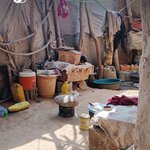
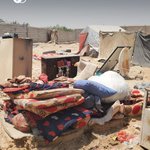
The field study titled 'Unsafe Havens: A Study on the Displacement Crisis and the Suffering of IDPs in Yemen,' released by Mwatana for Human Rights in December 2024, recommended shifting from a purely emergency response to more durable solutions. This framework encompasses enhancing conditions at displacement sites, generating employment opportunities, supporting livelihoods, strengthening protection mechanisms, and establishing the necessary conditions for safe, dignified, and voluntary return.
Kindly find, at the following link, the complete study: -
mwatana.org/reports-en/unsaf…

Consequent to the protracted conflict, and alongside the proximate causes of displacement—including aerial and ground attacks, armed hostilities within or adjacent to densely populated areas, and the contamination of landmines and explosive ordnance—the deprivation or scarcity of essential services, systemic unemployment, impediments to accessing agricultural and pastoral livelihoods, and the severe degradation of living standards have compelled a vast number of civilians to seek displacement.
Kindly find, at the following link, the complete study: -
mwatana.org/reports-en/unsaf…

Internally displaced persons (IDPs) in Yemen are subjected to manifold risks and rights violations prior to, during, and subsequent to their displacement. These violations encompass restrictions on freedom of movement, arbitrary detention, physical assaults, and the pillaging of property.
Kindly find, at the following link, the complete study: -
mwatana.org/reports-en/unsaf…

The field study titled 'Unsafe Havens: A Study on the Displacement Crisis and the Suffering of IDPs in Yemen,' released by Mwatana for Human Rights in December 2024, addressed the displacement experience in Yemen. It analyzed the root causes of displacement, the risks and rights violations faced by internally displaced persons, and their substandard living conditions, alongside the systemic obstacles impeding access to durable solutions
Kindly find, at the following link, the complete study: -
mwatana.org/reports-en/unsaf…

In December 2024, Mwatana for Human Rights published its field study, 'Unsafe Havens: On the Displacement Crisis and the Suffering of Internally Displaced Persons in Yemen (2014-2024).' The study aimed to examine the conditions of displaced persons within IDP camps, and to monitor the risks and violations to which they are subjected, whether in their areas of origin, their areas of displacement, or during the course of their displacement.
Kindly find, at the following link, the complete study: -
mwatana.org/reports-en/unsaf…

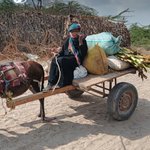
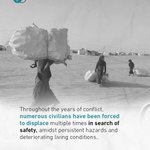
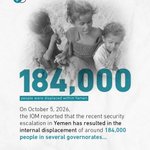
The International Organization for Migration (IOM) announced on Monday, October 5, 2026, that approximately 184,000 individuals have been internally displaced within Yemen due to the recent security escalation across several governorates. According to the statement, many were forced to move multiple times in search of safety, amidst a continuous rise in displacement figures and worsening humanitarian needs.
yemen.iom.int/news/new-iom-d…

Mwatana for Human Rights retweeted

🇵🇸🇾🇪 BREAKING: The UK government's arms export policies have eviscerated international humanitarian law.
@CAATuk’s new report exposes how the UK arms exports system is fundamentally broken and rigged in favour of pre-determined conclusions.
🔎 caat.org.uk/publications/dea…

With researcher Ruth Rohde, an author to Making a Killing: How the West Profits from Slaughter in Gaza and Yemen, and the chairperson of Mwatana for Human Rights Radhya Al-Mutawakel, we ask why no one and nothing stopped the flow of weapons even as the Yemeni people were killed and starved.
To listen more click on the following link:
player.captivate.fm/episode/…
Mwatana stressed the need for communities affected by U.S. military operations in Yemen to rehabilitate essential service facilities that were damaged or destroyed, including health centers and water and electricity networks, as well as to remove unexploded remnants of bombs and munitions and secure areas affected by them.
Kindly find, at the following link, the complete statement: -
mwatana.org/posts-en/calling…

Mwatana affirmed that victims’ right to know the truth, obtain justice, and receive redress and reparation must be an essential part of any response to the impact of U.S. military operations on civilians in Yemen. These operations, which were conducted in violation of international humanitarian law and resulted in civilian casualties or damage to civilian objects, require independent and effective investigations, the publication of their findings, accountability for those responsible, and ensuring that civilian victims have access to effective remedies and appropriate reparation for the harm suffered, including compensation, rehabilitation, and the reconstruction of damaged property and facilities, depending on the nature of the harm.
Kindly find, at the following link, the complete statement: -
mwatana.org/posts-en/calling…
Affected civilian communities, including those injured and the families of those killed in U.S. airstrikes, have expressed numerous needs related to redress and reparation. These communities are calling for the rehabilitation and repair of essential service facilities that were destroyed, such as health centers and water and electricity networks, as well as for the necessary support for recovery and reconstruction efforts.
Kindly find, at the following link, the complete research paper: -
mwatana.org/reports-en/death…

U.S. strikes caused widespread anxiety, fear, and psychological trauma among victims, particularly women and children, who have since lived in constant fear of renewed attacks. The horrific scenes and traumatic experiences they endured during and immediately after the strikes remain vivid in their memories.
Kindly find, at the following link, the complete research paper: -
mwatana.org/reports-en/death…

U.S. attacks killed civilians who were the primary breadwinners for their families and caused dozens of other civilian victims to lose their sources of livelihood, either as a result of injuries that caused long-term disabilities or through the destruction of income-generating assets, such as farms, shops, and small factories. In addition, hundreds of civilians lost their jobs and livelihoods in factories, government facilities, and vital infrastructure that were completely or partially destroyed by U.S. airstrikes.
Kindly find, at the following link, the complete research paper: -
mwatana.org/reports-en/death…

In addition to destroying livelihoods, U.S. airstrikes targeted essential service facilities, such as water infrastructure and health facilities, on which residents of impoverished rural villages depend almost entirely.
Kindly find, at the following link, the complete research paper: -
mwatana.org/reports-en/death…

The central research question addressed by the research paper, titled “Deaths and Human Costs of U.S. Airstrikes on Civilian Populations in Yemen,” is to clarify the nature of the direct harm inflicted on civilians and on Yemen’s civilian and economic infrastructure; examine the continuing and long-term impacts of these strikes on civilians; identify victims’ needs to mitigate the economic, social, psychological, and health consequences of the attacks; and document their demands for compensation and access to justice. The paper also analyzes patterns of violations of international humanitarian law in U.S. attacks.
Kindly find, at the following link, the complete research paper: -
mwatana.org/reports-en/death…
