

@NASA official notifications on cosmic activity in near-Earth space including solar events, asteroids, comets, and meteors.
Washington, D.C.
Joined March 2009
- Tweets3.3K
- Following105
- Followers1.2M
- Likes610




It’s #SunDay! Here’s your space weather report for Oct. 9-15:
•3 M-class flares
•0 C-class flares
•19 coronal mass ejections
•1 geomagnetic storm
This video from NASA’s Solar Dynamics Observatory shows the week’s activity. After the Oct. 10 geomagnetic storm, which led to aurora sightings across northern Europe, Canada, and the northeastern United States, it was a relatively calm week on the Sun.
The Moon makes a special guest appearance in this week’s video beginning at about 0:36. Note the sharp outline of the Moon’s edge. That’s because the Moon has almost no atmosphere to scatter sunlight.
At about 2:30, we also see a calibration maneuver, which the spacecraft performs periodically to account for changes in its instruments’ optics over time.
More about solar activity: go.nasa.gov/4bLKwte
#MeteorSighting: Over 200 eyewitnesses in the Pacific Northwest spotted a fireball at 6:56 p.m. PT on Oct. 14. An analysis of the available video data places first visibility of the meteor 49 miles above Mountain Top, Washington. The meteor moved northeast at 36,000 mph before disintegrating 29 miles above Lenville, Idaho.
More on this fireball: go.nasa.gov/4hKYCQ0
Supplemental data was provided by the American Meteor Society.

ALT This graphic reads, Meteor Sighting Washington, Idaho, Oregon at the bottom. It features an outline of the areas with an illustrated meteor traveling northeast in the center. Credit: NASA/Alyssa Lee
It’s #SunDay! Here’s your space weather report for Oct. 2-8:
• 4 M-class flares
• 1 C-class flare
• 23 coronal mass ejections
• 1 geomagnetic storm
This video from NASA’s Solar Dynamics Observatory shows the week’s activity.
The week’s strongest flare, an M6.7, erupted Thursday, Oct. 8, and appears at about 2:58 in the video. The eruption also sent a coronal mass ejection toward Earth. As of Friday, Oct. 9, forecasters at the National Oceanic and Atmospheric Administration’s Space Weather Prediction Center expect it to arrive Sunday, Oct. 11. It could trigger a geomagnetic storm or strengthen one already underway. If you’re in the northern U.S. or Canada, keep an eye out for auroras!
More about solar activity: go.nasa.gov/4bLKwte
Our Solar Dynamics Observatory #SunDay post is taking a break this week as we update some of our image processing software.
We'll be back next week with more views of our closest star. ☀️
NASA Space Alerts retweeted

How do we respond when we detect an asteroid that could pose a threat to Earth?
Follow the story behind a recent real-world test in our newest documentary, Planetary Defenders: This Is Not an Exercise, now streaming for free on NASA+. go.nasa.gov/4AUCQ3Z
It’s #SunDay! Here’s your space weather report for the week of Sept. 18 - Sept. 24:
• 0 M-class flares
• 1 C-class flare
• 14 coronal mass ejections
• 0 geomagnetic storms
This video from NASA’s Solar Dynamics Observatory shows the week’s activity, though a momentary data gap (which has since been resolved) left out imagery from Sept. 24.
It was another quiet week on the Sun. The coronal holes that took form last week — the dark “stripes” that indicate cooler, darker regions where fast solar wind escapes to space — have continued sending high-speed streams toward Earth, though none powerful enough to create a geomagnetic storm.
September 22 marked the beginning of autumn in Earth's Northern Hemisphere, as well as a high point in “aurora season.” Aurora season happens twice a year around the equinoxes, when Earth’s roughly 23-degree “tilt” tips our planet’s magnetic field so it more easily lines up with the Sun’s magnetic field. As a result, in September and October and in March and April (around the equinoxes), geomagnetic storms and auroras tend to become more common and more intense. The phenomenon is known as the Russell-McPherron effect.
More about solar activity: go.nasa.gov/4bLKwte
It’s #SunDay! Here’s your space weather report for the week of Sept. 11 - Sept. 17:
• 0 M-class flares
• 0 C-class flares (only counted if associated with coronal mass ejections)
• 17 coronal mass ejections
• 0 geomagnetic storms
This video from NASA’s Solar Dynamics Observatory shows the week’s activity.
A quiet week on the Sun as a cluster of active regions move across the Sun’s disk and around the limb. As of Friday, Sept. 18, there are no active regions on the Earth-facing side of the Sun.
The dark “strips” across the Sun that emerge towards the end of the video are coronal holes. These cooler bands of solar material on the Sun (which make them appear darker) are where the Sun’s magnetic field lines open up to space, allowing high-speed solar wind to escape.
More about solar activity and space weather: go.nasa.gov/4bLKwte
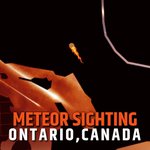
#MeteorSighting: Eyewitnesses in Michigan and Canada spotted a bright fireball over Ontario at 8:47 p.m. ET last night, Sept. 13. The event was verified by several cameras belonging to the Southern Ontario Meteor Network and other publicly accessible cameras in the area. Analysis of the data from these systems indicates that the meteor - produced by a small fragment of an asteroid about 2 inches in diameter and weighing approximately 7 ounces - first became visible above the Canadian town of Markstay-Warren, moving northwest at 32,000 mph. It disintegrated above a point midway between Wanapitei Lake and Raphoe.
More on this fireball: go.nasa.gov/4dEKo0r

ALT This graphic reads, Meteor Sighting Ontario, Canada, at the bottom. It features an outline of the areas with an illustrated meteor traveling northwest in the center. Credit: NASA/Alyssa Lee
It’s #SunDay! Here’s your space weather report for the week of Sept. 4 - Sept. 10:
• 2 M-class flares
• 6 C-class flares
• 29 coronal mass ejections
• 0 geomagnetic storms
This video from NASA’s Solar Dynamics Observatory shows the week’s activity.
The Sun delivered a “one-two punch” of flares on Sept. 5, with an M1.0-class flare erupting from the Sun’s western limb (right side) at about 0:43 seconds into the video, followed by a C8.5-class flare from the eastern limb (left side) at about 0:46 seconds. Both flares also produced coronal mass ejections that swept through space to either side of Earth. By the end of the video, we have nine active regions on the Earth-facing side of the Sun, most of them clustering together right in the middle of the Sun’s disk.
More about solar eruptions and space weather: go.nasa.gov/4bLKwte
#MeteorSighting: NASA meteor cameras and the Geostationary Lightning Mappers on the GOES 18 and 19 satellites detected a bright fireball that occurred over western Kentucky at 1:33 a.m. CT on Sept. 10. The object - a piece of a comet about 16 inches in diameter and weighing ~200 pounds - entered the atmosphere above Crutchfield, Kentucky, and moved southwest at 145,000 mph. The fireball disintegrated above the town of Mabel, unleashing an energy of 50 tons of TNT and creating a bright flare that lit up the night sky.
More on this fireball: go.nasa.gov/4yqAveL

It’s #SunDay! Here’s your space weather report for the week of Aug 28 - Sept 3
• 1 M-class flare
• 4 C-class flares
• 55 coronal mass ejections
• 0 geomagnetic storms
This video from NASA’s Solar Dynamics Observatory (SDO) shows the week’s activity.
While this week’s flare count was fairly low, there was a surplus of coronal mass ejections. The week’s strongest flare was an M3-class, which can be seen erupting from an active region on the eastern limb (left side of Sun) at about 3:02. This active region is rotating onto the Earth-facing side of the Sun, so any eruptions from it in the near future may have some impact on Earth.
More about solar eruptions and space weather: go.nasa.gov/4bLKwte
A small natural object 1.5-5 feet (0.5-1.5m) is predicted to impact Earth’s atmosphere just northwest of Australia and safely disintegrate today, Sept. 6, 12:14 p.m. EDT. While not a hazard, scenarios like this provide an invaluable test of our planetary defense capabilities to monitor for larger objects and predict impact threats.
The object was first reported to the Minor Planet Center by the Catalina Sky Survey, with earlier detections by Pan-STARRS, and the Center for Near-Earth Object Studies @NASAJPL calculated its trajectory and impact location - all funded by NASA's Planetary Defense Coordination Office.
This is only the 13th small object that has been detected in space prior to impact, most from @NASA’s routine planetary defense monitoring.
#MeteorSighting: Eyewitnesses in Oregon and Washington reported a bright fireball seen the night of Aug. 30 at 8:32 p.m. PDT. The fireball was spotted at an altitude of 52 miles above the western slope of Mount St. Helens. Moving west at 48,000 mph, the object traveled some 80 miles through the upper atmosphere before disintegrating 33 miles above Astoria, Oregon. This fireball was not associated with any meteor shower, and meteorites are not thought to have been produced when the object fragmented.
More on this fireball: go.nasa.gov/4xysLaI
Eyewitness accounts supplied by the American Meteor Society

It’s #SunDay! Here’s your space weather report for the week of Aug 21 - 27:
• 8 M-class flares
• 3 C-class flares
• 32 coronal mass ejections
• 0 geomagnetic storms
This video from NASA’s Solar Dynamics Observatory (SDO) shows the week’s activity.
Active region AR14513 — the bright cluster of activity that has made its way across the Sun’s disk this week, appearing in the center at about 2:10 in this video — produced all but two of this week’s flares, though none reached X-class. The strongest flare in this period was an M6.9, also produced by AR14513, appearing at about 1:57 in the video. It still has a few more days on the Earth-facing side of the Sun, so we'll keep watch!
More about solar eruptions and space weather: go.nasa.gov/4bLKwte
It’s #SunDay! Here’s your space weather report for the week of Aug 14 - 20:
• 4 M-class flares
• 3 C-class flares
• 22 coronal mass ejections
• 0 geomagnetic storms
This video from NASA’s Solar Dynamics Observatory (SDO) shows the week’s activity.
All of this week’s M-class flares happened in the last two days of this reporting period. Their source is the active region AR14513, which appears as a bright cluster that rotates into view from the Sun’s eastern limb (left side) starting on the 19th, about 2:30 into this video. We’ll keep an eye on this busy active region as it moves into an Earth-facing position over the coming days.
Related: New NASA-funded efforts to predict active regions before they emerge: go.nasa.gov/4xHkFfE
It’s #SunDay! Here’s your space weather report for the week of Aug 7 - 13:
• 0 M-class flares
• 1 C-class flare
• 16 coronal mass ejections
• 1 geomagnetic storm
This video from NASA’s Solar Dynamics Observatory (SDO) shows the week’s activity.
It was a quite calm week on the Sun, with a moderate geomagnetic storm occurring on Aug. 8 after several coronal mass ejections arrived at Earth together.
There was also a total solar eclipse on Aug. 12. How come SDO didn't see it? SDO follows a “geosynchronous” orbit, orbiting Earth at the same rate as Earth spins. The spacecraft effectively “hovers” over its ground station in White Sands, New Mexico. White Sands was outside of the eclipse’s path, so SDO didn’t see it.
Visualize SDO’s orbit: go.nasa.gov/4ghyUAH
#MeteorSighting: Hundreds of eyewitnesses in Idaho, Oregon, Washington, and the Canadian province of British Columbia reported a bright fireball in the early morning hours of Aug. 14 at 12:48 a.m. PDT. The fireball was first spotted above the Washington town of Soap Lake, moving north at 33,000 mph. It traveled 36 miles through the atmosphere before fragmenting above Sim’s Corner. When it broke apart, the fireball unleashed an energy of 10 tons of TNT, creating a pressure/shock wave that propagated to the ground. Doppler weather radar indicates that some small meteorites may be on the ground in the area. This fireball was not part of the currently active Perseids meteor shower.
More on this fireball: go.nasa.gov/3TVadT7
Eyewitness accounts supplied by the American Meteor Society

Tonight, NASA is hosting a watch party for the peak of the Perseids meteor shower!
Tune in to @NASA_Marshall's YouTube channel starting at midnight ET on Aug. 13 to hear from meteor experts, watch live views of the skies, and ask your questions.
📺: youtube.com/watch?v=kVRkkrB4…

ALT This graphic reads, "Up All Night! Watch the 2026 Perseids Meteor Shower with NASA Experts. Starting at 11 p.m. CT August 12, 12 a.m. ET August 13 on NASA Marshall's YouTube" Credit: NASA/Pablo Garcia
Tomorrow: a total solar eclipse over Iceland and Spain. ☀️🌑🌎
The U.S. won’t see totality — so watch it live on X with @NASA and at nasa.gov/live.
Coverage begins at 1:15 p.m. EDT!