

🌱 Advancing interdisciplinary research in biochar, carbon science, emerging contaminants, sustainable materials, agriculture, energy, and the environment.
Joined June 2025
- Tweets567
- Following224
- Followers50
- Likes26




🌍 Climate awareness is not climate action.
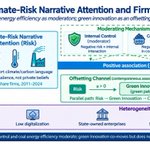
A study of 2,184 Chinese firms finds that more climate-risk language in annual reports is linked to higher carbon emissions.
Strong internal controls may help narrow this gap.
#CarbonResearch #ClimateRisk
🔗
doi.org/10.1007/s44246-026-0…

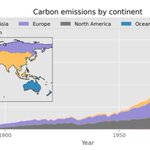
🌍 Nearly 280 years of carbon emissions, one global picture!
A new study in Carbon Research tracks CO₂ emissions from 1750 to 2022, revealing rising global emissions and major differences across countries and sectors.
#CarbonResearch #CO2
Read more🔗:
doi.org/10.1007/s44246-026-0…

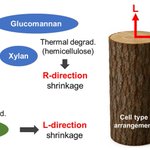
🌳 Wood doesn't shrink equally in all directions!
New research in Biochar reveals how cellulose, hemicellulose, and metal ions shape wood shrinkage during carbonization.
🔬 New insights for biochar design!
#Biochar #Biomass
Read more🔗:
doi.org/10.1007/s42773-026-0…

Waste helps transform waste!
Biogas slurry boosts the conversion of digestate into nitrogen-rich artificial humic acid, reaching 40.16% selectivity at 220°C.
🌱 A promising pathway for circular agriculture!
#Biochar #CircularEconomy
Read more:
doi.org/10.1007/s42773-026-0…

🧪 Lab safety goes beyond wearing a lab coat!
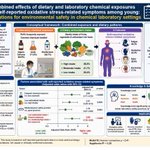
A survey of 426 young scientists found that 78.6% reported frequent chemical exposure, while only 46% followed good safety practices.
🔬 Safer labs, healthier scientists.
Read more🔗:
maxapress.com/article/doi/10…

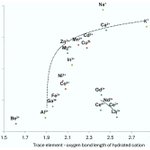
A simple metal–oxygen bond length could help predict how plants absorb trace elements from soil.
New research offers a promising tool for faster, simpler soil contamination risk assessment.
#SoilScience #PlantScience
Read more🔗:
maxapress.com/article/doi/10…

🌱 A surprising twist in soil pollution!
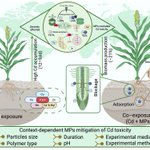
Microplastics may reduce cadmium toxicity in plants.
A global meta-analysis of 4,243 observations reveals how plastics can alter heavy metal uptake and plant health.
#Microplastics #SoilPollution
🔗:
maxapress.com/article/doi/10…

At 300°C, biomass cores can exceed the set temperature by 20–30°C.
New research reveals how particle size shapes internal heating and supports better biomass torrefaction.
#Biomass #Bioenergy
Read more🔗:
maxapress.com/article/doi/10…

🔬Tiny beads, powerful uranium capture!
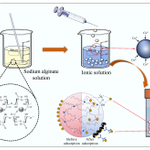
Seaweed-derived alginate gel beads achieve an impressive 394.85 mg/g U(VI) adsorption capacity.
A promising material for uranium-contaminated water treatment!
#WaterTreatment #MaterialsScience
🔗:
maxapress.com/article/doi/10…

⚡1.2 V. 942.4 mg/g uranium capture!
Researchers developed a chitosan-based electrode that combines electrical attraction and chemical binding for efficient uranium recovery.
🌊 A promising step toward cleaner water!
#Uranium #WaterTreatment
🔗:
maxapress.com/article/doi/10…

🌊 Drones + AI reveal hidden water pollution!
By combining UAV imaging with 4 AI models, researchers achieved accurate chlorophyll-a monitoring (R² = 0.797) and linked industrial land use to higher pollution risks.
#AI #WaterQuality
🔗:
the-newpress.com/aie/article…

🐾 Pet hair holds hidden clues to indoor pollution!
AI-powered screening reveals that pet hair and house dust share over 50% of identified contaminants.
Up to 28× more chemical annotations and 47× faster analysis!
#AI #EnvironmentalScience
🔗:
the-newpress.com/aie/article…

🌍 Tiny plastics. Global challenges.
AI could help detect microplastics, track where they go, and assess their risks. A new Perspective proposes a Pan-microplastic AI Framework connecting pollution, climate change and One Health.
Read more:
the-newpress.com/aie/article…

Forest carbon storage is more than just trees!
🌱 More even tree species distribution is linked to higher soil carbon.
⛰️ Steeper slopes weaken litter carbon accumulation.
New insights from Brazil's forests!
#ForestCarbon #Climate
Read more🔗:
maxapress.com/article/doi/10…

🌾 Recycling rice straw may come with a hidden risk!
Direct straw incorporation raised arsenic levels in rice grains by 73.1%. Turning straw into biochar avoided this increase and reduced Cu and Pb accumulation.
#Biochar #FoodSafety
Read more🔗:
maxapress.com/article/doi/10…

A 3-year study reveals 46 keystone microbial taxa that may help sustain carbon, nitrogen, sulfur, and iron cycling in a deep-water reservoir.
Discover nature's hidden microbial network!
#Microbiome #Biogeochemistry
Read more🔗:
maxapress.com/article/doi/10…

🌱 Safer rice may start with a single seed!
A new perspective explores how selenium seed priming could reduce toxic methylmercury in rice, offering a promising path toward safer food and greener farming.
#FoodSafety #SustainableAgriculture
Read more:
maxapress.com/article/doi/10…

🌱 More carbon doesn't always mean more soil carbon storage!
A new study reveals that carbon inputs boost topsoil carbon, but excessive inputs can limit carbon accumulation in deeper soil.
🔬 Soil microbes help explain why.
🔗:
maxapress.com/article/doi/10…

🌿 From herbal waste to cleaner water!
A new review in Biochar X explores how traditional Chinese medicine residues can become powerful biochar materials for removing heavy metals and antibiotics.
♻️ Waste into value!
#Biochar #CircularEconomy
🔗:
maxapress.com/article/doi/10…

Nanobiochar could help cyanobacteria stabilize sandy soils and support ecosystem recovery. 🌱
A new review explores its role in sustainable agriculture, water treatment, and dryland restoration.
#Biochar #Nanotechnology
🔗:
maxapress.com/article/doi/10…
