
Health/IO Economist at @uicpublichealth. I also really like Avatar/Korra.
Chicago, IL
Joined October 2013
- Tweets47
- Following438
- Followers240
- Likes166
Nicholas Tilipman retweeted

Job Alert: I was talking to @MelindaBBuntin and she is hiring for an Senior Modeler to work in her new Center at Hopkins (link below). She's not active on twitter anymore so I offered to tweet. Real cool job: reach out to her directly if interested!
hbhi.jhu.edu/initiatives/chs…
Nicholas Tilipman retweeted

For those of you at ASHE looking for a 1:45 session to attend tomorrow, join me and @NTilipman @elena_andreyeva in Midway 6, where I will unveil some of my most ambitious graphic design efforts to date. Here is a preview.

Nicholas Tilipman retweeted

Submit (blind) to #MHEC2022 at forms.gle/GVJxV5KLFTCXfaEd7 by 6/5. Thanks in advance to scientific committee of @DidemTuzemen @mandy_gaulke @cjrhgarmon @bdtimpe @DannyTannenbaum @hoa_vuxuan & more. No registration fee & limited travel funding available for students & those need.


Save the date for the 2022 Midwest Health Economics Conference: September 14-16 in Lawrence, KS, hosted by @KU_Economics @KU_IPSR @KUCollege @ResearchAtKU @KUprovost @UnivOfKansas. Very grateful to @NSF for their support. Call for papers coming soon. #MHEC2022

Nicholas Tilipman retweeted
Save the date for the 2022 Midwest Health Economics Conference: September 14-16 in Lawrence, KS, hosted by @KU_Economics @KU_IPSR @KUCollege @ResearchAtKU @KUprovost @UnivOfKansas. Very grateful to @NSF for their support. Call for papers coming soon. #MHEC2022
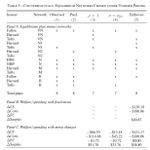
On the other hand, I find if large employers were to flexibly set premiums *and networks* differently by region, you could see significant welfare gains with minimal adverse distributional consequences! 13/14

1
4
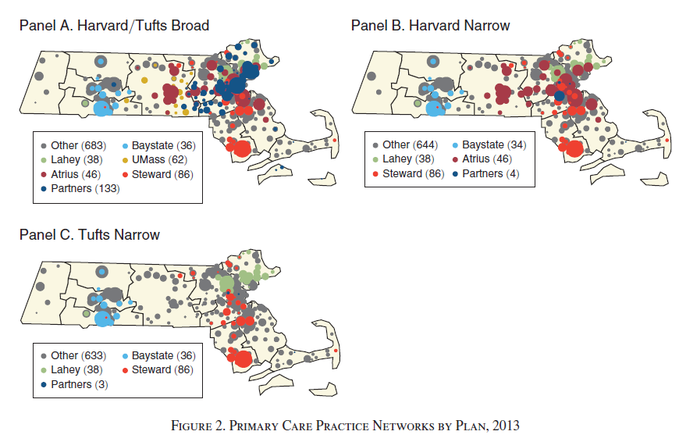
First, the demand side is (to my knowledge) the first to incorporate demand for *physician* networks in addition to hospital networks. It turns out there’s a ton of variation in physician networks across plans separate from that of hospitals! 5/14
1
4
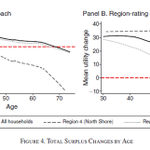
This might be indicative that (a) employers care a lot about regional equity in provider access and (b) private firms in particular may be catering more to preferences of workers with higher labor market bargaining power, e.g. managers and executives 11/14
2
1
Why do employers do this? I don’t decompose this causally, but I do find suggestive evidence that employers seem to be placing weight on the preferences of a small set of employees in plan design: older workers and those in less competitive provider markets. 10/14

2
4
What are the implications of this? Well, in simulations, I find that if employers valued networks equally to the average employee, this would result in surplus gains of about $52 per household per month. 9/14

1
2
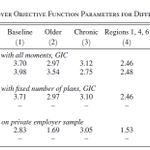
The headline result here is that employers appear to “overweight” the network preferences of the average employee by a factor of about 4-to-1. This leads to a kind of "overprovision" of broad-networks relative to average employee preferences. 8/14
1
4
Second, I specify an employer objective function in selecting plans for their employees, which enables me to estimate a “mismatch” parameter between employer and employee preferences. 7/14
1
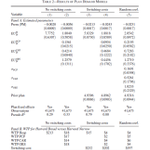
This is non-trivial! Prior literature tends to find low premium elasticities and high switching costs in employer plans. But I find incorporating physician networks triples estimated elasticities for employees relative to if they were just choosing over hospital networks. 6/14

1
4
I study this in the context of employers choosing to offer narrow-network insurance plans. These plans, while prevalent on the marketplaces, haven’t really taken hold in the large group market as much. Is it because employees don’t want them? Or something else? 3/14
1
2
I’m extremely excited to see my JMP get published in the AER! I'm really proud of it and so here's a 🧵about it! 1/14
aeaweb.org/articles?id=10.12…

Super excited that our paper's in print @Health_Affairs! Great🧵by @rebwebmy👇
This Post is from an account that no longer exists. Learn more
5