








Naish retweeted

the best way to signal status in the Bay Area is to act noticeably stressed about lack of compute
Naish retweeted

We invite you to Forge.
At Forge, we will challenge you to make your own frontier.
You'll spend the day with the builders, researchers, and technical leaders pushing AI forward.
Lin Qiao. Jensen Huang. Jay Parikh. And more.
Apply to attend: fireworks.ai/forge

Naish retweeted

the @FireworksAI_HQ team have been fantastic partners. they provide near-real-time support and are obsessive about providing customers a fantastic experience. even in the rare case where we've ran into hiccups or bugs (things happen!), they were so impressively fast at resolving and getting us back on the right track that it increased our love and gratitude for their service-- this says a lot about their ethos towards customers.
we'll have more to share soon on what we've built on their training platform, and the results :)
thank you @chahvivi @lqiao @the_bunny_chen for all of your support and for building something super valuable for the AI ecosystem

every conversation with @Rob_Bishop has been a insane learning experience. @Macroscope was one of the earliest power user of the training platform and its been a fun journey to keep up with the amazing work they are doing. Deeply technical, relentless on quality bar, always pushing our training infra to the limits, and fun to work with. thank you @kayvz and @Rob_Bishop for helping make the product better with your feedback.
Naish retweeted

I am the product lead for the training platform at @FireworksAI_HQ . Today the Training API and Fireworks Lab are GA.
I won’t walk you through all the features. I want to tell you why teams train with us, because it's usually not the reason you'd expect.
Some teams treat training like a project. Pick a model, tune it, ship it. Done. The teams that win don't think that way. For them it's a long-term bet on owning their AI. And a bet like that needs a partner across the whole development cycle, not one piece of it.
The silent killer is getting the infrastructure wrong. In RL at scale, training and inference stop being two systems and become one loop. The challenges start with model choice, GPU procurement, and room to scale when the run grows. They get harder once the loop is running. Numerics drift between the trainer and the rollout engine, and your learning signal corrupts while every dashboard says the run is fine. GPUs sit at synchronization barriers waiting on a handful of long completions. Weight sync eats the step time you thought was going to training. Most teams find this weeks in, after stitching compute, inference, and training together themselves.
The second gap is expertise, and few organizations hold frontier-lab talent at every layer of the stack. Harness, eval, and reward design. Synchronous or async RL. How much weight staleness the algorithm tolerates. Every one of those is a place to stall, and none of them is the actual problem you set out to solve. The problem was the thing you wanted the model to do. The rest is tax.
That's the difference between a product and a partner. We bring the frontier lab-grade infrastructure and meet you wherever you are. Start on Managed Training, bring your data or evals, we run the loop. Want more control, use the Training API on Serverless and iterate on your reward or recipe fast. Ready to scale, move to Dedicated for full-parameter runs. Want people in the room, Fireworks Lab embeds researchers, engineers, and a PM with your team, from co-design all the way to a custom build we hand over. Same platform the whole way up, every model already enabled for training on elastic compute. You're not locked to one model, one GPU type, or one cluster size.
The pushback I sometimes get is "we'll just do this in-house," and my answer is "at what cost?" How much do you value time to market? And where do you draw the line on quality? Customers tell us they get 2-4x more iteration on the same budget with us than with DIY or other setups. For most, the higher-ROI move is to put their people on data, evals, and product taste and let us do the rest better, faster, and cheaper.
Because none of it matters if the model isn't good enough to ship. That's the part people miss. Done right, a specialized model doesn't just keep up with the frontier on your task. It beats it.
One more thing on cost, because people benchmark it wrong. It's not about cheap GPU-hours. It's quality per GPU and how fast you iterate on performance/quality. We've had large tech teams run full-parameter RL on Fireworks with a fraction of the GPUs their in-house setup needed. Cheap hours don't help if you need twice as many and move half as fast. We've run RL on 10,000+ GPUs, so this holds at real scale. Full-parameter, not just LoRA.
Renting intelligence gets you the average of everyone's tasks, at a premium, on someone else's roadmap. Owning yours is a bet you should make with the right partner.
Build your own frontier → fireworks.ai/training


Naish retweeted

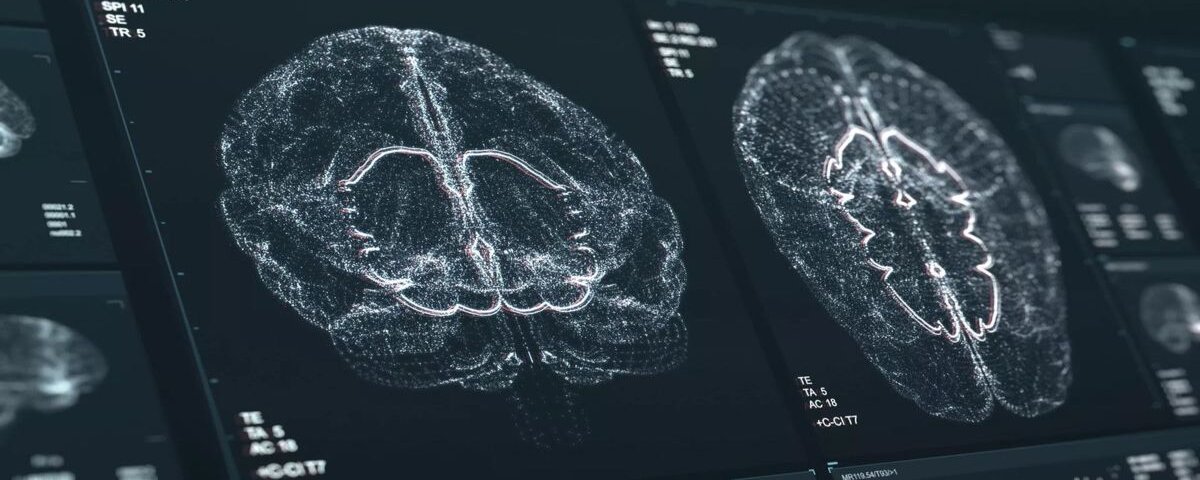
that's neuron.
it doesn't know fear.
it doesn't know lack.
it just repeats what you tell it.
you tell it "i'm not enough" 500 times. the neuron fires. then fires again. then builds a superhighway for that belief.
you tell it "nothing ever works for me" every morning. the neuron doesn't argue. it just memorizes.
you tell it "i can't change" long enough, the neuron believes you. and then your reality matches.
that's neuroplasticity.
from a quantum perspective, your focused attention is what turns possibility into experience. the neuron is the bridge, but the bridge only appears when you choose a direction.
the good news? the same neuron doesn't know truth from a lie. it just repeats. so you can overwrite the lie with a new signal. when you hold that new signal with quiet certainty, reality reorganizes around it, without you forcing it.
what most people get wrong: they try to "think positive" once. then wonder why nothing changes.
one weak signal doesn't build a highway. repetition does. and without the inner "already done", the repetition stays hollow."

Naish retweeted

The curse of discipline is that every day looks the same. The curse of indiscipline is that every year does.


Naish retweeted

Major cheat code for life: Always assume things will work out, then do the work to make it true. It’s a mindset of active optimism. Earned faith. It creates a quiet confidence that allows you to tolerate the uncertainty of life better than anything else.


Naish retweeted

MEMORY IS THE MOAT
@nikesharora, Chairman & CEO of @PaloAltoNtwks , interviewed by @HarryStebbings (@20vcFund )
Summary: Nikesh Arora took Palo Alto Networks from an $18 billion company to one worth $225 billion, and his read on enterprise AI is blunt: most companies are doing it wrong, and most of the products are not ready. His core claim is that consumers forgive AI's mistakes while enterprises cannot, so the money will flow to whoever builds the depth (the context, the memory, and the edge-case training) that lets an agent act without a human catching its errors. The companies that win will redesign themselves around AI instead of adding it to yesterday's workflow, and the lasting advantage will be the memory a system builds up about you. He expects token prices to fall 90%, half of G&A roles to disappear in 3 years, and more engineers and salespeople, not fewer.
1. Context Stickiness. The lasting advantage in AI is the context a system holds about you, not the model itself. Arora says the frontier labs are racing to remember what you asked over the last 30, 60, 90 days so each new answer gets easier and you stop wanting to leave. The more a model knows about a user, the higher the cost of switching, and that stickiness is the moat. For enterprises the same logic holds: the company that owns its context wins, not the one renting the smartest model.
2. Breadth Versus Depth. The frontier model problem is a breadth versus depth problem. Consumers tolerate false positives and enterprises have none to spare. Arora had Gemini write a passable investment memo in 4 minutes, and a wrong line or two did not matter because a person was sitting in the middle to catch it. An agent acting on its own has no person in the middle, so a false positive becomes a live failure. Consumer AI wins on breadth and brand, while real enterprise revenue comes from depth.
3. The Waymo Standard. Waymo is the biggest agentic product in the world, and it shows what depth actually costs. Replacing one human, the driver, took tens of billions of dollars of edge-case training and data that exists nowhere on the internet. You cannot drop the next Anthropic model into your Mercedes and tell it to drive you home. Every enterprise agent that truly replaces a person needs that same depth, which is why most agentic enterprise products are not ready.
4. Rethink The Workflow. Most enterprises are losing because they add a little AI to an old workflow instead of redesigning the workflow around AI. Arora's example: scanning an invoice 20% faster is the trap, while the real win is letting AI do 80% of the thinking, like reading every CV and telling you which 20 people to interview and what to ask each one. That means giving up human control, which is exactly what companies resist. The winners over the next 3 years rethink the company with AI, not the task.
5. Software With Opinions. The next wave of enterprise software will have opinions, and that is the real change Arora is pointing at. Coded SaaS gives you the output you defined for the input you fed it. An AI marketing assistant reads your copy, tells you it is off-brand, and says how to fix it. That opinion makes an average employee smarter, which is why Arora expects half the people in G&A functions like marketing, finance, and HR to be gone within 3 years.
6. More Engineers, Not Fewer. The fear that AI shrinks headcount is half wrong. Process-heavy G&A roles compress, but Arora wants more technical and more sales people. His teams keep asking for resources to rework marketing and HR, and for people who can prompt frontier models, build harnesses, and bring in data nobody else has. A good product also needs more sellers: he met 20 customers in Europe last week and half did not know what his 20-year-old company already ships.
7. Tokens At One-Tenth. Long-term token pricing should be a tenth of what it is today. Compute costs 2 to 4 times what it did 2 years ago because more than half of it feeds loss-making consumer AI, which forces the pricing pressure onto enterprise and coding workloads that have to pay. As compute gets more efficient and consumer usage gets capped, prices fall hard over the next 3 to 5 years. The model from 2 years ago was already good enough for 90% of tasks; the problem was it cost too much to run.
8. The Token Allocation Trap. Capping token spend punishes your best people. Arora runs a "use judiciously" model, not a free-for-all, because the smartest AI-savvy employee can burn 20 times the tokens of an average one. Playing whack-a-mole with cost hurts the high performers most and slows the learning you need. The better move is to track usage, leave the power users alone, and cap only the genuine outliers.
9. The Attacker's New Edge. Powerful coding models cut both ways. Trained to write good code, they are just as good at finding bad code. Pointed at his own systems, a model found in 6 weeks what would have taken his team 5 to 6 years. It cannot safely auto-patch, because it would "fix" 30% of things that are not broken, so it arms attackers faster than defenders. The result is urgency: every enterprise has to fix its systems faster, which is good for security companies.
10. The FTE Tell. If a startup needs forward-deployed engineers to sell into the enterprise, the product is not finished. Arora's read: enterprise AI is barely 12 months old, agents keep changing what the product even is, so vendors send engineers to build the product inside the customer while the technology keeps moving. A real forward-deployed engineer brings code back and folds it into the product; many are just adoption consultants. Expect customers to churn from one tool to the next, the way coding went from Windsurf and Devin to Codex, Claude, and Factory.
11. Three Missed Tricks. Miss one trick and you survive, miss two and you are partly impaled, miss three and you could be obsolete. This is why Arora spends more time than ever learning, pinging founders building things he does not yet understand. He buys early and cheap on conviction, treating an acquisition as a 10x or 100x bet where paying 1 or 2 times more does not matter, rather than waiting to buy the proven winner for a billion. He runs a twice-weekly "AI EIO" meeting so his top 15 leaders compete to show what they shipped.
12. The Sunk Cost Walk. A board member taught Arora to separate effort from wanting the outcome. After months grinding through a near-billion-dollar acquisition, he was told to take a long walk and ask one question: if this deal walked in the door right now with zero effort, would I still write the check? You have not spent a dollar yet, so the only thing that counts is whether it stands on its own merits. The same trap catches investors who confuse beating 8 VCs to a term sheet with the deal being good.
Truly insane if you stop to really think about it.
Very cool observation

.@ScottWu46 says because of AI future generations won't even recognize today's jobs as "work":
”If you think about our ancestors from hundreds or thousands of years ago, imagine them looking at us and what we do.”
“You're pushing buttons. You're sitting in a room and talking with other people, and you call that a meeting?”
“ What do you mean that's work? I'm in the fields. I'm doing this every day. I’m farming, I'm making all of our clothes by hand.”
“ I think what we’ll have going forward is going to look that different from what we have today.”
2
3
82
Naish retweeted

In 2015 a writer named Tim Urban sat down and counted the days he had left with his parents. He was 34, healthy, both parents alive and well. The number came back around 300. Less time than he spent with them in any single year of his childhood.
The post is called The Tail End, on a blog called Wait But Why. The idea is to stop counting your life in years and start counting it in events. Reach 90 and you get about 4,680 weeks, and every one of them fits on a single sheet of paper. Maybe 60 more winters after that. If you read five books a year, that is 300 books, picked from every book ever written.
Those things at least spread out evenly. A third of the way through life means a third of the way through your pizzas. Time with the people you love does not work like that. Almost all of it sits at the very start. Then it is gone.
For your first 18 years you are around your parents nearly every day. Then you leave for college or a job in another city, and a normal adult sees their parents maybe 10 days a year. So the day you move out, you are already at 93 percent. Urban was living in the last 5 percent and had no idea until he drew the chart. He called it the tail end.
It does not stop at parents. His two sisters, after a whole childhood in the same house, had around 15 percent of their time together left. The four friends he played cards with most days in high school were down to their last 7 percent. Nobody had a fight. Nobody moved away angry. Life quietly spends the time for you while you assume there is plenty left.
You do not have to be old to be near the end with someone. If your parents are alive and you live in a different city, you have probably already used more than 90 percent of the days you will ever spend in the same room as them.
His one instruction is about that last stretch. When you are down to the final days with someone you love, treat that time like what it is, which is almost gone. The rest is the tail end, and it is much shorter than it feels.

Naish retweeted

only four types of companies from now on: labs, data cos, deploy cos, and rollup cos.
Naish retweeted

I believe this next wave of Bio is going to be bigger than anyone can imagine.
Multiple $10T companies. Maybe even a 100 Trillion dollar company.
Buddy moved to NYC, got a job at OpenAI and now I see him more in sf than I did when he lived here. Ty OAI!
59
Naish retweeted

in the next 3 years, every major AI lab will spin up its own bio arm and in-house wet labs.
biology is the next big bet in AI after code
pay attention.


Anytime anyone ever accuses of me of stealing in the future, ima be like "nah man, I'm not stealing I'm distilling"
51
Naish retweeted
We’re thrilled to announce @MiniMax_AI M2.7 is now available Day-0 on Fireworks for commercial use.
This self-evolving agentic model delivers frontier-level performance across:
→ Software engineering & code security
→ Complex autonomous agents
→ End-to-end project delivery
→ Log analysis & office automation
200K+ context. Strong reasoning. Native multi-agent support. Production-ready from day one.
Another Day-0 launch, so you get their fastest innovations the moment they ship.
Try it now:
fireworks.ai/models/firework…
