





Naplain 🔻 retweeted

How does anyone buy this nonsense?
-British East India Company — Corporate conquest, taxation, and extraction of wealth from India.
-Dutch East India Company — Military conquest and monopolization of the spice trade.
-Banda Islands massacre — Mass killing and dispossession to monopolize nutmeg production.
-Atlantic slave trade — The buying and selling of millions of enslaved Africans for profit.
-American plantation slavery — Enslaved labor producing cotton, tobacco, and sugar for capitalist markets.
-Royal African Company — A chartered corporation trafficking enslaved Africans.
-Opium Wars — British military force used to secure commercial privileges in China.
-Congo Free State — Forced labor, terror, and mass death in commercial rubber extraction.
-British colonial India — Land dispossession, coercive taxation, and extraction of agricultural wealth.
-British enclosure movements — Common lands enclosed and customary rights extinguished to establish new property relations.
-Indigenous land dispossession — Native American territories seized and transferred into private ownership and commercial development.
-California Gold Rush — Indigenous dispossession and mass violence accompanying mining expansion.
-United Fruit Company — Concentrated landownership, political influence, and exploitation in Central America.
-Amazon rubber boom — Indigenous enslavement and forced labor for commercial rubber production.
-British South Africa Company — Corporate conquest, territorial appropriation, and colonial exploitation.
-Industrial capitalism and labor repression:
-Ludlow Massacre — Armed repression of striking coal miners and their families.
-Homestead Strike — Carnegie Steel's use of Pinkerton agents against striking workers.
-Pullman Strike — Federal troops deployed against railroad workers.
-Battle of Blair Mountain — Armed conflict between coal miners and forces defending mine-owner interests.
-Haymarket affair — Labor repression and controversial prosecutions amid the struggle for the eight-hour workday.
-Triangle Shirtwaist Factory fire — 146 workers killed in a factory with deadly safety failures.
-Company towns — Employers controlling workers' housing, stores, and economic lives.
-Convict leasing — Prisoners, disproportionately Black Americans, leased to private businesses for forced labor.
-Industrial child labor — Children employed in dangerous factories and mines.
-Ford Hunger March — Police and Ford security personnel fired on unemployed demonstrators.
Memorial Day Massacre — Chicago police killed ten people during a steelworkers' demonstration.
Colonial rubber plantations — Coercive labor arrangements supplying industrial markets.
Radium Girls — Workers poisoned by radioactive materials in industrial production.
Asbestos industry — Corporate failures to protect workers and consumers from known health hazards.
Bread and Roses strike — Textile workers fighting low wages, dangerous conditions, and employer resistance.
Imperialism and commercial interests:
Banana Wars — U.S. military interventions protecting commercial and strategic interests.
U.S. occupation of Haiti — Foreign financial control and coercive labor practices.
Guatemala coup of 1954 — CIA-backed overthrow of a government pursuing land reform that threatened United Fruit holdings.
Iran coup of 1953 — British and American intervention amid disputes over oil nationalization and Cold War politics.
Chile, 1973 — Overthrow of Allende followed by dictatorship, repression, and extensive market-oriented restructuring.
Anglo-Persian Oil Company — Unequal oil concessions benefiting British commercial interests.
Colonial Congo mining — Extraction of minerals under coercive and racially unequal colonial institutions.
Apartheid South African mining — Corporate profits supported by a racially segregated labor system.
Indonesia, 1965–1966 — Anti-communist massacres followed by an economic realignment favorable to foreign investment.
Iraqi oil concessions — International petroleum companies securing privileges under British imperial influence.
Financial extraction, fraud, and public bailouts:
Wall Street crash of 1929 — Financial speculation and leverage contributing to economic devastation.
Savings-and-loan crisis — Fraud, reckless lending, institutional failures, and enormous public costs.
Enron scandal — Accounting fraud concealing financial problems and destroying employee and investor wealth.
WorldCom scandal — Corporate accounting fraud on a massive scale.
Financial crisis of 2008 — Predatory lending, securitization, excessive leverage, and widespread foreclosures.
Bank bailouts — Extraordinary public financial support used to stabilize private financial institutions.
Predatory subprime mortgages — Borrowers steered into expensive or unsuitable loans.
Wells Fargo fake accounts — Millions of unauthorized customer accounts created under corporate sales pressure.
LIBOR manipulation — Major banks manipulating benchmark interest rates.
Bernie Madoff Ponzi scheme — Massive financial fraud against investors.
Opioid industry scandals — Deceptive pharmaceutical marketing and failures in drug distribution.
Corporate wage theft — Employers illegally withholding workers' earned compensation.
Price-fixing cartels — Corporations conspiring to raise prices and suppress competition.
Foreclosure-documentation scandal — Improper and defective documentation used in mortgage foreclosures.
Post-Soviet Russian privatization — State assets transferred into private hands amid corruption and insider dealing.
Monopolies, corporate abuses, and public resources:
Standard Oil — Monopolistic practices, preferential railroad rates, and exclusionary competition.
Railroad land grants — Vast transfers of public land to private railroad corporations.
Crédit Mobilier scandal — Corporate insiders extracting profits from federally supported railroad construction.
Teapot Dome scandal — Corrupt leasing of public oil reserves to private interests.
General Motors streetcar controversy — Corporate efforts to monopolize sales of buses and related products.
Tobacco industry deception — Companies concealing or misrepresenting evidence about smoking and addiction.
Bhopal disaster — Thousands killed by a catastrophic gas leak at a Union Carbide subsidiary.
Deepwater Horizon — Catastrophic oil spill involving BP and major failures of industrial safety.
Volkswagen emissions scandal — Corporate deception of regulators and consumers.
Flint water crisis — Cost-driven government decisions and oversight failures exposing residents to contaminated water.
Private prison industry — Corporate revenue derived from incarceration contracts.
Boeing 737 MAX crisis — Corporate safety and regulatory failures contributing to 346 deaths.
East Palestine derailment — Norfolk Southern train disaster releasing hazardous chemicals into an Ohio community.
Love Canal disaster — Industrial chemical waste contaminating a residential neighborhood.
DuPont and PFAS contamination — Industrial pollution, litigation, and allegations of concealed environmental and health risks.


Naplain 🔻 retweeted

En Saxe-Anhalt, cette crise politique possède une généalogie : « l’unification » de 1990, la liquidation industrielle et la mise sous tutelle de l’Est.
Pour comprendre ce 44%, nous republions cet article.
monde-diplomatique.fr/2019/1…

Naplain 🔻 retweeted

🇫🇷 FLASH - 900€ par an pour s’inscrire en licence, 1.300€ en master. Un rapport sénatorial propose de faire payer les étudiants environ 5 fois plus cher qu’aujourd’hui, contre respectivement 178€ et 254€. Le rapport recommande aussi de supprimer le droit des bacheliers à poursuivre des études supérieures. Avoir le bac deviendrait une "simple condition" pour s’inscrire, sans garantie de pouvoir continuer ses études. Les universités pourraient fixer elles-mêmes leur nombre de places et refuser les candidats ne remplissant pas les prérequis. (franceinfo)

Naplain 🔻 retweeted
je vais m'expliquer parce qu'on me le demande
Leur critique est claquée parce qu'ils font un épouvantail fictif de la position antistalinienne. Ils prétendent que c'est une critique morale, qu'on refuserait d'assumer Staline parce qu'il "etai méchon", sauf que notre position

Naplain 🔻 retweeted
🇫🇷 FLASH | Avec l’accord du Premier ministre, un regroupement de banques pourrait FINANCER la campagne présidentielle de Marine Le Pen en 2027 grâce à un prêt partiellement couvert par une garantie publique. L’État ASSUMERAIT donc une partie du RISQUE FINANCIER pour un parti récemment CONDAMNÉ dans une affaire de détournement de fonds publics. (Le Monde)

Sur le dépérissement de l’État chez Lénine. Henri Lefebvre, Pour connaître la pensée de Lénine, p. 319.


1
137
La contradiction fondamentale de la philosophie de Hegel entre la méthode et le système, et ses successeurs. Roger Garaudy, Pour connaître la pensée de Hegel, p. 193-196.


1
1
149
Les lois (dans la théorie de la connaissances) chez Lénine. Henri Lefebvre, Pour connaître la pensée de Lénine, p. 188-189.


2
100
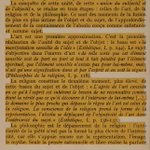
Sur l’union du subjectif à l’objectif chez Hegel (art, religion, philosophie). Roger Garaudy, Pour connaître la pensée de Hegel, p. 165-165.


86


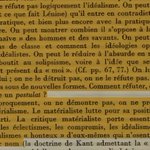
Sur la réfutabilité de l’idéalisme et la prouvabilité du matérialisme chez Lénine. Henri Lefebvre, Pour connaître la pensée de Lénine, p. 154.

57
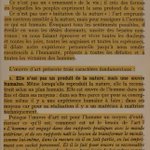
Sur la théorie du reflet (conceptuel) chez Lénine. Henri Lefebvre, Pour connaître la pensée de Lénine, p. 135-136.


48
Le contenu de la NEP selon Lénine. Henri Lefebvre, Pour connaître la pensée de Lénine, p. 117-118.


47
L’Empire russe cherchant à développer l’infrastructure en conservant la même superstructure. Henri Lefebvre, Pour connaître la pensée de Lénine, p. 49.

34
Sur la critique de gauche et la critique de droite chez Lénine. Henri Lefebvre, Pour connaître la pensée de Lénine, p. 340-341.


1
47


