
🇸🇬Nathan retweeted

If you enjoyed this post, please like and retweet the first post ❤️
Grazie e buon appetito!
teapawt.org/arny_trezzi/status/212…

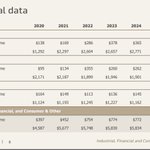
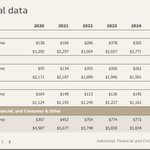
1/ $BSP is a founder-led Italian serial acquirer beating Silicon Valley at its own game.
Many see 50 dead companies.
I see the world's best capital allocator in tech.
The ~$40 price creates an asymmetric opportunity.
My thesis in a few charts 🧵

🇸🇬Nathan retweeted

A toothpaste company has quietly killed the entire market research industry and nobody is talking about it.
Colgate published a paper showing you can predict real purchase intent by simply asking LLMs to roleplay customers.
And this is beyond insane.
If you ask an AI, "Rate this product from 1 to 5," it gives safe, middle-of-the-road garbage.
So researchers invented a method called Semantic Similarity Rating (SSR).
Instead of asking the AI for a number, they asked it to roleplay.
They gave the LLM a demographic profile. They showed it a product concept. And they asked it to write down its raw, unfiltered thoughts.
Then, they used a semantic model to translate those written thoughts into a numerical score.
The results are staggering.
Tested against 57 real personal care product surveys and 9,300 human responses, the synthetic consumers hit 90% of human test-retest reliability.
They perfectly mirrored how different age brackets and income levels react to price changes.
And they provided detailed, qualitative feedback that was deeper and more critical than what actual humans wrote.
This destroys the economics of traditional market research.
You don't need to wait a month to see if a product will sell.
You can simulate 1,000 hyper-targeted customer interviews overnight.
You can A/B test pricing across every demographic instantly.

🇸🇬Nathan retweeted

Nick Sleep’s Nomad Letters (2005–2007) are some of the best writing on investing ever published.
In these years, Sleep shared his work on the equity yield curve, the robustness ratio and the “founder’s portfolio” – ideas still underused twenty years later.
I distilled them into a 6-slide visual Blueprint.
1/2


🇸🇬Nathan retweeted

Written for those who are not experts on the S-1: how the economics work, where the risks sit, what surprised me, some questions, and what it means for us who use these tools. I know the world does not need another S-1 take, read the disclosure first.
🇸🇬Nathan retweeted

Outside of passing judgement, there are 2 types of white-collar labour:
1. technical (does stuff)
2. relationship (interacts w/ people)
It's now obvious that, thanks to AI, we are (or will be) massively oversupplied with 1.
This means that 2 becomes a bottleneck because this type of labour can't scale drastically. It's just how humans are wired (see Dunbar's number).
People who can build and maintain strong relationships will be highly sought after and valued. This has always been true, but it will be even more true in an AI world.
If you don't consider yourself a "relationship person" and haven't put much effort into it, think critically about this. Relying on technical ability alone feels more fragile than ever.
🇸🇬Nathan retweeted

pretty good advice from Lord Chesterfield...guy rarely misses
"One method more I recommend to you, by which I have found great benefit, even in the most dissipated part of my life; that is, to rise early, and at the same hour every morning, how late soever you may have sat up the night before. This secures you an hour or two, at least, of reading or reflection before the common interruptions of the morning begin; and it will save your constitution, by forcing you to go to bed early, at least one night in three."

🇸🇬Nathan retweeted

I’ve always been comfortable betting on people.
It sounds unscientific until you realize how difficult it is to predict next year’s earnings, product cycles or the economy.

🇸🇬Nathan retweeted

Companies acquired by $TEQ.ST that grow >10% per year made up almost 90% of 2025 EBITDA in the Nord segment.
There is a correlation between acquisitions before 2021 (laggards) and after 2021.

🇸🇬Nathan retweeted

Success IT Consultancy & Services was nominated for @IMDAsg SME AI Adoption Awards today!
While we didn’t win, I think it was quite the experience spending the day at IMDA’s SME go digital day event, and meeting other winners and fellow nominees. We will continue to do better! And try again next time!
I had a good time catching up with old friends too! So awesome to meet everyone there!


🇸🇬Nathan retweeted

Wrote a post on how baseball and the stock market have similar market inefficiencies, with the Tampa Bay Rays a modern example
basehitinvesting.substack.co…
🇸🇬Nathan retweeted

AJ Wasserstein is perhaps best known for founding ArchivesOne, a large document storage company he sold to Iron Mountain. He's now a lecturer at Yale on entrepreneurship & publishes a lot of interesting things.
Here's his 2020 paper on revenue quality:
som.yale.edu/sites/default/f…

🇸🇬Nathan retweeted
There are other ways, but the two most accessible paths to wealth in the stock market are to save aggressively and index, or to own an extraordinary business for an uncomfortably long time.
🇸🇬Nathan retweeted

I have always loved this story, highlighted in @APompliano’s new book which I highly recommend.
Chauffeur knowledge is dangerous.


🇸🇬Nathan retweeted
Buffett on modeling quarterly revenue/alt data
Schroeder: "He figured out the one or two factors that could make the horse succeed or fail. And in this case it was sales growth and making the cost advantage continue to work. And then he took all the historical data, quarter by quarter, for every single plant. He got the similar information as best he could from every competitor they had. And he filled pages with little handwritten scratches of all this information, and he studied that information, and then he made a yes/no decision."
--
Schroeder: "He decided that he would come in and invest in this company, Mid-Continent Tab Card Company. But interestingly, he did not take Wayne and John's word for it, because the numbers they gave him were really enticing. But again, he went through and he acted like a horse handicapper. Now here's another point of departure from what almost anybody else would do. Everybody that I know, or knew as an analyst, would have created a model for this company and would have projected out its earnings and would have looked at its return on investment and done it in the future. Warren didn't do that. In fact, in going through hundreds of his files, I've never seen anything that resembled a model. What he did is he did what you would do with a horse. He figured out the one or two factors that could make the horse succeed or fail. And in this case it was sales growth and making the cost advantage continue to work. And then he took all the historical data, quarter by quarter, for every single plant. He got the similar information as best he could from every competitor they had. And he filled pages with little handwritten scratches of all this information, and he studied that information, and then he made a yes/no decision. He looked at it. They were getting 36% margins. They were growing over seventy percent a year, on a million of sales. So that is where the historic numbers—he looked at them in great detail, just like a horse handicapper studying the tip sheet. And then he said to himself, I want a fifteen percent return on two million of sales. And then he said, yeah, I can get that. And he came in as an investor.
So what he did is he incorporated his whole earnings model and compounding, just kind of cash flow, into that one sentence. I want 15% on two million of sales. Why 15%? Because Warren is not greedy. He always wants a mere 15% day-one return on investment, and then it compounds from there. That's what all he's ever wanted. He's happy with that. You're not laughing. What's wrong? And it's a very simple thing. There's nothing fancy about it. And I think that that's another important lesson, because he's a very simple guy. He doesn't do any kind of, you know, discounted cash flow models or anything like that. He's—for decades he just says, I want a 15% day-one return on my investment, and I want it to grow from there. Da-da. And the two million dollars of sales was pretty simple, too. It had a million, it was growing 70%. There was a big margin of safety built into these numbers. It had a 36 percent profit margin. He said, I'll take half that. And he ended up putting—$60,000. I'm thinking in more modern terms. He ended up putting $60,000 of his personal, non-partnership money into this company, which was about 20% of his net worth at the time. He got 16 percent of the company stock, plus some subordinated notes.
And the way he thought about it was really simple. It was a one-step decision. He looked at historical data, and then he had this generic return that he wants on everything. It was a very easy decision for him, and he relied totally on historical figures with no projections. I think that that's a really interesting way to look at it, because I saw him do it over and over in different investments."


🇸🇬Nathan retweeted
When evaluating a management team, I like to use a simple exercise:
Imagine the company makes a surprise announcement tomorrow.
What’s in the press release?
Are you excited or nervous?
That gut reaction tells you a lot about how much you really trust management.