

behavioural and data science for policy • former memory scientist @MemoryLab @rotmanresearch @SofT
Joined March 2014
- Tweets2.8K
- Following3.5K
- Followers1.4K
- Likes4.2K




Pinned Tweet
Excited to see this big collaborative project out in the world @NatureHumBehav!
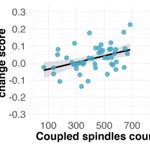
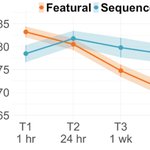
Sleep actively enhances memory for the temporal sequence -but not sensory details- of our real-life experiences, even months-to-years later. 🧠 oscillations matter.
🧵: xitter.cf/NickBDiamond/status/17…

Thrilled to see this paper in @NatureHumBehav after years of work by Drs. @NickBDiamond and @stf_simpson with Drs. Stuart Fogel, Daniel Baena, and @brianjamesmurra.
@Baycrest @rotmanresearch
Nick Diamond retweeted

New in @PNASNews:
In two large experiments (~18k obs from ~14.8k people), we find that brief conversations with AI can get people to take real political action - incl. signing real petitions and giving money to charity.
Surprisingly, the persuasion strategy that worked best for changing people's attitudes - packing convos with info - was the least effective at changing behavior!
🧵

There have been (by my count) shootings at 4 Jewish schools in Montreal & Toronto in the last 6 months, and 2 in the last week.
I heard a lot about antisemitism as a kid, a grandchild of Holocaust survivors. Never imagined I'd grow up to see news like this in my local papers.


The shooting at the Sons of Jacob Synagogue in Belleville, Ont., on Sunday night happened as many were gathering for Yom Kippur, one of the holiest days in the Jewish faith.
Follow along for live updates here: thestar.com/news/canada/bell…
Nick Diamond retweeted

For six months, Google Maps sent a slice of drivers in ten American cities down deliberately slower routes.
About 30 seconds slower on average, and under 2% of trips were touched. The experiment ran on roughly 100 of the most congested road segments in each city, switching on and off day by day so each city acted as its own control. The results are out now in Nature Cities, from Google Research with collaborators at Berkeley and Stanford.
The reasoning behind it is old and slightly counterintuitive. Every navigation app does the same thing: it finds you the fastest route right now, for you alone. When millions of phones do that at once they all pour onto the same handful of arteries, and those arteries stop being fast. Transport economists have been writing about the gap between what's good for one driver and what's good for the network since the 1950s. Nobody had tested a fix at city scale with real drivers, because you'd need to steer routing for a large share of a city's traffic, and about three companies on Earth are in that position.
So Google put a penalty on the worst segments during their worst hours, which nudged the routing engine towards alternatives of similar road class and comparable travel time, then measured what happened across the whole network on weekdays between 7am and 8pm.
On the targeted segments, traffic moved roughly 2% faster in the median city. Los Angeles got 4.56%, Atlanta 3.30%. Fuel burn on those stretches dropped between 0.5% and 1%. Across every road that saw a change in traffic, which covers around 80% of each city's driving, speeds rose 0.35%, reaching 0.5% during the morning and evening peaks. Total travel time on affected trips fell 0.69%. Their Bayesian model put the probability that the speed effect was genuinely positive at 99.8%.
That adds up to more than 1,000 tonnes of CO2-equivalent saved per year, per city, in most of the places studied. Cars and vans account for around 10% of global carbon emissions, and the average driver spends about 2.6 years of their life behind the wheel, so a fraction of a percent across an entire road network is a serious amount of fuel.
Per driver, the saving comes to about 0.25% of an average journey, roughly one fortieth of the normal day-to-day wobble in how long the same commute takes. Nobody in those ten cities noticed anything, in either direction, including the people sent the long way round.
The authors are careful about what they haven't shown. They measured the immediate effect, not what happens once drivers work out the freed-up route is quicker and pile back onto it, which is the standard way road improvements get eaten. Their penalty scheme was deliberately crude, so the ceiling on the approach is unknown. And the underlying Google Maps data is commercially confidential, so nobody outside can check the numbers.
The finding sitting underneath all this is that a private company's routing algorithm has become a piece of transport infrastructure, tunable in the way a traffic light or a congestion charge is tunable. The obvious follow-up experiments are the ones a city government would want to run, not the ones a mapping company would.
link to full article: nature.com/articles/s44284-0…

Nick Diamond retweeted

In 1990, Dolly Parton went on vacation in Ireland.
She walked into a local pub in County Kerry and delivered a flawless performance of Coat of Many Colors.
A heart of pure gold who made people smile across oceans.
Nick Diamond retweeted

🚨🚨New paper in @Nature with @AshuAshok, @lukebeehewitt & @ghezae_isaias 🚨🚨
Can LLMs predict results of social science experiments?
Across 70 preregistered studies, we find strong correspondence (r=.85) between LLM-predicted and observed effects.
doi.org/10.1038/s41586-026-1… 🧵

Nick Diamond retweeted

Hey #Toronto، solveto.ca just got a major upgrade.
Report any city issue in 30 seconds.
Snap a photo, AI writes the report, it goes to 311 + your councillor simultaneously.
Live map. 24 categories. Ward filters. All free.
No app download. No account needed. 🧵
Nick Diamond retweeted

Can feed algorithms shape what people think about politics? Our paper "The Political Effects of X's Feed Algorithm" is out today in @Nature and answers "Yes".
nature.com/articles/s41586-0…

Nick Diamond retweeted

The distinction between genuine grassroots activism and automated influence operations iscollapsing.
While policy debates focus on bot farms, in a new paper we describe a distinct threat to democracy emerging via partisan coordination apps and artificial intelligence–what we term “cyborg propaganda" jonaskunst.net/wp-content/up…
Led by Jonas Kunst

Nick Diamond retweeted

I resigned from OpenAI on Monday. The same day, they started testing ads in ChatGPT.
OpenAI has the most detailed record of private human thought ever assembled. Can we trust them to resist the tidal forces pushing them to abuse it?
I wrote about better options for @nytopinion

Nick Diamond retweeted
Collaborative groups often outperform single individuals in complex problem solving. A new paper examined how to create the right incentives to promote this kind of collective intelligence.
Rewarding experts who are accurate can improve collective intelligence. But rewarding reformers whose predictions have greater potential to reduce the collective error (even though their personal predictions may be far from the truth) is *much more effective* in promoting the emergence of collective intelligence!
If you want to create smart groups, you need to incentive contributions to the collective rather than mere individual success!
pnas.org/doi/epdf/10.1073/pn…

Nick Diamond retweeted
AI now allows propaganda campaigns to reach unprecedented scale and precision.
Our new paper in @sciencemagazine Magazine explains how a disruptive threat is emerging: swarms of collaborative, malicious AI agents.
We describe the potential risks and some interventions for this growing threat to organizations, institutions, and nations.
This paper was led by @daniel_thilo & @JonasKunst22246 :
science.org/doi/10.1126/scie…

Nick Diamond retweeted
🚨 New today in @ScienceMagazine !!🚨
We’re publishing the results of the largest AI persuasion experiments to date: 76k participants, 19 LLMs, 707 political issues
We examine “levers” of AI persuasion: model scale, post-training, prompting, personalization, & more…
🧵:

Nick Diamond retweeted
Across social media platforms, political posting remains tightly linked to affective #polarization -- the most hyperpartisan users post the most.
As casual users disengage and polarized partisans remain vocal, the online public sphere grows smaller, sharper, and more ideologically extreme.
This is why you can't draw conclusions about public opinion from social media commentary: arxiv.org/abs/2510.25417

Nick Diamond retweeted
AI shows ingroup bias towards AI content!
If we deploy LLMs in decision-making roles (e.g., purchasing goods, selecting academic submissions) they will favor LLM agents over ordinary humans
pnas.org/doi/10.1073/pnas.24…


Nick Diamond retweeted

Survey experiments to measure preferences seem to be all the rage these days within economics. Since the analyst ultimately cares about actions rather than measuring wishes, hopes, aspirations or intentions, we should take care to ensure stated preferences map into revealed preferences.
I remain in the camp that a List experiment gives us our best shot to measure such preferences accurately, especially around sensitive topics. You can find the (really old!) study here, recently revised! ideas.repec.org/p/feb/framed…

Nick Diamond retweeted

This Comment from Gary Charness and colleagues discusses how various LLM tools can support different stages of the experimental research process.
nature.com/articles/s41562-0…

Nick Diamond retweeted
The increasing fragmentation of constructs and measures in psychological literature hinders cumulative knowledge generation. This Comment by Anvari et al calls on the field to take action toward defragmentation via four key recommendations. nature.com/articles/s41562-0…
