
Medicine Law
Uganda
Joined July 2021
- Tweets2.7K
- Following2
- Followers146
- Likes2.1K


Pinned Tweet
In 2030s and 40s there will be no emotions except fear, rage, triumph and self abasement;
There will be no loyalty except loyalty to the party;
But always there will be the intoxication of power;
Always at every moment there will be the thrill of victory;
1
1
254

Nicholas Musinguzi Jnr. retweeted

A lady that went to Nican Resort for an outing with friends 8 years ago has today won a case against the same resort after accusing it of selling expired beer to her. The lady says that she had complications immediately after taking the beer and was immediately rushed to the hospital for treatment but her friends were able to check the bottle and see if it had anything wrong then realized that beer was expired. Today court ordered Nican to pay 10 millions plus 250,000 ugx.

Nicholas Musinguzi Jnr. retweeted
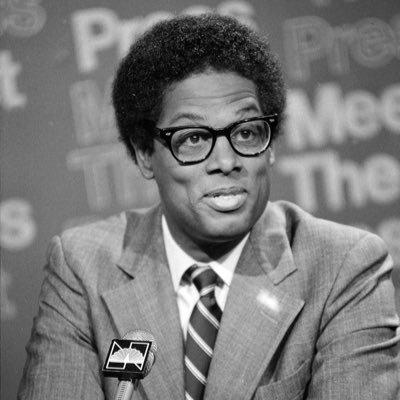
Thomas Sowell breaks down why so many South American countries have struggled with poverty and what holds their economies back.
Nicholas Musinguzi Jnr. retweeted
Thomas Sowell explains the root causes behind the problems facing Britain and the United States.
His perspective challenges many of the assumptions people take for granted.
Nicholas Musinguzi Jnr. retweeted

Manuela P Mulondo reveals how she almost divorced Brian Mulondo. She says that she went thru depression because of the disagreements they were having at home partly because she thought she and her husband were on an equal footing


Nicholas Musinguzi Jnr. retweeted

A lot of African startups aren't tech companies. They're logistics, lending or retail businesses with an app, priced like software. The market has noticed. Some founders haven't.


Nicholas Musinguzi Jnr. retweeted

Always easier to host a conference or organize and accelerator than it is to build a business.
Nicholas Musinguzi Jnr. retweeted
The African startup ecosystem has produced more conferences, accelerators and "ecosystem builders" than profitable companies. That should embarrass all of us.
Nicholas Musinguzi Jnr. retweeted
“If white racism is the cause of lower educational and economic outcomes for black Americans, why are black Nigerians exempt?”
— Thomas Sowell
Nicholas Musinguzi Jnr. retweeted
Thomas Sowell challenges the conventional narrative about what caused the Great Depression and explains the economic forces behind America’s struggle.
Nicholas Musinguzi Jnr. retweeted

Recently in South Africa, an opposition mayoral candidate called the media to highlight a water pipe the city hadn't fixed in YEARS. Officials immediately raced to fix it before she arrived, only to BREAK another one in front of everyone.
You really can't make this stuff up.

Nicholas Musinguzi Jnr. retweeted
Thomas Sowell shares historical facts about civilization that rarely make it into today’s classrooms.
Nicholas Musinguzi Jnr. retweeted

YOU MAY BORROW MONEY, NOT A HUSBAND
DFCU Bank Limited v Elizabeth Nabatanzi Lugudde (Civil Suit No. 0442 of 2021) [2026] UGCommC 520 (27 October 2026)
The dispute
In September 2008 DFCU Bank granted Elizabeth Nabatanzi Lugudde an overdraft of Shs 20,000,000 at 25% per annum, repayable within sixty days, for a trading venture to South Sudan. She signed the facility with a man she introduced as her husband, Samwiri Lugudde Kanyike Katwe, the registered proprietor of land at Lungujja whose title was deposited as security.
The bank lodged a caveat. The man was in fact her brother-in-law, Moses Kamya alias Samuel Lugudde Kanyike, carrying an identity card in the name “Lugudde Kanyike”. She defaulted, and in March 2010 the bank sold the land by auction for Shs 26,000,000. The real proprietor sued to nullify the sale, the buyers sued for a refund and damages, and in 2012 the bank settled the two suits for Shs 11.5 million and Shs 50 million, besides bailiff’s and legal fees. In 2021 it sued her for the debt, Shs 97,406,000 in special damages, punitive damages, interest and costs.
Her defence was that her husband had agreed to her presenting another man in his place and had handed her the title himself; that a truck accident on the Gulu highway had frustrated the venture; and that the bank had colluded with her husband to inflate the settlements. She also pointed to her acquittal in the criminal prosecution that followed.
The decision
Stephen Mubiru J entered judgment for the bank. On fraud, the court treated the defence as an admission. Presenting a man she knew was not her husband was a false statement of fact within section 14(1)(a) and (d) of the Contracts Act, and the decisive step was to judge the fraud from the position of the party deceived. Whatever the husband may have agreed to, the bank was told the registered proprietor was present and consenting, and it lent on that footing. Consent to the use of a title is not consent to the deception of a lender. Her own 2010 letter, saying her husband had directed her to borrow “in his absence”, undid her claim that he was involved throughout. The acquittal did not help, since the criminal standard is higher than the standard for proving fraud in a civil case.
Frustration failed under section 66(1) of the Contracts Act: the loss of a truck made repayment harder, not impossible, and is a risk the borrower carries. On quantum, the court noticed that the bank’s statements could not be reconciled with 25% simple interest and that no evidence of default charges had been led, so it recalculated the debt at Shs 83,832,192 as at filing.
The special damages were allowed on the principle in Hammond & Co v Bussey (1887) 20 QBD 79: where a wrong drags the claimant into litigation with third parties, the reasonable cost of defending or settling it is recoverable as a consequence of that wrong. The chain ran unbroken from the impostor to the invalid security, the sale, the two suits and the settlements. The collusion allegation was itself an allegation of fraud and failed for want of evidence. After stripping out Shs 25,556,800 that the bank had folded in as loan and interest, the court allowed Shs 71,859,200. Receipts and fee notes were missing, but cogent oral evidence sufficed, and where the wrongdoer’s own conduct makes the precise figure uncertain, the uncertainty falls on the wrongdoer.
Punitive damages are not ordinarily available for breach of contract, but deceit is an independent tort and her conduct fell within the Rookes v Barnard [1964] AC 1129 category of conduct calculated to procure a benefit at the plaintiff’s expense. Noting that section 37(1) of the Mortgage Act makes it an offence to present to a mortgagee, as one’s spouse, a person who is not, the court awarded Shs 10,000,000, measured against the likely criminal penalty and her modest means. Interest was set at the contractual 25% on both the debt (from filing) and the special damages (from 23 May 2012), 6% on the punitive award, with costs.
Why it matters
The central holding is that a third party’s consent cannot cure the deception of a counterparty. That matters in a country where family land is routinely pledged by relatives under informal arrangements. Spousal consent exists to protect the family home, and a stand-in defeats its purpose entirely. Borrowers should take from this that a “family understanding” binds nobody at the bank counter. Lenders should note that the borrower’s exposure is not limited to the debt: every shilling spent fighting the true owner and the auction buyers can be recovered from the person whose fraud started it.
A word of caution
Three points may attract an appellate court. First, the Shs 83.8 million already carries almost thirteen years of interest, yet 25% was then run on the whole sum from filing. Section 26 of the Civil Procedure Act separates the principal sum adjudged from interest adjudged before the suit, and the court had itself applied simple interest, so the order arguably compounds what the contract did not. Second, the judgment says each item of special damages was documented, although it had earlier recorded that the receipts and fee notes were never produced; the award really rests on oral evidence and the burden-of-uncertainty rule. Third, default occurred in 2009 and the suit came in 2021. Limitation is not discussed, and the bank’s reliance on discovering the fraud in 2021 sits uneasily with the fact that the true owner sued it in 2011.
Practical takeaways
a) Lenders should see the registered proprietor and spouse in person and verify their national IDs against the title before disbursing.
b) A spouse’s private consent does not excuse impersonation; it exposes both the borrower and the impostor to civil and criminal liability.
c) A borrower who means to contest a contractual interest rate must plead and prove that it is harsh and unconscionable.
#spousalconsent
