

My alter ego, focused on investing 🍀 I write on Substack hoping for constructive arguments https://xitter.cf/t.co/PHK4V56mqH
Close to the Alps
Joined June 2022
- Tweets4.4K
- Following292
- Followers3.5K
- Likes3K
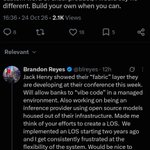
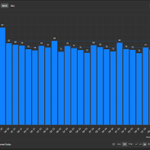


This platform sometimes shows valuable insights. VMS is here to stay and most likely grow it's use case, if managed properly.

Nicoper retweeted

@Kreuzmann13 is one of the brightest and most intellectually curious young investors I've met. Definitely worth a follow and a sub!
I've had the pleasure of co-hosting a company call with him - excellent investor and an even better person!


I wonder if South African equity markets will reach popularity levels of Japan and Korea. After that, we will discover Mexico again and the circle will be complete.
Nicoper retweeted

I sold my TerraVest $TVK.TO position today, after holding the stock for nearly seven years.
For context, my first purchases were around C$12. My APP was C$25. At some point in 2023, it was 90% of my portfolio. I am up 840% on the initial shares and 350% on the average.
This position is the singular reason that I now have the privilege of managing my PA full-time. I owe a great deal to Dustin Haw and the rest of the management team (yes, that includes Charles Pellerin).
My thoughts on the company have not changed over the years. Great niches, stellar management, and a bright future. Some segments with tailwinds, some with headwinds. As has always been the case.
Yet, as I considered my position over the past months, I realized two things.
First, TerraVest has become just another midcap to me, something I would normally never spend time on because I don’t have an edge. The stock is well-covered at this point, and I no longer have any reason to believe that my insights are superior to those of other investors. If I were to start my portfolio from scratch, TVK would not come to mind, and whatever its prospects, they are likely priced in.
Second. For practically all of my investing life, great companies have traded at premium valuations. Compounders often traded far in excess of 20x earnings. The thesis back in 2019 was that TerraVest deserved that same treatment, and over the years following, it got it.
Then interest rates started rising, and a little insider trading scandal occurred, and here we are back at a mid-teens multiple. As a result, the stock has been flat over the last two years.
As I ruminated over these facts and what to do with them, I noticed how anchored I had got to those premium valuations. I did not have a variant view anymore at all. I simply owned the stock because I thought that it might return to those old multiples if they just announced a really good quarter or a new acquisition. And missing that ride would feel painful. Even as I write this now I wonder, what if they announce something tomorrow and the stock shoots back up to C$175?
Obviously this is a bad way to think, and a terrible way to invest.
There are lessons there related to selling discipline, which I described in an earlier post.
Just as important for me to realize was that those old valuations were a function of low interest rates and stable geopolitics, rather than a mere recognition of the value of compounding.
If I think back to 2021 specifically, there seemed to be a new consensus around ‘the value of quality’, a recognition that quality stocks had historically been undervalued because their long-term prospects had been assessed too pessimistically, and that the ‘new’ valuations (e.g., $POOL and $CPRT at 40x earnings) were maybe a bit rich, but not entirely unfounded, given their great historical and future growth profiles.
This was connected to the prominent assumption that ROIIC dominates stock returns over the long term, which caused some to believe that valuation should be secondary to business quality, because it’s the latter that drives returns. While mathematically true, it only works if you drag the timeline out far enough.
Back then, this was easy to do. I could take a company like TerraVest and forecast a decade of 10-30% EPS growth, because that was what it had shown in the years prior, and there was nothing on the horizon that would derail that train. Because of that long-termism, whenever the stock ran up, I could hide behind that concept of ‘returns from here will converge to ROIIC, which clears my hurdle rate’. This, in turn, allowed me to be lazy and defer a sell decision, with no regard for the eroded margin of safety.
Would I feel comfortable making those same projections today, in a world that is indebted, inflationary, at war, and indefinitely mismanaged by the partisan clown carousel? While the disruptive threat of AI looms over it all?
No.
Which means I must cast off my attachment to those old valuations.
Now I don’t know what a fair multiple would be for TerraVest in particular, but it is almost certainly lower than what it was a couple years ago. The returns from here on out might be satisfactory but will probably not be spectacular. And I see so many interesting opportunities today at MSD multiples that I don’t see why I would hold a stock like TerraVest.
In any case, my error was twofold: first in not selling the stock when an appropriate valuation was reached, and second in assuming that this valuation would still be appropriate today.
Remember ye not the former things…
So to sum up, the world has changed and the discount rate has increased. It’s possible that a fair multiple for the stock is somewhere in the 14-16 range, and given the current valuation this does not provide me with enough upside compared to other opportunities. I think it could take a long time before compounders that once traded at high multiples do so again but we’ll have to see.
I met some wonderful people by virtue of discussing this stock on here, and to those who still hold, I hope you all make bank.
GLTA


Funny thing is becoming obvious with use of ai in big organizations. Those who were productive before, are even more so now. Those who were unproductive before, also enjoy their multiplication. On net level, it's difficult to judge the impact. Both come with the similar cost.

After a long exchange with a CEO of one company I am invested in.
"Our past scheme did not work so well. If you have any better ideas for executive compensation please let us know".
My brain: "Have you ever heard of Mark ..."