

Investor | policy | politics | Geopolitics | Defence | AI | Observer & Commentator | Critic | stay curious वीर भोग्या वसुंधरा
India
Joined February 2019
- Tweets27.2K
- Following992
- Followers28K
- Likes23.6K


Pinned Tweet
This Week of Market Outlook is Now Published :)
Read about many businesses, a few I liked this week, and some interesting IPOs that matter. You'll also get an idea of where the money is flowing, along with the India Market Health Report.
normalguy.co.in/post/market-…

Idealist of this Week is Now live :)
In the current market, I believe risk management and stock selection will matter more than ever
normalguy.co.in/post/idealis…

Yttrium oxide costs $7.90 per kg inside China and $441 outside that is 55 times more for same material, Before April 2025, prices were similar everywhere
China made 270,000 of 390,000 tons of rare earth oxides in 2025, which is 69% of global total that lead came from decades of separation investment western countries skipped.
Digging yttrium is simple but processing it needs plants that barely exist outside China.
Lynas in Australia, ReElement in US, and South Africa at Phalaborwa are all starting yttrium projects. Combined output stays tiny against 10,000 to 15,000 tonnes in annual global demand
Yttrium has no replacement in chips, lasers, or jet engine coatings. New supply needs years nobody has
China became largest car exporting country in 2023, overtaking Japan. Gap keeps widening every quarter.
But stock prices tell different story. Chinese auto stocks have lagged global auto stocks since early 2023.
Markets price what sales charts miss. Industry margins halved between Q1 and Q2 this year. Mining and battery companies grabbed most of profit, with mining margins at 20.5% while car assembly earns low single digits.

India used 2.1m tonnes of copper in FY26, growing 12% over last year that growth was faster than GDP at 7.7%
Many talks about data centers needing copper. In India, data centers made up less than 1% of total copper use. Biggest demand came from building roads, bridges, and power lines, where copper use grew 29%. Cars and trucks followed with 14% growth after slow FY25
Copper demand in India is growing because of construction work, not data center hype. Not watch wrong part of market
Government released copper vision paper saying India will need 4 to 5m tonnes of copper per year by 2035. Right now India uses 2.1m tonnes. By 2047, need reaches 9 to 10m tonnes
India made only 0.7m tonnes of refined copper at home in FY26. Only 1 government company mines copper here, covering just 4% of what country needs. Sterlite closure in 2018 removed 56% of refining output.
Government paper admits India may import 91 to 97% of copper raw material by 2047, Domestic mining cannot fill that gap
world copper supply will fall 10m tonnes short of demand by 2040. Mining output peaks near 2030 at 33m tonnes. Demand reaches 42m tonnes same decade. New mine takes 17 years on average from discovery to first output
India alone needs equivalent of 1 giant new mine every year for next 20 years. Biggest copper mine in Congo pushed its own target back by full year.
World is not opening enough new mines. India has not begun facing how large its own supply gap will get.
So what next - Recycle or find the alternative Aluminum or something else

India’s copper demand grew 12% to 2.1 million metric tons in the year to March 2026, outpacing the country’s 7.7% GDP growth.
Data centers made up less than 1% of it, according to the International Copper Association India.
Infrastructure led instead, rising 29% and accounting for 22% of domestic consumption. Automotive demand rose 14% after a sluggish FY2025.
Growth accelerated from 9.3% the year before.
Source: ICA India via The Economic Times

From Britain, where Microsoft walked away from a $2.7 billion site because the grid connection slipped into the 2030s

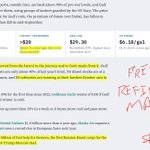
America fired about as many Patriot interceptors in 7 months as it received in 19 years, and lost or damaged 81 aircraft.
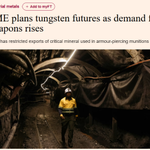
this is why America has delayed Patriot transfers to Ukraine and why missile makers are booming, and why CME Group plans the first futures market for tungsten, a metal used in weapons
Losses - 81 aircraft include 45 Reaper drones, 12 F-15E fighters and 1 F-35A
Saudi Arabia said to have used about 2,400 of its 2,800 Patriot interceptors
RTX - record order book of $340 billion after $81 billion of new awards


If yu want to know Why Apple hiked price, Why Xi Jinping went to North Korea, & Why Indian PM met Myanmar military gov’t leader
China, which has the world largest tungsten reserves, used to export raw ore, Now it is importing huge volumes of raw tungsten ore and concentrates from Global South countries.
The goal is to process them domestically into higher-value products (like powders, carbides, and tools) for export or domestic high-tech use.
Look at what China is doing with tungsten in 2026, Importing raw ore from Kazakhstan, Myanmar, North Korea, Bolivia, Rwanda. 91.5% of imports by value are unprocessed concentrates.
At same time, its tungsten carbide exports rose 150% between February and April 2026, Import raw, export processed. APT exports collapsed 70% since February 2025.
Processing capacity outside China is less than 20,000 tonnes against China 200,000 plus. This is not about restricting exports. This is about becoming only place on earth that can refine tungsten.
China imported 123 MT of tungsten hexafluoride between February and May 2026. WF6 is a gas needed to deposit thin metal layers inside every advanced chip. Two Japanese WF6 producers, Kanto Denka and Central Glass, just announced permanent shutdown from July 1 because China cut off their tungsten powder supply.
Samsung, SK Hynix, TSMC directly affected. Price up 200% year on year. No substitute exists for sub-7nm chips. China buys WF6 for its own fabs while denying raw material to everyone who makes it.
North Korea shows up as China third biggest tungsten supplier. $80.9M worth in just four months of 2026. UN Security Council resolutions ban North Korean mineral exports. That data is sitting in Chinese customs records.
US plans to bar Chinese, Russian, Iranian, North Korean tungsten from defense procurement starting January 2027. But once North Korean ore enters Chinese smelters, tungsten carbide that comes out carries no trace of where raw material came from.
Sanctions assume traceability that does not exist in mineral processing.
At the same time, China is still importing some high-end finished products like tungsten hexafluoride (WF6) - critical for semiconductor manufacturing and tungsten carbide.
North Korea as a top-3 supplier ($80.9M / 1,070 MT in just 4 months). Tungsten is one of North Korea biggest exports by value, and almost all of it goes to China. This creates a sanctions-exposed part of the supply chain.
Kazakhstan dominance - It became the single largest source by far in this period. China is locking in supply from Central Asia and processing it at home.
Still importing high-end materials - Even while building massive domestic capacity, China continues to buy WF6 (for chips) and some carbide. This shows gaps in ultra-high-purity or specific grades.
Global ripple effect from China export curbs - Since Feb 2025, China tightened export licensing on tungsten and compounds (further restricted in 2025–26, with only 15 authorized exporters for 2026–27). This caused Sharp drop in China exports of tungsten powder and APT
WF6 prices surging over 200% YoY in some markets.
Japanese WF6 producers (important global suppliers for AI chipmaking) facing raw material shortages and reportedly cutting output in H2 2026
Speed of the shift - Despite having the biggest reserves, China is now one of the largest importers of raw tungsten ore. This is classic resource nationalism + industrial upgrading
Chokepoint risk is real. Mining diversification is happening (projects in Kazakhstan, Rwanda, Australia, etc., with Western funding), but processing (especially high-purity for semiconductors and defense-grade materials) is much harder and slower to replicate.
Direct impact on AI chip production via WF6 shortage and price spike.
Tungsten is critical for kinetic energy penetrators, armor-piercing rounds, and high-performance alloys. Secure non-Chinese supply (or reliable processing) is now a national security priority in many countries.
The North Korea link adds another layer of complexity.
Supply Chain War Phase 1


Problem is there is lot of problem Everywhere that create more problem this is just getting Hotter but in slow Mode

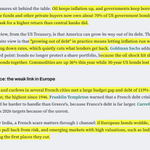
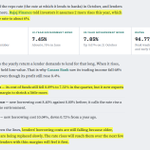
India's rate rise, the rupee and reserves, and why borrowing costs keep climbing from Washington to Paris

From Oct 1, RBI wants every service exporter to fill EDF form. No minimum earning limit exists.
Solo tutor making ₹50k per month fills same form as Infosys making $18bn per year. Every invoice gets reported to bank within 30 days of month end. Bank puts it in RBI system within 5 days. Money has to arrive within 9 months or exporter gets flagged
India did $257bn in digital service exports last year. Making small and big exporters follow same rules slows growth where it starts.
HDFC sent freelancers getting foreign payments Excel file with 5 sheets. Needs physical pen signatures and printed letters. Same data goes in again every single month. RBI made these rules in January 2026, 9 months before they started in
No bank made online form with dropdowns or saved data. Google AdSense publishers are now told to show invoices that Google does not send
Form was made for goods exports and used for services with zero changes. Banks gave all work to exporters and did nothing on their end.
RBI said on Oct 7 that individuals do not need to file EDF. 2 weeks later, banks still ask individuals to file before releasing payments. Chartered accountants are confused because proper notice never went to banks
RBI says individuals are free from this. HDFC says fill form or no payment. Freelancer earning in dollars cannot use own money till paper is done.
India wants $1tn in service exports by 2030. Mismatch between what RBI announces and what banks do is growing at worst possible time
WTF is going on?

Only 13% of Indian startup investors think deeptech is worth betting on. India gets just 1% of global VC money, while US gets 75%.
With so little capital, Indian VCs go for safer, faster-return businesses. Indian chip design startups raised just $162 million since 2023.
Deeptech did hit record $2.96 billion in India in 2025 but that money went to fewer companies. Big checks going to fewer bets means most hardware startups still struggle to raise. Building different kinds of funds would help more than asking VCs to be bolder.
Ather is worth $6.8 billion today But when VCs could have invested, it was worth $400 million and losing money every month. That changes how risk looked at that time. Indian VC funds run 7 to 10 year cycles. Hardware companies need 8 or more years to show returns.
Fund design itself makes hardware bets hard
India stopped giving permits for new HFC gas factories after December 2027 that means no one can build new plants
SRF runs 52,000 tons per year of HFC capacity and is pushing to 65,000+ tons before that door closes. So SRF locks in permanent supply while competitors cannot enter. Chemicals revenue grew 26% in Q1 FY27 to ₹2,315 crore, and that was before quota scarcity even started.
SRF also began selling R-467A, first Indian refrigerant gas with global approval
SRF knows all 8 ways to put fluorine into chemical compounds. Most Indian competitors know only 2 that gap gives SRF ability to make products across full range. Simple refrigerant gases sit at bottom and earn less.
PVDF for batteries sits in middle and earns more. Ultra pure HF for chip making sits at top. SRF more than doubled its investment in next generation gases, raising HFO capex from ₹1,100 crore to ₹2,285 crore. SRF chemicals growth target for FY27 is 15% to 20%
India battery cell scheme has one strict rule. Every approved manufacturer must use 60% Indian made materials within 5 years.
Battery cells need PVDF, plastic binder that holds battery chemicals together. They also need battery grade foil. Very few Indian companies can make these today. SRF is building PVDF plant right now and expects real volumes by FY28. India’s battery demand is projected to reach 220 GWh by 2030.
Cell makers will have to buy PVDF from Indian suppliers, and SRF starts first
Now it’s time to start hunting for opportunities. The market may fall further, perhaps a little more than most expect
I’ve already discussed this in my recent article, where I explained what’s happening in the market. I’ve also highlighted these risks multiple times in my Market Outlook.
Consolidation is possible around current levels, but a lot depends on energy prices, FII selling, MTF margin calls, and overall market liquidity. In this kind of market, stock selection becomes more important than ever
That’s exactly why I shared my watchlist last week after such a long time, to help you understand where I’m looking for opportunities and make it easier to identify good businesses.
More importantly, pay attention to companies that haven’t corrected much even in these difficult market conditions that itself tells you something
A few companies are now available at reasonable valuations, but I still think we need more correction in some areas. Let’s see where things go from here.
In my view, this market tantrum will continue for now, so don’t expect too much. Any recovery is likely to be slow and very selective. What’s happening around the world will continue to affect India, especially after November 3, 2026
And something feels off in the Middle East. I wouldn’t be surprised if we see more developments or another escalation there. So don’t be surprised if something unexpected happens
For now, patience, liquidity, and the ability to identify the right businesses at the right prices will matter more than chasing every market rally.
Only hold stocks where your investment thesis is still intact and you have strong conviction that matters the most. Also, having a stop-loss is mandatory in my approach.
Those who regularly read my weekly Market Outlook will understand why I keep sharing MTF data and why it matters
normalguy.co.in/post/physiol…

Watchlist is now Updated :)
A watchlist is much more than a list of stocks. It helps you understand where the market is going and where opportunities might emerge.
More importantly, a good watchlist becomes extremely useful during market corrections. When the market crashes, you don't have to start researching companies from zero. You already know which businesses are good, what valuations you are comfortable with, and what developments you need to monitor
normalguy.co.in/post/new-wat…

