

Preparing society better to respond to ocean, coastal and Great Lakes acidification by fostering transdisciplinary research, education, outreach. Official @NOAA
- Tweets1.9K
- Following212
- Followers3.2K
- Likes3K




ALT The R/V Sikuliaq docked in port with dark skies and waters, surrounded by port lights. Image courtesy of Kelsey Allen, NASA


ALT A bar chart showing the chance of El Niño (red bars), ENSO-Neutral (grey bars), and La Niña (blue bars) provided for 9 upcoming, overlapping 3-month seasons (each letter represents a month, for example, F = February). The color shading within the bars indicates the chances of different categories of El Niño or La Niña strength (weak, moderate, strong, and very strong). Alternatively, the table at the internet address below presents the percent chances of each strength category in numerical form. https://cpc.ncep.noaa.gov/products/analysis_monitoring/enso/roni/strengths/

ALT Flyer featuring the Choose Your Own (O)Adventure with a QR code, resources provided that include background, classroom ready, and resources by species and region. The bottom of the flyer has a magnifying glass, colored pencils, graph paper, a ruler and a dotted arrow with an arrow showing a generalized path.

ALT A conductivity, temperature, and salinity (CTD) rosette rises from the deep in dark waters at night just below the surface. Water samples from a CTD rosette are used to collect eDNA and then evaluated for species presence and diversity. This information is paired with high-quality measurements of ocean conditions to determine how the environment may affect the distribution of marine life and biological communities. Credit: NOAA

ALT A crabber brings up a full crab pot on a smaller craft to assess legal catch on a sunny day with calm seas. Picture provided as a courtesy by Ben Drummond (https://benjandsara.com/)


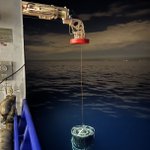
ALT A large mechanical arm lowers down a CTD rosette into calm waters. There is a spotlight highlighting the side of the ship, the arm and rosette. Dim skies are pictured in the distance.

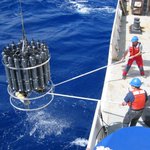
ALT Scientists retrieve a rosette of CTDs, tubes with sensors that measure ocean chemistry and other conditions above calm waters. WCOA 2026 will deploy this tool along the West Coast to assess the status of ocean acidification and its impacts on marine resources. Credit: NOAA

ALT NOAA Ship Henry B. Bigelow traverses calm seas as seen from above.


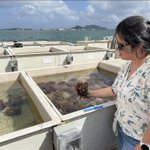
ALT Dr. Melissa Melendez inspects a coral in a holding tank next to the ocean in Hawai'i. She leads a project investigating the effects and risks of ocean alkalinity enhancement on coral reefs and coralline algae. Credit: Gabby Kitch, NOAA Ocean Acidification Program

ALT NOAA's Ocean Acidification Program announces seven new projects funded to advance ocean acidification education and outreach in underserved and Indigenous communities. This flyer shows school children running with announcement below. Find more about this work in the link in the post. Credit: NOAA OAP


ALT A healthy coral reef as seen through the water in the foreground and a mountainous coastline above the water in the background


ALT Join us this week as we approach #OADayOfAction on 8-January to recognized the global average ocean pH of 8.1, almost 30% more acidic than 250 years ago. This picture depicts a bleached coral skeleton behind a banner for highlights that ocean acidification is a global issue that requires local actions. Credit: The Ocean Foundation

ALT Schematic showing different approaches to carbon dioxide removal on land and in the ocean. Credit: Sarah Battle

ALT Corals behind icon and title "Mission: Iconic Reefs." Credit: National Marine Sanctuary Foundation


ALT Jaime Palter (left) and Fiona Teevan-Kamwahi (right) from the University of Rhode Island collect water samples in a small boat at their field site in Winnapaug Pond, RI. They will measure water chemistry from waters where terrestrial liming occurs nearby and shellfish reside. Credit: Gabby Kitch, NOAA Ocean Acidification Program