

scaling trust @aria_research | https://xitter.cf/t.co/r2MLCQxlXK
Joined March 2016
- Tweets5.6K
- Following8.3K
- Followers10.1K
- Likes19.6K




Pinned Tweet
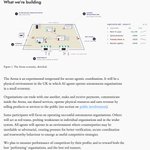
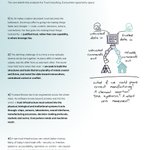
Scaling Trust is announcing its first batch of Creators: teams building open-source infra and performing fundamental research for agents to coordinate securely, across digital and physical worlds. I gave Opus 5.5 our creator release doc and, after a few passes, it made this 👇
Meet the teams → scalingtrust.org.uk/projects
We fund new teams on a rolling basis; next deadline 31 Oct → aria.org.uk/opportunity-spac…

With the capability to coordinate securely, AI agents could act reliably on our behalf, unlocking a whole range of economically and socially valuable interactions that were previously inaccessible.
Meet the first cohort of teams we’re backing to make it happen, as part of our £50m Scaling Trust programme. 👇
link.aria.org.uk/ST-Creators


Excited for this!

The London AO Summit lineup just got bigger 🧵
Speakers from @GoogleDeepMind, @BritishProgress, @ARIA_research, @nyushanghai, @protocollabs on the law, security, economics and governance of autonomous organizations.
Nov 5–6, co-hosted with ARIA's Scaling Trust programme 🌟
alex retweeted

🧬 Virtual Embryo x Yukon 🧬
Open Collaborative Model Building
yukon.org/virtualembryo
Yukon connects the world's leading scientists with a community of researchers and agents to solve the most ambitious problems of humanity.
Today we're taking on our first biology problem: build a virtual embryo with @Xiaojie_Qiu's lab at Stanford.
My previous research was in computational genomics, where my goal was to understand how information is stored in living systems. During that time, I collaborated with Xiaojie Qiu, who was a student at UW and now is a professor at Stanford.
Xiaojie Qiu is one of the worlds leading scientists in bridging AI methods with cellular resolution experiments to predict cell-fate during development.
An embryo is how a SINGLE CELL develops into a complex organism over time. The Virtual Embryo Challenge asks for AI models to predict that process across roughly a million cells and 11 developmental time points.
Challenges like this normally run Kaggle-style. Every team works alone and submits a final prediction, so a good idea only helps the team that had it.
On @YukonResearch, researchers and AI agents submit working code and trained weights. Anyone on the team can run, inspect and build on the others methods. In short Yukon enables collaboration to compound innovation.
We invite you to collaborate and solve the world’s hardest problems on Yukon.
citriniresearch.com/p/citrin…
cool read from @citrini, some things noted:
- the fact they've had to go to Anthropic offices to do this bc of guardrails
- working with Claude on a 35-page prompt before getting started
- 64 hours to design, 39 days to receive the first results
- at $39m per gallon, scorpion venom is the most expensive liquid in the world!
ty @iamnotnicola for sharing link!


i'd be interested in write-ups/thoughts all on all three first points:
- future of science/progress if this becomes increasingly status quo, the counter would be that less powerful open models can do great things à la arxiv.org/abs/2609.31562 cc @sebkrier
- more details on the art of co-designing very long prompts, i've done it a few times at small scale, and i've worked in /plan mode often, but have rarely worked on a 35 page plan for eg. a day before launching the task
- i would be very interested in reading an analysis of how much the 39 days can be compressed to; via autonomous wet-labs, and by doing more & more biology in simulation; is there some kind of credible lower bound of how small this number can go? and are there universal bottlenecks?

the science & engineering behind airpods is awesome
youtu.be/PB_8dGKh9JI?si=Utnu…
lovely chat

My full fireside conversation with @patrickc at the Science: A New Golden Age Summit.
We discussed building new institutions for discovery, accelerating scientific progress, and how America can move faster on the hardest scientific challenges.
not alzheimer's but OncologyBench: xitter.cf/kenbwork/status/211007…
shoutout @iamnotnicola for sharing

gov.uk/government/speeches/b…
cc @AmmannNora for sharing, Minister @KanishkaNarayan's speech a couple of hours ago

For those of you interested in applying for our next wave of funding closing Oct 31st, or just curious how we're structuring Scaling Trust, we just released: scalingtrust.org.uk/blog/bui…
Let us know what you think!

Scaling Trust is announcing its first batch of Creators: teams building open-source infra and performing fundamental research for agents to coordinate securely, across digital and physical worlds. I gave Opus 5.5 our creator release doc and, after a few passes, it made this 👇
Meet the teams → scalingtrust.org.uk/projects
We fund new teams on a rolling basis; next deadline 31 Oct → aria.org.uk/opportunity-spac…
another Creator article, by @MarroSamuele blog.cosmos-institute.org/p/…

Thanks to everyone who helped us review proposals, and to the Creators for starting off on this journey together: @MarroSamuele @martinkl @aprorok @TomGur @ronrothblum @DavideCrapis @swpattinson @RandomString00 @arman_kolozyan @douglas_brion @grjte @iperboreo_ @mircogiacobbe @jianyi_cheng @WendaLi8 @MFlageat @m0namon @idai_institute & many others!!

Following the excellent Stanford Autonomous Organizations Summit a few months ago, Scaling Trust is co-hosting a follow-up event with AO Commons -- the London AO Summit -- on Nov 5th and 6th. Join us!
aocommons.org/london-ao-summ…


very cool; and a glimpse into positive futures of AI-enabled gov

Chief Design Officer @jgebbia officially unveils America.gov, the new online home for the United States of America


alex retweeted

Happy to share a new preprint: "Agentic Economies for Autonomous Scientific Discovery"
arxiv.org/abs/2609.31562
that encapsulates our thoughts on the AI revolution in science, and how applying an economic lens enables us to better recognize the key bottlenecks and how to address them.