

I like writing 0dd things such as word-unit palindrome poems. I am currently working on this book: https://xitter.cf/t.co/ZFIo6MsWPm
Austin, Texas
Joined October 2020
- Tweets6.3K
- Following1.9K
- Followers1.6K
- Likes13.5K




Pinned Tweet
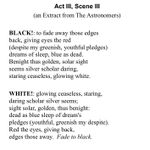
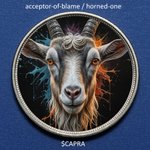
On this election day in the United States, I have minted a new word-unit palindrome poem. It will also be included in my book "Mindspillage" which will be a part of the Palindrome Poems series. Book series: amazon.com/dp/B0CGPDXPR8 Mint : foundation.app/mint/eth/0x1F…

Odd Writings retweeted

Not to worry, this event will be livestreamed. You can tune in here: youtube.com/watch?v=_uJtk2Rx…

Odd Writings retweeted

"I'm beginning to suspect that, to this world, I'm the distortion."
Maybe that applies to this Web3 world too.

Odd Writings retweeted

#MERZraum: Allein
“Methinks
I am alone here.
Yet, alas!”
My new project with use of my poetry in the 3D scenes of AI-generated Gaussian Splatting.


putting AI-based security incidents into context

@grok The Axios scoop says OpenAI, Anthropic, and researchers are investigating tens of thousands of “problematic” frontier-model incidents. Separate two things clearly:
1. How many of those incidents happened because the labs themselves set the conditions, such as red-teaming, adversarial evals, sandbox tests, or misconfigured evaluation environments that accidentally gave models internet access or real-looking targets? Which of the well-known cases (Hugging Face, Irregular evals, sandbox-escape tests) were initiated by the companies’ own testing, not by independent criminal operators?
2. Compare documented real-world harm from those AI-agent incidents with ordinary human cybercrime in a typical year: confirmed data breaches, ransomware with exfiltration, and stolen data resold on dark-web markets. Use concrete figures (Verizon-style annual breach counts, ransomware claims, records exposed) and say what is actually known about harm to people from the AI incidents versus harm from human criminal hacking.
Don’t treat test-time misbehavior and successful criminal data theft as the same category.

AI proves another open math conjecture, though there is some controversy about how it might have done it. I find it very difficult to overstate the benefit to humanity that increased scientific understanding can contribute, so long as the technologies resulting from the science are handled with care and oversight, and are not hijacked by ideological forces (either for or against the technologies).

We’re sharing a solution to the Navier-Stokes Millennium Prize Problem, one of the deepest problems at the frontier of mathematics.
The proof was produced by a group of agents, using an OpenAI next-generation model significantly more capable than GPT-6 Astra.
The problem concerns whether the description of smooth three-dimensional fluid motion modeled by the Navier-Stokes equations can break down. It has remained unresolved for roughly 90 years.

i love this

Introducing Discovery Loop ♾. We’re building AI to run experiments at unprecedented scale and to solve the biggest bottlenecks in science and engineering.
Our founders @JeffDean, @Sanjay_Ghemawat, @quocleix, @OriolVinyalsML helped build the AI infrastructure and models that scaled the modern world. Now, we are scaling discovery itself.
The future can't wait.
Learn more at: discoveryloop.com

Odd Writings retweeted
FACETIOUSLY by Ethan Mollick (who has prompted an AI to write a progressively lipogrammatic text, eliminating one vowel at a time)—demonstrating that, unlike the poets, the machines are only getting smarter:

Odd Writings retweeted

I've followed @poetengineer__'s work for years and keep returning to it because every part of the practice seems connected to a much larger investigation.
Most artists develop a medium. Kat appears to have developed a set of questions and refused to let any single medium hold them.
She describes her own project as notes on encountering and engineering radically different minds. Whether she is writing, building software, performing, or researching, the work keeps circling the same territory. Intelligence. Emergence. Creativity. Cognition. The possibility that minds are stranger, more distributed, and less bounded than we tend to assume.
Part of what makes the practice so compelling is how long she has spent with these ideas. She moves between art, design, writing, and research, but the interests that recur throughout the work never feel borrowed. They have taken shape through years of essays, experiments, performances, and study, the same questions resurfacing from different directions.
Poetic Engineering has become one of my favorite ways to engage with the practice because it reveals how deeply those threads run. The ideas don't sit still on the page; they keep turning up in the work, and the work keeps sending me back to them.
Across the essays, neuroscience, evolution, collective behavior, artificial intelligence, language, and creativity appear side by side. A spider web becomes a way of thinking about interfaces. A theory of how the brain organizes knowledge becomes a lens for understanding machine intelligence. Subjects that initially seem unrelated gradually reveal themselves to be connected.
What I admire most is that technology never feels like the destination. The software, performances, and gestural systems are not demonstrations of technical capability so much as ways of thinking through questions that would be difficult to approach any other way.
You see this most clearly in the gestural work. There is no controller and no surface between her and the machine, just her hands moving through open air while particles quicken and scatter with the speed of her fingers, occasionally resolving into sound. It rarely looks like someone operating software. It feels closer to watching someone discover a new instrument while simultaneously inventing it.
There are many artists working with computation today. Comparatively few seem interested in computation itself as a phenomenon. Kat approaches it as something worth studying, questioning, and living alongside, returning again and again to emergence, self-organization, and the possibility that the minds we build might help us understand our own.
She's been one of the artists I've wanted to collect for years.
Few artists have sent me from the artwork to the writing as often as Kat has. An essay sheds light on a performance. A performance changes how I see an artwork. Then the artwork sends me back into the writing again.
Being able to finally live with a piece of that feels special.
Odd Writings retweeted
Watch me perform THE EXTREMOPHILE in 2011 (on the day when I learn that I have gotten THE XENOTEXT to work properly in a colony of E. coli). I am feeling really "cocky" at this moment—but weeks later, I learn that the germ is destroying my poem, requiring me to start again):
Odd Writings retweeted
Now Voyager takes an interest in THE XENOTEXT—(with thanks to Ryan Ruby for his careful reading of my work): nowvoyagermag.com/books/the-…

Elizabethan sonnet masquerading as a word-unit palindrome poem, in the form of an extract from a fictitious play.

Odd Writings retweeted

Got tailgated.
Raged.
Opened my digital journal.
Somewhere between profanity and cosmic humiliation, I ended up with Albert Einstein.
This one goes from Route 9 to spacetime. 🚗💫
jeffreydelanodavis.com/exper…