

📬 Every Friday we send a free email round-up of the week’s most important stories in the business of football. https://teapawt.org/t.co/XiZs68ou5H
Joined January 2019
- Tweets2.7K
- Following278
- Followers4K
- Likes75







Red Star Belgrade (@crvenazvezdafk) have to sell players every year to compete.
The club cannot generate enough from Serbia’s domestic market to fund a team expected to win the league and secure European football each season.
Since Marko Marin became technical director in 2022, Red Star have sold young players, including teenagers, to clubs in Europe’s biggest leagues for significant fees.
According to Marin, player sales made up around 60 per cent of the club’s budget last season, with European competition contributing 15–20 per cent.
That reliance leaves little protection if either source of income falls short.
“It’s a paradox,” he says: Red Star have to sell every year and still build a better team.
Read the article via the link in the comments 👇


There has never been more M&A activity in Spanish football than in 2026.
With 13 transactions completed so far this year, Spain has already surpassed its previous annual record, becoming Europe’s most active football M&A market for the first time.
The attraction for investors lies partly in the relationship between valuations, sporting potential and financial risk.
Oakwell Sports Advisory, which has worked on deals in Spain this year, had identified the market’s potential before becoming active there.
“When we’ve done that assessment on the various leagues, Spain was coming out top on, if not all of them, a lot of them,” says Nic Hamer, associate at Oakwell.
A domestic broadcast renewal worth nine per cent more than the previous cycle, tighter financial controls and ongoing stadium investment are strengthening that proposition.
With several factors now aligning, Spain is emerging as an increasingly attractive destination for investors seeking opportunities in European football.
Read the article via the link in the comments 👇


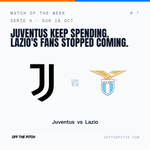
Tomorrow, @juventusfc and @OfficialSSLazio meet in @SerieA.
Lazio's supporters have been boycotting the Stadio Olimpico since January, in protest of owner Claudio Lotito. The ground was 40% full across 2025/26, against 62% the season before.
@FIGC - The Italien Football Federation held the club's summer too. Wages and transfer costs take more of Lazio's income than its rules allow, so Lazio could sign only once they had sold. They sold €43m and spent €22m.
Juventus are going the other way. They have not made a profit since 2016/17, nine seasons ago, and they are still buying: €165m this summer, with net debt at €357m


Five years ago, @SV07Elversberg played in Germany’s fourth tier. Now, they play in the @Bundesliga_DE.
They have raised the bar again this season, beating @bayer04_en and @borussia Mönchengladbach in their first top-flight games.
Elversberg's finances and facilities underline the scale of those performances.
In 2025, they reported wages of €14.6 million. The Bundesliga average in 2024/25 was €118 million.
And while their new rivals boast elite training facilities, Elversberg’s players prepare for training sessions in modular containers.
But their ambitions extend far beyond their surroundings. Now, the task for the underdog club is to show how far they can go among Germany’s elite.
Technical director Josef Welzmüller reveals the club’s grand ambitions and the culture driving them in the full article.
Read it via the link in the comments 👇


Tonight, @Feyenoord and @Como_1907 meet in the @ChampionsLeague, having reached the competition through two very different strategies.
Como were in Serie D in 2017 and are now in the Champions League for the first time in their history.
In 2024/25, their first season back in @SerieA, their Indonesian owners supported a wage bill bigger than the club’s total revenue, while Como lost €105 million.
Feyenoord finished second in the @eredivisie to qualify, funded their squad through player sales and have made a profit for three years running. The Champions League generated €64.8 million for them in 2024/25, more than Como’s total revenue that season.


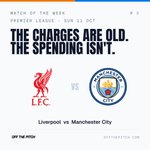
On Sunday, Liverpool FC and Manchester City FC meet in @premierleague.
Last month an independent commission upheld 114 of the 115 charges against @ManCity, covering the seasons from 2009/10 to 2017/18. Central to the ruling is that sponsors paid only part of their fees while the owner covered the rest, in what the commission called sham contracts used to inflate the club’s revenue. City have appealed, and no sanction has been decided yet.
This summer they spent €526 million on transfers.
City won three league titles in those nine seasons. @LFC finished second to them in 2013/14, trailing by two points. If that title is taken away, Liverpool are next in line.
Take a look at the two clubs’ financial head-to-head below.


For @DarekMioduski, the debate over how European football distributes its money should not stop with @UEFA's club competition revenues.
The European Football Clubs (@EFC_Football) vice-chairman and @LegiaWarszawa owner believes the @Conf_League as been a success in creating more opportunities for clubs from smaller and medium-sized markets.
But as European Leagues pushes for changes to UEFA’s distribution model, Mioduski argues that domestic leagues should also look at their own revenues.
Europe’s biggest leagues generate significant media income from smaller football markets without sharing those revenues with the local football ecosystem, he argues.
His proposal: leagues should consider building a solidarity system of their own.
It adds another dimension to the debate over how money and opportunity should be distributed across European football.
Read the full interview via the link in the comments.


Nantes takeover in doubt amid uncertainty over investor financing
French media reported last week that @FCNantes owner Waldemar Kita had signed a preliminary agreement with Paulo Tavares and Phenix Sports Invest over a €100 million takeover.
However, Off The Pitch can reveal that the deal remains far from completion.
According to a source closely linked to a potential takeover, who spoke anonymously because they are not authorised to comment publicly, several red flags surround the deal.
Most significantly, the investment group have yet to submit proof of funding or any other documents demonstrating liquidity.
The source described this as highly unusual for a deal at this stage and said they would be “very surprised” if it were completed at €100 million for French club who were relegated from Ligue 1 last season.
Instead, they believe a price between €25 million and €40 million would be more realistic, although there is considerable uncertainty over whether the investor group can raise even that amount.
Opposition against the proposed takeover has also arrived as the club's Social and Economic Committee voted against the proposition yesterday.
One of the leading lenders behind Europe’s stadium boom has raised concerns over the financing of new projects.
More than 50 stadium projects across Europe have featured in Off The Pitch’s daily newsletter in 2026 alone, as clubs chase new revenue through multi-purpose venues.
But at the World Football Summit in Madrid, JPMorgan executives Tim Self and Mike Carlson raised concerns over growing interest rates and whether stadiums can be delivered on time and on budget.
Higher financing costs mean lenders can provide less debt, which can force projects to become cheaper and ultimately limit the revenue-generating potential that drove the project in the first place.
Read the full article via the link in the comments to learn about the risks, the financing options and why clubs are still pushing ahead.


Transfer financing volumes reached new highs this summer, without the lender whose arrival drove pricing to record lows last year.
@premierleague clubs committed €4.1 billion this summer, fuelling unprecedented demand for transfer financing.
But Citibank, whose arrival pushed margins on the most attractive deals to record lows and triggered a price war among lenders last year, was largely absent from the transfer receivables market - contrary to expectations after its high-profile entry.
Demand for financing was higher than ever, with some buying clubs even pushing their first payments into future seasons, underlining the growing need for immediate liquidity to fund transfer activity. And with Citibank far less active than expected, more of that business flowed especially to other large, established lenders.
As clubs become more dependent on quick access to credit, both the availability and cost of that liquidity are becoming increasingly important to football’s financial landscape.
Read the full article in the comments.


Tomorrow night, Sevilla FC and FC Barcelona meet in @LaLiga.
In 2020/21, @FCBarcelona lost €481 million and @SevillaFC had just won the Europa League. Barcelona have since worked their way back to almost breaking even. Sevilla won the Europa League again, but have not made a profit in any season since.
Take a look at the financial head-to-head below.


Tonight, Real Sociedad and AFC Bournemouth meet in the @EuropaLeague, with squads put together in opposite ways.
@afcbournemouth, in Europe for the first time in their history, buy players and sell them on. Last season they sold five for €287M after paying €106M for them, and finished sixth.
@RealSociedad look closer to home. Half their squad value came through their own academy. Bournemouth's academy players are worth less than €1M.
#FootballFinance


The Belgian Pro League continues its partnership with Off The Pitch, keeping relevant staff at every club in its two top men's divisions and the top tier of women's football on the daily newsletter for another season.
"Every morning our clubs get a clear picture of what is happening across the football industry, and through the week they get analysis and interviews they would not find elsewhere. That has become part of how our clubs stay informed, and continuing the agreement was an easy decision," says Lorin Parys, CEO of the Pro League.
The @ProLeagueBE is one of a growing group of leagues that have chosen to cover every club centrally rather than leave it to clubs to arrange individually. The English Football League (@EFL), the @Bundesliga_DE, the Danish league, the Scottish league and the Polish @_Ekstraklasa_ have taken the same approach, and together these agreements now cover more than 100 clubs.
"We have decision-makers at more than 300 clubs reading us every morning. Those clubs start the day knowing what is happening in the industry. The ones that do not are finding out later, second hand, and usually when it already affects them. More leagues should be making that a central decision rather than leaving each club to sort it out on its own," says @MadsMeisner, co-founder of Off The Pitch.

The Swiss Football League has become more competitive domestically. But the European decline of its biggest clubs is creating a financial problem.
The country has slipped to 16th in @UEFA's coefficient ranking, leaving it with four European qualifying places.
The @News_SFL CEO Claudius Schäfer wants a return to the top 15 and five European spots, and sees @FCBasel1893 and @BSC_YB as central to that recovery.
“We are struggling because the two best teams, Basel and Young Boys, were struggling in the last years.”
The consequences extend beyond coefficient points. For a league where player trading is a major source of income, weaker European performances can translate into lower transfer values and less capacity to reinvest.
When comparing the squad values of Switzerland’s leading clubs with their peers in similarly ranked European leagues, the Swiss sides are trailing behind.
For Schäfer, part of the response is to examine what the league can control: its competition format and youth development.
Find the full interview in the comments.

