

Evolutionary Paleobiologist | Collection Manager | Co-founder of @TimeScavengers | opinions are my own | she/her
- Tweets5.7K
- Following1.5K
- Followers1.5K
- Likes15.2K




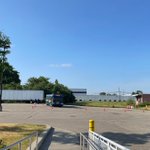







ALT A large blue bus practicing with orange cones in a large parking lot.


ALT Open parking lot view from a loading dock ramp of a blue Michigan bus training with orange cones on the ground. Another bus is situated to the left of frame.


ALT Ten images of representative paracrinoid specimens. Top row from left: Columbocystis typica (USNM 93407b); Malocystites murchisoni (CMC-P50436); Bistomiacystis globosa (OU 8937). Middle left (two images): Implicaticystis symmetricus (SUI39522). Two images, centre and centre bottom row: Canadocystis tennesseensis (USNM 241272). Centre right and bottom left: Oklahomacystis tribrachiatus (OU8150). Bottom left (two images): Globulocystites cristatus (OU 8154). Scale bar represents 10 mm.

ALT Left graphic is a logo built of circles. Outermost circle is traditional knowledge which encompasses all other fields. Ceramic pot, tree, crystal, arrowhead, trilobite, and skull graphics indicate natural history disciplines. Natural History is at the center of the Venn diagram. Text on right: Calling all educators! You're invited to the Natural History Education DemoCamp. June 26-27. Find the registration and more information: https://spnhc.org/education-democamp/


ALT Foreground: John posing for a picture in front of a mountain, holding a DSLR camera in his hands. The text at the top is "Travel with Tilly: John O. Ajayi, Organic Geochemist." The caption at the bottom is: "John is an organic geochemist who combines techniques from different disciplines, like geology and chemistry, to reconstruct the history of Earth’s environment."


ALT Artist rendition of an Ordovician ocean. John Sibbick/Science Photo Library.

ALT Background: wooden table or drawer with small black specimen boxes with fossils in them. Each box also has a label. Sarah's figure is at the bottom of the image to indicate scale. Foreground: Meet the Museum: The University of Nebraska State Museum. Sarah discusses her first time visiting the crinoid and proboscidean collections at the University of Nebraska State Museum. Time Scavengers logo of a monochromatic blastoid on the top of the text box with two graphics of fossils underneath.


ALT Background image: Rocks surrounding a small pool of water that has blue green water. Around this there is some sandy soil and greenery. Foreground: Geology of Oregon, Part One: Hot Springs. Sarah discusses her visit to the Terwilliger hot springs in Willamette National Forest near Eugene, Oregon. Read more to learn about how hot springs work and what organisms live in them! Time Scavengers logo of a monochromatic blastoid and foraminifera.

ALT Close up image of a fossil echinoderm that requires a hardground to attach to. Image shows variety of skeletal plates and anatomical structures of this animal. Text contains University of Michigan Museum of Paleontology - CC-BY-NC 4.0.

ALT Foreground: Image of a person smiling, with their arm holding onto the side of a ship. A sunset is in the background of the image. Background: view of sunbeams streaming through light blue ocean waters. Text reads: Rinu is a second year PhD student whose research focuses on understanding past monsoon patterns using marine fossils. 'My advice to anyone working in science will be to enjoy the process'

ALT Upper and lower right images: shelled creatures facing left and right with other organisms encrusting on the shell. In the center is the University of Michigan Museum of Paleontology seal. Left side text: Fossil Friday: Paraspirifer bownockeri; Middle Devonian (419-359 Mya); spiriferid brachiopod; common in the Silica Shale Fm. of Ohio & Michigan, USA; often host many encrusting organisms. Time Scavengers logo of monochromatic blastoid.

ALT Fossil echinoderm in center of image with five-ish-ness very clear. Specimen is orangish / sepia tone. Title is Timorblastus coronatus, UMMP 60767. Scale bar is a white rectangle and is 1 mm. University of Michigan Museum of Paleontology CC-BY-NC 4.0 listed at the bottom.