

I work in the corporate world by day, left of centre by night. Also a Father and husband, headphone junkie, foodie, traveller and technologist.
UK
Joined May 2020
- Tweets1.2K
- Following717
- Followers69
- Likes1.2K



A Corporate slave retweeted

RIP
Previous Lebanese war, in 2006, Kahneman wrote to me:
"I am struggling to find the words to express my feelings. Affection for people who specialize in killing at a distance is not one of them. I will find it difficult to look you in the eye, but I hope we can meet soon."
A Corporate slave retweeted

Hello. New podcast just dropped: #208 - The moral evolution of a philosopher. (Peter Singer)
We talk about some popular ethical positions that you'll run into these days if you're having discussions. Hopefully it helps when trying to understand your own positions better as well as others. The episode is done through examining the moral evolution of philosopher Peter Singer throughout each stage of his career. I think his journey mirrors a journey that a lot of people have. Regardless you'll probably find plenty to agree with and disagree with in this one. Hope you love it and have a great rest of your week!
philosophizethis.org
We talk about Emotivism. R.M. Hare's Prescriptivism. Nozick's Experience Machine. Some thought experiments from Derek Parfit. Henry Sidgwick and Objectivist Hedonistic Utilitarianism.

A Corporate slave retweeted

Victoria Park, London, 1978.
100,000 Skins, Punks, Jews, Blacks, Muslims, Mixed , English, Irish, Hindus, Sikhs, Scots, Welsh, Working Class, Middle Class, trade unionists, unified against racists and fascists.
Gen Z, it's your turn.

A Corporate slave retweeted

Oh it’s started already, « WE’D HAVE WON IF SOUTHGATE HAD PLAYED WATKINS FROM THE START AND PALMER WIDE AND PICKFORD UP FRONT AND FODEN ON THE ROOF, SOUTHGATE MUST BE JAILED BECAUSE I WANTED TO WIN AND IT’S NOT FAIR. »
A Corporate slave retweeted

Extraordinary story potentially brewing in Bassetlaw, where, according to the exit poll, Reform UK have a good chance of winning. Their candidate is 86 year-old Frank Ward, father of the newly elected Labour mayor of the East Midlands, Claire Ward. 😮
Neo liberalism failures is driving the extreme right into power across the West. Add in climate change and the next few years seem very challenging indeed
5
A Corporate slave retweeted

couldn’t make this up, beyond satire
This post is from an account that no longer exists. Learn more

A Corporate slave retweeted
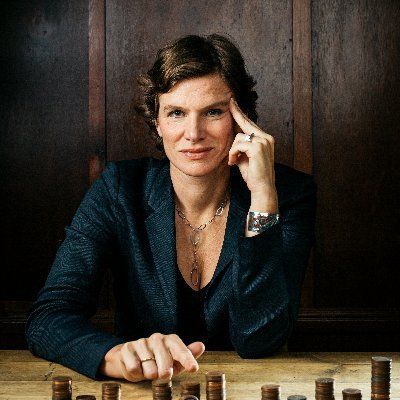
Jon Stewart’s excellent (comic) discussion of why media should do their job holding people to account with evidence on the present and past instead of useless speculations about the future.




A Corporate slave retweeted

Powerful and important article by Guy Singh-Watson: theguardian.com/commentisfre…
A Corporate slave retweeted
New podcast episode! #201. Today we talk about a potential way to find meaning for someone prone to postmodern subjectivity. We talk about surplus enjoyment. Zizek’s alcohol use, or lack thereof. Resisting surface level consumption. Love and failure. Hope you love it, and I hope you have a great week.
philosophizethis.org

A Corporate slave retweeted

MONEY AND HOW IT GETS THAT WAY
A few months ago, during my hospital stay, a new friend gifted me two bottles of wine. I had known this friend was rich, and so when he left, Isabella and I looked up at value of the wine. Each bottle, it turned out, was worth almost a thousand pounds. Once we had seen this, it made it impossible for us to drink the wine; Isabella suggested that we might sell them, but in the end we shoved them in the bottom of a cupboard, waiting for what we called a ‘special occasion.’ God knows what that would be, unless I were to win the Nobel Prize, which is unlikely. We wondered whether a thousand-pound bottle of wine would taste much different to the usual Tesco shit we drink.
As people do these days, we then looked up our friend’s net worth on the internet, and were amazed to see he had half-a-billion quid. Inevitably, it changed our view of him, and we wondered if it were better not to look people up on the internet. Our opinion of him had been corrupted. We were now in awe of him. After all, to have accumulated such riches, he must have some special qualities. He is charming and clever, but then so are a lot of people, and we found ourselves trying to X-ray him.
We have another friend, known for his acuity, taste and intelligence, who now lives in a run-down block, and exists entirely off his government pension. Would we consider him a loser, since he has been unable to secure a reasonable standard of living in his old age, while our other friend has tens of millions? Financial status can have a profound effect on everyday relationships; you may find yourself imbuing your wealthy friend’s most inane statements with a deep wisdom.
My father was a minor civil servant in the Pakistan embassy, and he a bought our small house in a London suburb, Bromley, with help from my mother’s parents, who lived with us. We were always strapped for cash, but we had a decent standard of living; with a car, central heating, a washing machine, a large garden, two kids and a dog. Sometimes my mum took what she called, “little jobs” working in a factory or a shoe shop or painting toy soldiers. But a job was a job then, it wasn’t a career or a profession, and it would never make you rich. As an immigrant from India, Dad liked to tell us every day that we should appreciate what was in front of us; free education, dentistry, healthcare, and property was relatively cheap. The U.K was one of the richest countries in the world because of the empire. The welfare state meant we didn’t want for much, it was really a socialistic society.
When I left home in the mid-seventies for London - the city of the Sex Pistols and The Clash – it was rough and poor, and I lived, for ten years, in a housing co-op flat with a rent of twenty quid a week, next to four railway lines. We furnished the place with stuff we found in skips and jumble sales. We bought our clothes, books, and albums from second hand shops. We stole cutlery from restaurants, from which we would often abscond after eating, and we shoplifted. My school friends and the people I moved with all worked in the arts as photographers, musicians, actors, writers, and so on. We loved our work, but it never occurred to any of us that we would become wealthy or even make much of a living out of what we did. Money was never an animating force; it wasn’t in our lexicon, it was never a possibility.
What motivated us was our work and sex. We were a liberated generation, free, we believed, of hundreds of years of hiding and repression, and we wanted to fuck more than we coveted material things. The only rich people we were aware of were aristocrats who had inherited property and land. Then there were the nouveau rich models, actors and popstars, but even they had trouble holding on to money. They were admired for their creativity and originality rather than their ability to get rich. Growing up, even if you were to come into some money, there was only so much you could buy. There wasn’t so much “stuff” around.
For my three sons, things are different. According to Carlo, everything now has been monetised, a process that began with Thatcher and Reagan. Unlike me, my sons are privately educated. But being privately educated in my day meant becoming a doctor, or a bank manager, or an officer in the army. Prestigious jobs, but they wouldn’t make you rich. Some of my sons’ school friends have gone into the financial sector, and have earned huge amounts of money. Globalisation has reached it’s apex with the internet, where people can buy and sell things around the globe, and young content creators can become rich and famous quickly. Envy is central to our culture. People want to create envy in others, and we enjoy being envious, fantasies can be stimulating. Others teach you what to desire.
Being disabled, if you are to live well, is expensive. By necessity, I have become an employer of physios and carers, and builders to renovate my house. Some of the people I met at hospital who weren’t able to pay for these things have been shunted, some at a young age, into care homes, where they will receive little support. Disablement reconfigures your relation to money; you don’t want what you wanted before, and the new things you do want, or rather need, are wildly expensive. But if you don’t have them, your quality-of-life collapses.
For now, in my cupboard, I have two expensive bottles of wine, which I should drink before it is too late, but it will be through a straw.
