Peldom Zhang (@PeldomZ) header
Peldom Zhang (@PeldomZ) profile picture

4th-year PhD candidate at #WestlakeUniversity majored in Computational Structural Biology, Protein designer, AIDD/CADD developer, Tech savvy, Amateur astronomer

Hangzhou, China
Joined May 2020
Photo by Peldom Zhang (@PeldomZ)Photo by Peldom Zhang (@PeldomZ)Photo by Peldom Zhang (@PeldomZ)Photo by Peldom Zhang (@PeldomZ)Photo by Peldom Zhang (@PeldomZ)Photo by Peldom Zhang (@PeldomZ)Photo by Peldom Zhang (@PeldomZ)Photo by Peldom Zhang (@PeldomZ)Photo by Peldom Zhang (@PeldomZ)Photo by Peldom Zhang (@PeldomZ)
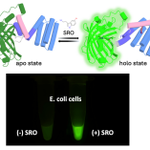
Design de novo sensor from scratch? Introducing ProBuilder: A backbone generative algorithm for designing ligand-induced binders. We report de novo sensors for serotonin, zinc, etc. A versatile framework for future sensor development. preprint👇 biorxiv.org/content/10.64898…
5
37
1
176
10,290
Evolving the tool, discovering new potential. We developed the latest version of ProBuilder to design binders for ions and small molecules
1
3
385
Latest publication of our lab! 🎉 Amantadine-controlled protein-designed assembly, as an ideal amantadine-inducible gene switch for therapeutic applications
De novo design of small molecule–regulated protein oligomers @ScienceMagazine 1. Researchers have developed a novel computational method to design protein oligomers regulated by small molecules, focusing on the FDA-approved drug amantadine. This approach enables precise control over protein assembly, offering potential applications in biotechnology and cell-based therapies. 2. The study introduces a "docking-while-binding" technique that simultaneously optimizes protein-protein and protein-ligand interactions. This method allows for the de novo creation of ligand binding pockets directly at the protein-protein interface, enabling the design of homotrimers, heterodimers, and heterotrimers. 3. The designed amantadine-regulated protein oligomers were validated in cellular and animal models, demonstrating their ability to control gene expression, protein localization, and reversible condensate formation. Notably, the system achieved noninvasive, dose-dependent control of gene expression in mice through oral administration of amantadine. 4. The compact size of the protein components (~65 amino acids) and the use of an orally bioavailable small molecule make this system highly suitable for translational applications. The approach opens new avenues for developing next-generation chemically inducible protein assembly tools. 5. The study highlights the potential for further optimization using deep learning models and the incorporation of additional ligands to enhance sensitivity. This work represents a significant advancement in the field of chemogenetics, providing a versatile toolkit for manipulating complex biological processes. 📜Paper: science.org/doi/10.1126/scie… #ProteinDesign #Chemogenetics #SyntheticBiology #Biotechnology #GeneRegulation
1
1
3
300
"One method to design them all, and in the darkness bind them." Introducing our lab's new unified #proteindesign method HalluDesign! This lab-proven single approach lets us design universal binders (incl. antibodies/peptides) for: DNA/protein/ion/ligand
1
3
275
A breakthrough in glioblastoma treatment! Qihan Jin of our lab, de novo designed binders on CAR-T cells to target tumor antigens. Remarkable results in mice, clinical trials are underway. #proteindesign #glioblastoma #CART @lxcaosd nature.com/articles/s41551-0…
1
4
411
Witness of the history in protein design!
BREAKING NEWS The Royal Swedish Academy of Sciences has decided to award the 2024 #NobelPrize in Chemistry with one half to David Baker “for computational protein design” and the other half jointly to Demis Hassabis and John M. Jumper “for protein structure prediction.”
2
212
Congratulations to @WChentong ! Latest work of our lab
New backbone diffusion model Proteus from Longxing Cao’s group, displaying better backbone self consistency than RFdiff and Chroma. Some experimental evidence presented as well. biorxiv.org/content/early/20…
5
490
Pipeline updated! ProteinMPNN is great helpful in providing better design after FastDesign, thank all contributors!
ProteinMPNN paper: science.org/doi/10.1126/scie… Github: github.com/dauparas/ProteinM… Colab notebook: github.com/dauparas/ProteinM… HuggingFace notebook: huggingface.co/spaces/simond… Hallucinating symmetric protein assemblies paper: science.org/doi/10.1126/scie… Thanks to all collaborators!
2
Great helpful for verification of de novo designed metal binding protein😀
Accurate prediction of transition metal ion location via deep learning biorxiv.org/cgi/content/shor… #biorxiv_biophys
1
1
Today I finally met Prof. Yigong Shi, and officially joined #WestlakeUniversity as a 1st year PhD student, so excited to start my next journey!
12
15 years we have waited, and totally worth it.🎉🎉
It's here–the deepest, sharpest infrared view of the universe to date: Webb's First Deep Field. Previewed by @POTUS on July 11, it shows galaxies once invisible to us. The full set of @NASAWebb's first full-color images & data will be revealed July 12: nasa.gov/webbfirstimages
4
Long have we waited. I have been longing for Webb since I was a little boy. So excited to see next generation of Space Telescope🎉
We have LIFTOFF of the @NASAWebb Space Telescope! At 7:20am ET (12:20 UTC), the beginning of a new, exciting decade of science climbed to the sky. Webb’s mission to #UnfoldTheUniverse will change our understanding of space as we know it.
2
Impressive! Another big step forward👍
AlphaFill: enriching the AlphaFold models with ligands and co-factors biorxiv.org/cgi/content/shor… #bioRxiv
1
Directed Evolution model developed by me and Kelvin Li, it’s still under development and now adequate for few targets, source code will be available in a few months.
Congrats to team CSU_China from Central South University on their project “Peplib Generator: In silico directed evolution and de novo generation for peptide drugs powered by AlphaFold2”. They generated multiple peptide binders for a target binding pocket. arxiv.idec.io/article/000004…
1
4
Many thanks to @iDEC2021 for providing an initiative for developing programs for DE, and we’ll move further on protein design.
3
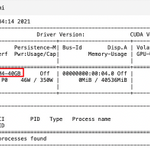
Allocated with a Nvidia A100, Colab Pro+ is pretty awesome!😁 Comparing with Tesla T4 on Colab Pro, I can predict a peptide structure using turbo-AlphaFold2 now in 0.73s from previous 1.63s.
4
Impressive idea! So the process of folding and PPI are similar. Still we need is a next gen complex predictor.
AlphaFold2 can also predict heterocomplexes. All you have to do is input the two sequences you want to predict and connect them with a long linker.
1