Assistant Professor, @corvinus_econ. Applied theory: price theory, human capital, family, and political economy. @interintellect_ member. RT=/=endorsement.
Budapest, Magyarország
Joined September 2015
- Tweets14.1K
- Following1.6K
- Followers1.3K
- Likes10.6K





'Sense and Sensibility' (Georgia Oakley): Much better than I expected. The message is not exactly Austen's. Austen clearly intended to show, being surrounded by a cult of sensibility, that on the whole, "sense">"sensibility". This film has a somewhat different take. I guess that's OK, but I would have liked a more "counter-cultural", anti-sentimentalist, "anti-authenticity" take (for a film that I think takes this approach, see 'The Queen', 2006 I think?). But even so, there are a couple of dialogues where Elinor's approach does come out very articulate and triumphant. There is one truly egregious scene (but I won't do any spoilers). The pictures are beautiful, and so is, as usual, Daisy Edgar-Jones, who is a good Elinor. Hugh Laurie would have been a better Mr. Palmer even at his current age, let alone how good he was in 1995. In fact, Mr. Palmer is nearly erased in this verion (bad!). I will end on a positive note: the film does contain one of the greatest Austen lines, said by the unsympathetic Fanny Dashwood: “If you observe, people always live for ever when there is an annuity to be paid them.” There is some empirical evidence for this, actually!
1
138
Yes to this.

"Academic" twitter at its worst.
A terrific young scholar, Rustam Jamilov, is mocked based on an abstract for a paper that is not listed on his website and does not appear to be available on the internet. The attacks are combination of puerile insults and a misunderstanding of the nature of economic theory.
The paper itself appears to be a standard theoretical exercise: construct an environment and explore the equilibrium implications for outcomes of interest. The fact that the author was interested in understanding conditions under which particular DEI policies can be efficient is no different than setting up an environment to understand when standard meritocratic matching rules are efficient (which is something I have done as well as many others). It is to his credit that he attempted to explore efficiency conditions for a policy that is assumed to induce inefficiencies. This paper correctly explores inequality/efficiency co-movements as equilibrium phenomena in response to different policies. As for the claim that the conclusions trivially follow from the assumptions, without knowing the model structure, it is impossible to know to what extent this is a reasonable criticism. Note that, by implication of what is stated in the abstract, substitutability would reverse the result.
2
239
.@tylercowen introduced the term "state capacity libertarianism". I view the pragmatic blend of classical liberalism espoused by Richard Posner as a major antecedent to it.
65
Peter Isztin 🌐🏛 retweeted
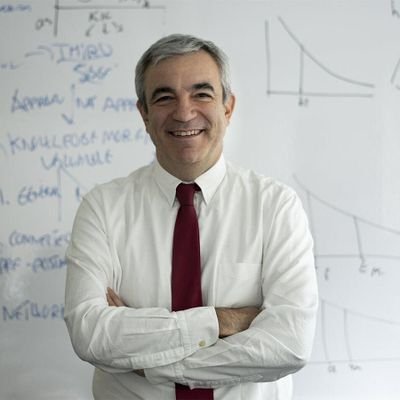
RIP Richard Posner, one of the most brilliant, hard-working and intellectually honest people I have ever met. He wrote his own opinions rather than leaving them to his clerks, and he spent seven years as chief judge of the Seventh Circuit. Even so, he wrote around 3,300 judicial opinions, about 90 a year, roughly three times the output of a typical appellate judge. On top of that he wrote some 50 books (between 40 and 66, depending on what counts) and between 300 and 500 articles, depending on what counts as an article.
I had the luck to work with him. After 9/11 he was talking to the FBI director Robert Mueller about whether to split the FBI, as many other countries do, into a crime-fighting agency and an intelligence-gathering one, following the notorious intelligence failures of the 2000s, most notably 9/11. He asked me to help, and I was honored to work with him for a year or so. We wrote a report for him and published some of our ideas in the Journal of Economic Perspectives in 2005 and later to them in the WSJ.
What I remember best is his dedication and discipline. Whenever I sent him a document, whether on Saturday evening or Sunday morning, he returned it within a few hours with dozens of insightful comments. He was generous, optimistic, sharp and honest. He wanted the truth. He was a believer in free markets, but he concluded that the 2008 crisis was a market failure and wrote a book saying so: A Failure of Capitalism: The Crisis of ‘08 and the Descent Into Depression (2009).
With his friend Gary Becker, he embodied best what @UChicago calls the life of the mind: a life consacrated to taking ideas seriously. RIP.

We mourn the loss of Senior Lecturer Richard Allen Posner, a longtime #UChicagoLaw scholar, former federal appellate judge, and pioneer in the field of law and economics, who died on November 10.
Read more about his legacy: buff.ly/e3c3WdL

ALT In loving memory of Richard Posner 1939-2026
Peter Isztin 🌐🏛 retweeted

A tribute to the astonishing Richard Posner, the most influential legal thinker of our era.
bloomberg.com/amp/view/artic…


RIP Richard Posner. To me, the greatest of the great legal minds, and among the greats of economics.
1
135
Peter Isztin 🌐🏛 retweeted
Hayek For Our Time - just out NOW from @CambridgeUP @CUP_Elements @tylercowen @lsolum @PeterBoettke
cambridge.org/core/elements/…

Peter Isztin 🌐🏛 retweeted
I went to see last night “The Standard of Living”, the play now in London about John Maynard Keynes’s life, and I really enjoyed it. It captures well his life and the times. However I disagree with an important part of the economics, a confusion that is behind the entire economic policy debate in Britain and the rest of Europe today: the confusion between Beveridge and Keynes.
The report by William Beveridge (an LSE economist and ex-director) led to an enormous expansion of the welfare state. That is often confused (also in the play) with Keynes’s views, as if the large and continuously growing post-war welfare state had anything to do with demand stabilization.
Keynesian demand management is what Andrés Velasco (also an LSE prof), as Finance Minister in Chile, did during the 2000s copper boom: he ran surpluses of 7% of GDP and more in 2006 and 2007 and put the money in a stabilization fund abroad. This was 12% of GDP by the end of 2008, when public debt was 4% of GDP. Public sector workers burned his effigy in Santiago asking for it to be spent. When the copper price collapsed along with the global economy, this surplus allowed him to introduce a massive stimulus package worth 2.8% of GDP, larger relative to the economy than the American one, which allowed him to stabilize Chile’s economy through the financial crisis. “Being a Keynesian means being one in both parts of the cycle,” he told The Economist. Today, very few governments are doing this. It is “whatever it takes” in crisis, and “welfare is untouchable” when the crisis finishes. This leads to a continuous ratchet up of spending that strangles any productive activity.
Keynes was in favour of using debt to stimulate demand, but under no circumnstances to finance permanent welfare spending. He wanted an ordinary budget for the state and then a capital budget that would be used for the demand management and that would be invested only in productive capacity. While Beveridge was about social redistribution, an issue of social policy, Keynes was about stabilization. The play and a lot of commentary seem to conflate both things and use demand management to justify permanent structural social policy.
I think this is pretty instructive for what’s happening in the UK and in the rest of Europe today. There is a widespread confusion that it’s neoliberalism which is hollowing out the state, when in fact the UK’s public spending burden is at around 45.6% of GDP this year, and the OBR expects it to stay around 45% for ten years running, the longest sustained period of spending this high since the Second World War; EU governments spend 49.5% of GDP (Eurostat, 2025). Outside wartime and the pandemic, the state has never been this large for this long. Neither neoliberalism nor austerity is at fault for the lack of investment.
Governments cannot hit the fiscal rules without touching the triple lock, and other welfare entitlements (free transport for the over 60s here in London!) that most MPs consider untouchable. What gets cut all the time to make the numbers add up is infrastructure, energy, grids, R&D, innovation, etc. The UK’s gross fixed capital formation is at 18-19% of GDP, which is the lowest in the G7, and the general government investment is also behind the OECD average.
The debate misunderstands the risk of pension sustainability. It is not that at some point in the future pensions become unsustainable. It is that today, their relentless growth eliminates the space to invest in infrastructure, innovation and the rest. Sadly, no party dares to make this argument. And even economists who defend the entrepreneurial or innovative state cannot bring themselves to state the obvious: that there is a huge opportunity cost in having one of every 5 new cars sold in the UK being paid by the state as a disability benefit, or in having free transport for all over 60 year olds.

"Complexity economist" here means cannot think in terms of models about social problems, so his thinking remains hopelessly muddled forever.

Economist @ProfSteveKeen has a provocative take on neoclassical economics: “The most dangerous cult is the one that doesn’t realize it’s a cult.”
Read more: evonomics.com/why-economists…
Full video in comments.
Peter Isztin 🌐🏛 retweeted
This (only for nerds!) thread on mechanism design and price theory is wonderful, the reason to be in Twitter.
And there is nothing to disagree on the technical/mathematical l argument, the argument is transparent and entirely correct of course. But one thing missing (or not sufficiently emphasized) in my view, is that that the "price theory side" of the spectrum always emphasizes (see e.g. Kevin Murphy 's summer camp lecture) is that game theory based micro is concerned first with theoretical rigour and interactions between small groups of players. Most useful e.g. to think about price war between Anthropic and OpenAI. By contrast , price theory is much more concerned with the empirical application and the market context in which the interaction takes place.
Think about the Rosen-Roback model: people and firms sort across locations, and wages/rents adjust to capitalize amenities and productivity differences until utility equalizes. The model generates sharp empirical predictions about the wage-rent gradients, migration, the incidence of local shocks, all driven (as @alz_zyd_ says) by preferences, technologies, and competition.
( For those curious, here is a nice intro to the model by illustrious price theorist Ed Glaeser youtube.com/live/zMmXo1nHetE…)

Also see Lester Telser's work on the core (cooperative game theory) more generally. @caseybmulligan and his coauthors also make use of core theory in 'Chicago Price Theory' (good thread btw)

I like my theory Beckerian nber.org/papers/w35970?fbcli…

6
177
Such a great paper

Small cash transfers to Zambian college students cut sexual activity, increased condom use, and improved partner quality, from @BauNatalie, @femonomics, and Bryce Millett Steinberg nber.org/papers/w35940

78