

The Potomac Officers Club is a membership organization focused on executives within Government and the Government Contracting Community.
Tysons Corner, VA
Joined July 2014
- Tweets16.4K
- Following2.1K
- Followers1.2K
- Likes604


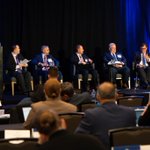

Carrie Thompson, Deputy Assistant Administrator for the Office of Intelligence Programs at the @DEAHQ closed out #POCIntel2026 by sharing how DEA is adapting its intelligence operations to address threats spanning transnational cartels, illicit drug supply chains, & more.


Introduced by Jim Edwards, Chief Growth Officer at @SOSi_HQ, Thompson highlighted the need to connect data across intelligence and counterterrorism communities as agencies contend with increasingly complex threats and growing volumes of information.
"Technology should amplify human judgement, not replace accountability."
During his keynote, @FBI Operations Director for the National Security Branch, Matthew Fodor, emphasized that intelligence is valuable when it drives action.


As terrorism, cyber threats, espionage and transnational crime converge, organizations need faster ways to turn data into usable insight, white maintining accountability, trust and human judgement.
He shared that the strongest advantage isn't a single technology or institution but the combination of innovation, information and trusted partnerships. Thank you, Dan Payne, Chief Security Officer of @MANTECH, for introducing Fodor!
#POCIntel2026
“Technology only matters when it changes what we do.”
During his keynote speech, the @NSAGov's Deputy Director Tim Kosiba discussed how frontier and agentic AI are reshaping national security and creating new opportunities and risks for government and industry.


For GovCons, he called for earlier collaboration with government, faster testing of new technologies & security built into systems from the start. Speed and security, he emphasized, must be built together.
Thank you to Samuel Unger, Account Executive, National Security Programs, @SAPNS2, for introducing Kosiba.
#POCIntel2026
AI is rapidly reshaping intelligence operations, but speed, trust and responsible implementation remain critical to mission success. AI must be built around the mission and the people using it. If operators cannot trust the technology in the field, adoption will not follow.

Panelists also highlighted the need for stronger collaboration across the intelligence community and with industry to advance AI adoption, infrastructure and workforce capabilities.

Thank you Richard Durand at @ATT, for moderating, and to Erik Blasch @AFOSR, Martin Holmes, PSM, David Shedd, Former Director (Acting) at @DefenseIntel, Paul Bence @Kpler, and Dr. Adele Merritt, CRO at ARLIS for sharing their insights! #POCIntel2026
AI is moving from a passive assistant to an autonomous agent, compressing the time organizations have to detect and respond to cyber threats.

Gurpartap Sandhoo of the @SemperCitiusSDA highlighted 3 areas where AI can help manage the growing volume and velocity of threats: distinguishing real missile threats from debris & sensor noise, orchestrating proliferated satellite architectures, & managing spacecraft operations.
Moderated by Rebecca King of @MANTECH, the discussion highlighted the need to close the gap between AI capabilities and operational readiness while defining where human oversight remains essential.
#POCIntel2026
Open-source intelligence is giving counterintelligence professionals a new way to see what adversaries are looking for.

Jarrod Gack, @SAICinc, further explored how organizations can combine publicly available and commercially acquired data with AI, automation and other analytical tools to identify emerging indicators and better focus limited counterintelligence resources.
Thank you to Jason Lee, @Moodys, for moderating. This panel underscored the scale and breadth of open-source information and its growing role in helping counterintelligence professionals identify threats and better understand adversary activity. #POCIntel2026
