

📚 Books & Ideas that challenge your thinking 🎧 Listen to summaries on your favourite platform. https://xitter.cf/t.co/X5Eo1SXinx
Joined February 2025
- Tweets1.1K
- Following29
- Followers528
- Likes379


Pinned Tweet
The year was 1889. Paris, a city draped in gaslight and simmering with change, was about to witness a human experiment unlike any before. Not in a laboratory, but in the most public of arenas: the Exposition Universelle.
Gustave Eiffel, a man of cold steel and colder calculation, was not just building a tower; he was building a monument to human audacity. Yet, few knew the true nature of his gamble. It wasn't merely engineering. It was a brutal test of collective will against the specter of the impossible.
Imagine the air, thick with the skepticism of a thousand Parisian whispers. "Eiffel's Folly," they called it. A grotesque metal skeleton, an affront to the city's artistic soul. The initial renders were met with outright derision. Pamphlets circulated, penned by leading artists and intellectuals, denouncing the "truly tragic street lamp." The pressure was immense. Not just financial, but psychological. Eiffel was not battling gravity alone; he was wrestling with the entrenched human fear of the radically new.
His strategy was simple, yet profound: absolute, unflinching transparency. Every single bolt, every riveted plate, every girder was fabricated with a meticulous precision rarely seen. And more importantly, he brought the public into the process. Daily, Parisians watched the colossus rise, inch by arduous inch. They saw the workers, tiny figures against the vastness, performing feats of coordination that bordered on ballet. Eiffel understood a primal truth: when people are allowed to witness the messy, arduous birth of something extraordinary, their resistance often transforms into reluctant admiration.
The early stages were a symphony of resistance. The wind, a constant, howling antagonist. The dizzying heights, a daily defiance of human instinct. But Eiffel, a figure of stoic resolve, never wavered. He understood that true influence isn't about persuasion; it's about demonstration. It's about building, with every fiber of your being, the very thing others claim is impossible, right before their disbelieving eyes.
He didn't argue. He built. He didn't defend. He presented. Each day, the silhouette against the sky grew, a silent, undeniable argument against every doubt. The constant, visible progress became a form of psychological warfare. The public, initially hostile, found their certainty eroded by the sheer, relentless presence of the emerging structure. They saw the raw effort, the risk, the profound human commitment embedded in every beam.
The true insight here is this: the greatest obstacles to human achievement are rarely external. They are almost always woven into the fabric of collective disbelief, the comfortable adherence to what has been. Eiffel didn't just build a tower; he dismantled a mindset. He proved that the most effective way to overcome ingrained skepticism is not through logical argument or persuasive rhetoric, but through the relentless, visible, undeniable act of creation itself.
By the time the Exposition opened, the scoffers were silent. The crowds, once derisive, now gazed up in awe. The Tower, once a symbol of folly, had become an emblem of human potential. It stood not just as an engineering marvel, but as a monument to the power of unwavering vision in the face of universal doubt.
The next time you face a wall of skepticism, ask yourself:
Are you trying to convince them with words, or are you building the undeniable truth before their eyes? The world doesn't need more rhetoric. It needs more demonstration.

People listen to you with their ears, but they trust you with their eyes.
What you do when you think no one is watching is the foundation of your character.
Ambition without execution is a daydream.
Execution without ambition is a nightmare.
You need the vision and the engine. One without the other is a path to ruin.
Pain is a signal.
Discomfort is a signal.
Boredom is a signal.
Learn to decode the messages your mind sends you in moments of stress. This is where the map to your growth is hidden.
The man who is a slave to his moods will never be the master of his moments. Emotional discipline is the prerequisite for a life of intention.
The world does not reward you for having a good idea. It rewards you for surviving the brutal, soul-crushing process of making that idea a reality.
Your mind is a garden. If you do not consciously plant flowers, weeds will grow with absolute certainty. The "weeds" are the default inputs of the world: outrage, distraction, and fear.
If you cannot be trusted with a secret, you cannot be trusted with power. Discretion is not about hiding the truth; it's about respecting its weight.
Stop celebrating the start.
The world is full of starters. The rewards are reserved for the finishers. Discipline is the bridge between a great idea and a real-world result.
The cost of a bad habit is paid twice: Once in the present moment's weakness, and again in the future you sacrifice for it. The discipline you enact today is the freedom you inherit tomorrow.
The highest discipline is not forcing yourself to do what you hate. It is architecting a life where you get to do what you love, and then applying a relentless work ethic to it.
Some people are calm because they’ve healed.
Others are calm because they’ve given up.
It looks the same on the outside.
But one leads to power.
The other leads to nothing.
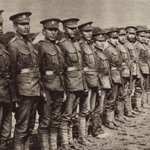
They were called the Lost Generation.
Not because they vanished — but because they returned from World War I utterly changed.
The term began with American writers like Hemingway, Fitzgerald, and Stein.
But it soon came to describe an entire generation of young people — mostly in Europe and the U.S. —
who came of age during the Great War and never recovered from it.
They were teenagers when they were sent into the trenches.
By the time they came home, they’d seen death, gas attacks, and suffering at a scale never imagined.
And society had no roadmap for their return.
So instead of processing the trauma,
the world chose silence.
Not healing.
Not reflection.
But a collective attempt to forget.
What followed was the Roaring Twenties —
a decade of wild parties, jazz clubs, new fashion, fast living.
To outsiders, it looked like celebration.
To historians, it looks like escape.
They weren’t chasing pleasure.
They were running from pain.
Even the art of the era — literature, film, design — often carried a hollow core.
A mocking tone.
A refusal to dwell.
But here’s what history reveals:
When a society doesn’t face its wounds,
it repeats them.
Because that pain didn’t vanish —
it festered.
The Lost Generation helped usher in a decade of instability, global depression,
and eventually, another world war.
Not because they were weak.
But because they were never allowed to heal.
The lesson isn’t just historical —
It’s psychological.
The mind doesn’t heal by forgetting.
It heals by integrating.
True resilience is not the ability to move on.
It’s the courage to remember without being broken.
And unless we face what we’ve buried,
we will always be ruled by what we refuse to confront

The year is 1912.
The Titanic didn’t just hit an iceberg.
It collided with the illusion of invincibility.
It was more than a maritime disaster,
It was a brutal, public autopsy of a mindset:
The belief that progress had made us untouchable.
⸻
The Titanic was built not just to sail, but to symbolise triumph.
A floating palace of Edwardian ambition —
Opulent, engineered, and declared “unsinkable”
Not by facts, but by faith.
A faith in technology.
In human ingenuity.
In the idea that nature had finally been tamed.
And so they brought too few lifeboats.
Not by mistake — but by mindset.
⸻
The ship wasn’t designed for disaster
Because failure wasn’t part of the blueprint.
This wasn’t just a shipwreck —
It was the death of a delusion.
A reminder that even our grandest creations
Are subject to forces beyond control.
⸻
The lesson?
True vulnerability is not weakness.
It’s reality.
The Titanic didn’t sink because it was poorly built.
It sank because its creators didn’t account for their own limitations.
They built a perfect system.
Then refused to imagine it could break.
⸻
We do this too.
We build lives, businesses, relationships —
With the same unspoken assumption:
“That iceberg? It won’t find me.”
We dismiss lifeboats,
Contingency plans, emergency exits, uncomfortable truths,
Because our narrative feels “unsinkable.”
⸻
But life doesn’t honour declarations.
The strongest beliefs,
The boldest designs,
The most confident predictions
Are always vulnerable to the unseen, the ignored, the unplanned.
⸻
True power isn’t invincibility.
It’s humility.
It’s resilience.
It’s knowing you can’t control everything,
So you prepare for what you hope never comes.
⸻
Ask yourself:
What “unsinkable” belief are you clinging to?
What contingency are you avoiding
Because your ego tells you it won’t be needed?
The highest falls come from those who forget they can fall at all.
