

Cautiously pessimistic UCL old age psychiatrist | Improving dementia + mental health treatment | Real critical psychiatry | Layla | Clinical academic training
London and Norfolk
Joined November 2015
- Tweets54.5K
- Following2.8K
- Followers18.5K
- Likes168K







Step 1 of the Holm Oak windbreak hedge, planned for the north boundary of our Norfolk garden. I’ll let you know in 10 years how it is going…


Robert Howard retweeted

That was the reason why we had FIVE times the death rate of East Asian states, prolonged national lockdowns and care homes devastated. They suppressed their epidemics and stopped the spread within 4-6 weeks using strong public health measures of find, test, trace, isolate and support. bmj.com/content/389/bmj-2024…

Robert Howard retweeted

Approximately 12,000 Palestinian Arabs volunteered to serve in the British military during WWII, fighting in mixed or separate units alongside Jewish volunteers from Mandate Palestine across Europe, North Africa, Greece, and France.

First visit to Girona for the Sociedad Espanola de Psicogeriatria Congress. Beautiful city and great to meet up with old friends here. My wife sends this, reporting that the dog has abandoned hopefully waiting for my return.

With the amazing @kathy_y_liu. Can we combine what we know about the neuropathology and neurochemistry of agitation in Alzheimer’s disease with the relational/attachment aspects of unmet emotional need that lead to this most distressing symptom?
alz-journals.onlinelibrary.w…
New paper - just how should the data on new Alzheimer’s treatments be communicated to clinicians, patients and families? People affected by dementia are so vulnerable to exaggerated claims of benefits, so please, let’s be evidenced in our promises.
alz-journals.onlinelibrary.w…
Robert Howard retweeted

Just crossed over 4 million reads on my blog. Many thanks to the readers over all of these years. Just a reminder that it is free, does not require a subscription or disclosure, has no sponsors, and it not-for-profit.
real-psychiatry.blogspot.com…

Robert Howard retweeted

mental health: “Parity of esteem with physical healthcare remains a distant prospect.”
theguardian.com/commentisfre…

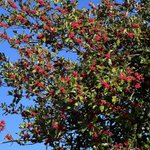
It’s only just stopped being Summer but the hedgerows already have their Christmas stock on display.

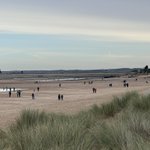
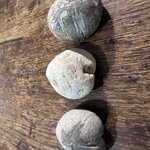
Morning on Happisburgh beach, where I’d love to find a Stone Age flint axe, but had to make do with this beautiful ammonite.

Robert Howard retweeted
NHS England mental health services review: what has it found and what does it recommend?
A good summary of the core recommendations. The need for more research to fill key knowledge gaps will I hope be one of the key recommendations of this review.
theguardian.com/society/2026…

Robert Howard retweeted

Exclusive: “The instant I saw the picture my mouth fell open and my pulse began to race.” So wrote James Watson in The Double Helix: A Personal Account of the Discovery of the Structure of DNA, his controversial account of how he and Francis Crick deciphered the structure of DNA in 1953.
The image, now known as photograph 51, showed an elegant, symmetrical pattern of spots formed by x-rays diffracted from strands of DNA—the fingerprint of the molecule's helical structure.
Rosalind Franklin, an x-ray crystallographer, had produced the image in the spring of 1952. But Watson's 1968 book, amid other slights and sexist language directed at Franklin, implied the flash of insight was his alone.
Popular accounts still routinely suggest Franklin missed the significance of the photo. She never had a chance to challenge Watson's dismissive narrative; she died of cancer in 1958, a decade before his memoir was released and became a bestseller.
But a new analysis of her notes on another x-ray image, which she made just days earlier using the same DNA sample, offers a firm rebuttal.
Learn more: scim.ag/4hNj7KB @NewsfromScience

ALT How did Rosalind Franklin miss the helix in her iconic DNA image? She didn’t New analysis refutes James Watson’s claim he was first to recognize significance of famed photograph 51
Robert Howard retweeted

US spy-tech company Palantir hired former Labour deputy leader @tom_watson to defend its £330m NHS contract.
Last week, as patients and health workers protested in 40+ places across England, he went on X to attack them. 🧵...
bmj.com/content/395/bmj-2026…

Robert Howard retweeted

It’s good that she said this
But incredibly sad for our country that she needed to

Kemi Badenoch draws a dividing line with Reform UK - and in particular Suella Braverman - giving a passionate defence of being a black Briton.
“I don’t want to explain to my son when we’re watching our brilliant England team play football, that some people don’t think our black players are English.
I remember back in the day when Ian Wright and John Barnes were playing. Nobody was questioning whether they were English. We certainly didn’t have sitting MPs questioning whether they were English.
“We must not let these people take us backwards. That is not the country we are. Reform MPs are openly questioning people’s identity. They are not like us. We are not like them. We are different. We are the Conservative Party.
"Back in the day, we were the ones who put out a poster saying ‘Labour says he’s black, we say he’s British’. We are still that same party. I don’t know whether you’ve noticed, but I am black. I am British. I am proud of my country. I’m proud of our history, all that we have done, and all that we will do in the world."
Robert Howard retweeted

If the many many decent Israelis are wondering why their country is sinking in global popularity, it’s because of people like this… 👇

Robert Howard retweeted

The pseudoscientific side of #antipsychiatry: promoting the narrative that antidepressants cause homicides. Peter Gøtzsche spearheads this fraud, and Mad in America obligingly follows suit.

On the Mad in America #podcast we are joined by forensic scientist Selma Eikelenboom. Her work is in examining the possible association between DNA variants, psychoactive medication, and acts of violence. #SSRI #antidepressants
buff.ly/JgQZR3W

Robert Howard retweeted

Inside the Lyme Disease industrial complex...where flawed tests sold by private companies lead to questionable diagnoses and harmful treatments
My latest for @unherd with @mgtmccartney

Robert Howard retweeted

Quick primer on Optogenetics. The Nobel Prize in Physiology or Medicine 2026 is awarded for optogenetics:
Peter Hegemann and Georg Nagel discovered a remarkable protein, channelrhodopsin, in a single-celled alga.
Karl Deisseroth transformed the protein into a light-controlled switch for nerve cells.

