Think
Gulf of Mexico
Joined April 2020
- Tweets34.7K
- Following981
- Followers856
- Likes13.5K






David Thornbridge retweeted

Also they don't mind a dictator as long as it's their guy, not some other guy.

David Thornbridge retweeted

"What made Jesus such an effective leader?"😂🤣😂
After 2,000 years ONLY 2.3 Billion out of 8.3 Billion people on this planet believe that "Gospel Jesus" is God!
Supposedly, Jesus commanded a "Great Commission" telling his followers to spread the "Good News" to ALL nations.
And yet, what an incredible FAILURE that is! OR...WOULD BE for a supposed "miracle-working" "God"... IF ... it actually existed!
The "Great Commission" is the GREAT FAIL!!!!!
If Jesus was real, what an incredible LOSER he would be!

David Thornbridge retweeted
It's easier to list who they don't hate. I was going to say, old white men, then realized they even hate some of us.😉😜🤣🤣


David Thornbridge retweeted
Christmas was a pagan holiday usurped by Christians to get pagans to convert, The Christmas celebrated in the U.S. is a secular holiday FAaaaar more pagan than Christian!
𝗖𝗛𝗥𝗜𝗦𝗧𝗠𝗔𝗦 𝗪𝗔𝗦 𝗔 𝗣𝗔𝗚𝗔𝗡 𝗛𝗢𝗟𝗜𝗗𝗔𝗬 𝗨𝗦𝗨𝗥𝗣𝗘𝗗 𝗕𝗬 𝗥𝗢𝗠𝗔𝗡 𝗖𝗛𝗥𝗜𝗦𝗧𝗜𝗔𝗡𝗦. 𝗧𝗛𝗘 𝗖𝗛𝗥𝗜𝗦𝗧𝗠𝗔𝗦 𝗖𝗘𝗟𝗘𝗕𝗥𝗔𝗧𝗘𝗗 𝗜𝗡 𝗧𝗛𝗘 𝗨.𝗦. 𝗜𝗦 𝗔 𝗦𝗘𝗖𝗨𝗟𝗔𝗥 𝗛𝗢𝗟𝗜𝗗𝗔𝗬 𝗙𝗔𝗥 𝗠𝗢𝗥𝗘 𝗣𝗔𝗚𝗔𝗡 𝗧𝗛𝗔𝗡 𝗖𝗛𝗥𝗜𝗦𝗧𝗜𝗔𝗡!
𝟭. 𝗝𝗘𝗦𝗨𝗦 𝗪𝗔𝗦 𝗡𝗢𝗧 𝗞𝗡𝗢𝗪𝗡 𝗧𝗢 𝗛𝗔𝗩𝗘 𝗕𝗘𝗘𝗡 𝗕𝗢𝗥𝗡 𝗢𝗡 𝗗𝗘𝗖𝗘𝗠𝗕𝗘𝗥 𝟮𝟱
• The Bible provides 𝗡𝗢 𝗗𝗔𝗧𝗘 for the birth of Jesus.
• Early Christians did not universally celebrate Jesus' birth.
• The earliest surviving clear evidence of Christmas being celebrated on December 25 in Rome dates to 𝟯𝟯𝟲 𝗖𝗘, approximately three centuries after Jesus' purported death.
𝟮. 𝗣𝗔𝗚𝗔𝗡𝗦 𝗖𝗘𝗟𝗘𝗕𝗥𝗔𝗧𝗘𝗗 𝗪𝗜𝗡𝗧𝗘𝗥 𝗙𝗘𝗦𝗧𝗜𝗩𝗔𝗟𝗦 𝗟𝗢𝗡𝗚 𝗕𝗘𝗙𝗢𝗥𝗘 𝗖𝗛𝗥𝗜𝗦𝗧𝗠𝗔𝗦
• 𝗦𝗮𝘁𝘂𝗿𝗻𝗮𝗹𝗶𝗮: A Roman festival featuring feasting, gift-giving, drinking and merriment.
• 𝗦𝗼𝗹 𝗜𝗻𝘃𝗶𝗰𝘁𝘂𝘀: The celebration of the Unconquered Sun, associated with December 25 in late Roman antiquity.
• 𝗬𝘂𝗹𝗲: A pre-Christian Germanic midwinter celebration involving feasting and seasonal traditions.
• 𝗪𝗶𝗻𝘁𝗲𝗿 𝘀𝗼𝗹𝘀𝘁𝗶𝗰𝗲 𝗰𝗲𝗹𝗲𝗯𝗿𝗮𝘁𝗶𝗼𝗻𝘀 𝗲𝘅𝗶𝘀𝘁𝗲𝗱 𝗹𝗼𝗻𝗴 𝗯𝗲𝗳𝗼𝗿𝗲 𝗖𝗵𝗿𝗶𝘀𝘁𝗶𝗮𝗻𝗶𝘁𝘆.
𝟯. 𝗖𝗛𝗥𝗜𝗦𝗧𝗜𝗔𝗡𝗜𝗧𝗬 𝗔𝗕𝗦𝗢𝗥𝗕𝗘𝗗 𝗣𝗔𝗚𝗔𝗡 𝗧𝗥𝗔𝗗𝗜𝗧𝗜𝗢𝗡𝗦
As Christianity spread throughout the Roman Empire and Europe, it frequently 𝗮𝗯𝘀𝗼𝗿𝗯𝗲𝗱, 𝗮𝗱𝗮𝗽𝘁𝗲𝗱 𝗮𝗻𝗱 𝗖𝗵𝗿𝗶𝘀𝘁𝗶𝗮𝗻𝗶𝘇𝗲𝗱 𝗲𝘅𝗶𝘀𝘁𝗶𝗻𝗴 𝗰𝘂𝗹𝘁𝘂𝗿𝗮𝗹 𝗮𝗻𝗱 𝗿𝗲𝗹𝗶𝗴𝗶𝗼𝘂𝘀 𝘁𝗿𝗮𝗱𝗶𝘁𝗶𝗼𝗻𝘀.
Retaining familiar celebrations could 𝗺𝗮𝗸𝗲 𝗰𝗼𝗻𝘃𝗲𝗿𝘀𝗶𝗼𝗻 𝘁𝗼 𝗖𝗵𝗿𝗶𝘀𝘁𝗶𝗮𝗻𝗶𝘁𝘆 𝗺𝗼𝗿𝗲 𝗰𝘂𝗹𝘁𝘂𝗿𝗮𝗹𝗹𝘆 𝗮𝗰𝗰𝗲𝗽𝘁𝗮𝗯𝗹𝗲.
However, historians debate whether December 25 was deliberately selected to replace a pagan festival or resulted from early Christian theological calculations.
𝟰. 𝗠𝗔𝗡𝗬 𝗖𝗛𝗥𝗜𝗦𝗧𝗠𝗔𝗦 𝗧𝗥𝗔𝗗𝗜𝗧𝗜𝗢𝗡𝗦 𝗔𝗥𝗘 𝗡𝗢𝗡-𝗕𝗜𝗕𝗟𝗜𝗖𝗔𝗟
• 𝗖𝗵𝗿𝗶𝘀𝘁𝗺𝗮𝘀 𝘁𝗿𝗲𝗲𝘀 — European evergreen traditions and later German customs.
• 𝗠𝗶𝘀𝘁𝗹𝗲𝘁𝗼𝗲 — Pre-Christian European traditions.
• 𝗬𝘂𝗹𝗲 𝗹𝗼𝗴𝘀 — European midwinter customs.
• 𝗛𝗼𝗹𝗹𝘆 𝗮𝗻𝗱 𝗲𝘃𝗲𝗿𝗴𝗿𝗲𝗲𝗻 𝗱𝗲𝗰𝗼𝗿𝗮𝘁𝗶𝗼𝗻𝘀 — Ancient seasonal symbolism.
• 𝗚𝗶𝗳𝘁-𝗴𝗶𝘃𝗶𝗻𝗴 — Practiced in pagan Roman festivals as well as later Christian traditions.
• 𝗙𝗲𝗮𝘀𝘁𝗶𝗻𝗴 𝗮𝗻𝗱 𝗱𝗿𝗶𝗻𝗸𝗶𝗻𝗴 — Traditional winter celebrations predating Christianity.
𝟱. 𝗠𝗢𝗗𝗘𝗥𝗡 𝗔𝗠𝗘𝗥𝗜𝗖𝗔𝗡 𝗖𝗛𝗥𝗜𝗦𝗧𝗠𝗔𝗦 𝗜𝗦 𝗟𝗔𝗥𝗚𝗘𝗟𝗬 𝗦𝗘𝗖𝗨𝗟𝗔𝗥
Consider the dominant cultural and commercial features of Christmas in America:
• 𝗦𝗮𝗻𝘁𝗮 𝗖𝗹𝗮𝘂𝘀, 𝗲𝗹𝘃𝗲𝘀 𝗮𝗻𝗱 𝗳𝗹𝘆𝗶𝗻𝗴 𝗿𝗲𝗶𝗻𝗱𝗲𝗲𝗿.
• 𝗖𝗵𝗿𝗶𝘀𝘁𝗺𝗮𝘀 𝘁𝗿𝗲𝗲𝘀, 𝗹𝗶𝗴𝗵𝘁𝘀 𝗮𝗻𝗱 𝗱𝗲𝗰𝗼𝗿𝗮𝘁𝗶𝗼𝗻𝘀.
• 𝗘𝘅𝗰𝗵𝗮𝗻𝗴𝗶𝗻𝗴 𝗽𝗿𝗲𝘀𝗲𝗻𝘁𝘀.
• 𝗖𝗵𝗿𝗶𝘀𝘁𝗺𝗮𝘀 𝘀𝗵𝗼𝗽𝗽𝗶𝗻𝗴 𝗮𝗻𝗱 𝗰𝗼𝗺𝗺𝗲𝗿𝗰𝗶𝗮𝗹 𝗮𝗱𝘃𝗲𝗿𝘁𝗶𝘀𝗶𝗻𝗴.
• 𝗙𝗮𝗺𝗶𝗹𝘆 𝗴𝗮𝘁𝗵𝗲𝗿𝗶𝗻𝗴𝘀, 𝗽𝗮𝗿𝘁𝗶𝗲𝘀 𝗮𝗻𝗱 𝗳𝗲𝗮𝘀𝘁𝗶𝗻𝗴.
• 𝗖𝗵𝗿𝗶𝘀𝘁𝗺𝗮𝘀 𝗺𝗼𝘃𝗶𝗲𝘀 𝗮𝗻𝗱 𝘀𝗲𝗰𝘂𝗹𝗮𝗿 𝗖𝗵𝗿𝗶𝘀𝘁𝗺𝗮𝘀 𝗺𝘂𝘀𝗶𝗰.
𝗡𝗢𝗡𝗘 𝗢𝗙 𝗧𝗛𝗘𝗦𝗘 𝗥𝗘𝗤𝗨𝗜𝗥𝗘 𝗕𝗘𝗟𝗜𝗘𝗙 𝗜𝗡 𝗝𝗘𝗦𝗨𝗦, 𝗚𝗢𝗗 𝗢𝗥 𝗖𝗛𝗥𝗜𝗦𝗧𝗜𝗔𝗡𝗜𝗧𝗬.
Even Santa Claus, whose origins partly derive from the Christian Saint Nicholas, has evolved into a 𝗽𝗿𝗲𝗱𝗼𝗺𝗶𝗻𝗮𝗻𝘁𝗹𝘆 𝘀𝗲𝗰𝘂𝗹𝗮𝗿 𝗰𝘂𝗹𝘁𝘂𝗿𝗮𝗹 𝗳𝗶𝗴𝘂𝗿𝗲.
𝟲. 𝗖𝗛𝗥𝗜𝗦𝗧𝗜𝗔𝗡𝗦 𝗗𝗢 𝗡𝗢𝗧 𝗛𝗔𝗩𝗘 𝗘𝗫𝗖𝗟𝗨𝗦𝗜𝗩𝗘 𝗢𝗪𝗡𝗘𝗥𝗦𝗛𝗜𝗣 𝗢𝗙 𝗖𝗛𝗥𝗜𝗦𝗧𝗠𝗔𝗦
Atheists, agnostics and people of other religions can celebrate Christmas as a 𝘀𝗲𝗰𝘂𝗹𝗮𝗿 𝗰𝘂𝗹𝘁𝘂𝗿𝗮𝗹 𝗵𝗼𝗹𝗶𝗱𝗮𝘆 without endorsing a single Christian theological claim.
𝗖𝗢𝗡𝗖𝗟𝗨𝗦𝗜𝗢𝗡
Modern American Christmas is a combination of 𝗣𝗥𝗘-𝗖𝗛𝗥𝗜𝗦𝗧𝗜𝗔𝗡 𝗪𝗜𝗡𝗧𝗘𝗥 𝗧𝗥𝗔𝗗𝗜𝗧𝗜𝗢𝗡𝗦, 𝗖𝗛𝗥𝗜𝗦𝗧𝗜𝗔𝗡 𝗥𝗘𝗟𝗜𝗚𝗜𝗢𝗨𝗦 𝗘𝗟𝗘𝗠𝗘𝗡𝗧𝗦, 𝗘𝗨𝗥𝗢𝗣𝗘𝗔𝗡 𝗙𝗢𝗟𝗞𝗟𝗢𝗥𝗘 𝗔𝗡𝗗 𝗠𝗢𝗗𝗘𝗥𝗡 𝗦𝗘𝗖𝗨𝗟𝗔𝗥 𝗖𝗢𝗠𝗠𝗘𝗥𝗖𝗜𝗔𝗟𝗜𝗦𝗠.
Although Christmas remains a religious observance for many Christians, 𝗺𝘂𝗰𝗵 𝗼𝗳 𝘄𝗵𝗮𝘁 𝗔𝗺𝗲𝗿𝗶𝗰𝗮𝗻𝘀 𝗮𝗰𝘁𝘂𝗮𝗹𝗹𝘆 𝗱𝗼 𝘁𝗼 𝗰𝗲𝗹𝗲𝗯𝗿𝗮𝘁𝗲 𝗶𝘁 𝗵𝗮𝘀 𝗹𝗶𝘁𝘁𝗹𝗲 𝗼𝗿 𝗻𝗼𝘁𝗵𝗶𝗻𝗴 𝘁𝗼 𝗱𝗼 𝘄𝗶𝘁𝗵 𝗖𝗵𝗿𝗶𝘀𝘁𝗶𝗮𝗻𝗶𝘁𝘆.
𝗖𝗲𝗹𝗲𝗯𝗿𝗮𝘁𝗶𝗻𝗴 𝗖𝗵𝗿𝗶𝘀𝘁𝗺𝗮𝘀 𝗱𝗼𝗲𝘀 𝗻𝗼𝘁 𝗿𝗲𝗾𝘂𝗶𝗿𝗲 𝗯𝗲𝗶𝗻𝗴 𝗮 𝗖𝗵𝗿𝗶𝘀𝘁𝗶𝗮𝗻 𝗮𝗻𝘆 𝗺𝗼𝗿𝗲 𝘁𝗵𝗮𝗻 𝗰𝗲𝗹𝗲𝗯𝗿𝗮𝘁𝗶𝗻𝗴 𝗛𝗮𝗹𝗹𝗼𝘄𝗲𝗲𝗻 𝗿𝗲𝗾𝘂𝗶𝗿𝗲𝘀 𝗯𝗲𝗹𝗶𝗲𝘃𝗶𝗻𝗴 𝗶𝗻 𝗴𝗵𝗼𝘀𝘁𝘀.


David Thornbridge retweeted
"Everything in the Bible is literally true,..."
Really? PROVE IT! Start here!

David Thornbridge retweeted
𝗖𝗛𝗥𝗜𝗦𝗧𝗜𝗔𝗡𝗦 𝗖𝗟𝗔𝗜𝗠 𝗧𝗛𝗘 𝗕𝗜𝗕𝗟𝗘 𝗜𝗦 𝗧𝗛𝗘 “𝗪𝗢𝗥𝗗 𝗢𝗙 𝗚𝗢𝗗.”
𝗧𝗵𝗲𝗿𝗲 𝗶𝘀 𝗻𝗼 𝗰𝗼𝗻𝗰𝗹𝘂𝘀𝗶𝘃𝗲 𝗽𝗿𝗼𝗼𝗳 𝘁𝗵𝗮𝘁 𝗰𝗹𝗮𝗶𝗺 𝗶𝘀 𝘁𝗿𝘂𝗲, 𝗮𝗻𝗱 𝘁𝗵𝗲 𝗕𝗶𝗯𝗹𝗲 𝗶𝘁𝘀𝗲𝗹𝗳 𝗰𝗼𝗻𝘁𝗮𝗶𝗻𝘀 𝗻𝘂𝗺𝗲𝗿𝗼𝘂𝘀 𝗰𝗼𝗺𝗽𝗲𝗹𝗹𝗶𝗻𝗴 𝗿𝗲𝗮𝘀𝗼𝗻𝘀 𝘁𝗼 𝗿𝗲𝗷𝗲𝗰𝘁 𝘁𝗵𝗮𝘁 𝗰𝗹𝗮𝗶𝗺.
There is good reason to conclude that the God portrayed in the Bible possesses 𝗻𝗼 𝗱𝗲𝗺𝗼𝗻𝘀𝘁𝗿𝗮𝗯𝗹𝗲 𝗸𝗻𝗼𝘄𝗹𝗲𝗱𝗴𝗲 𝗯𝗲𝘆𝗼𝗻𝗱 𝘁𝗵𝗮𝘁 𝗼𝗳 𝘁𝗵𝗲 𝗮𝗻𝗰𝗶𝗲𝗻𝘁 𝗺𝗲𝗻 𝘄𝗵𝗼 𝘄𝗿𝗼𝘁𝗲 𝗮𝗯𝗼𝘂𝘁 𝗵𝗶𝗺 — and exhibits ignorance entirely inconsistent with an omniscient creator of the universe.
𝟭. 𝗧𝗛𝗘 𝗕𝗜𝗕𝗟𝗘 𝗜𝗦 𝗧𝗛𝗘 𝗖𝗟𝗔𝗜𝗠, 𝗡𝗢𝗧 𝗧𝗛𝗘 𝗣𝗥𝗢𝗢𝗙
• Claiming divine inspiration does not establish divine inspiration.
• Quoting Scripture to prove Scripture is the Word of God is 𝗰𝗶𝗿𝗰𝘂𝗹𝗮𝗿 𝗿𝗲𝗮𝘀𝗼𝗻𝗶𝗻𝗴.
• Other religions make similar claims about their sacred texts.
• 𝗡𝗼 𝗶𝗻𝗱𝗲𝗽𝗲𝗻𝗱𝗲𝗻𝘁𝗹𝘆 𝘃𝗲𝗿𝗶𝗳𝗶𝗮𝗯𝗹𝗲 𝗲𝘃𝗶𝗱𝗲𝗻𝗰𝗲 establishes that a supernatural being authored or inspired the Bible.
𝗔 𝗯𝗼𝗼𝗸 𝗰𝗮𝗻𝗻𝗼𝘁 𝗲𝘀𝘁𝗮𝗯𝗹𝗶𝘀𝗵 𝗶𝘁𝘀 𝗼𝘄𝗻 𝗱𝗶𝘃𝗶𝗻𝗲 𝗮𝘂𝘁𝗵𝗼𝗿𝗶𝘁𝘆 𝗺𝗲𝗿𝗲𝗹𝘆 𝗯𝘆 𝗰𝗹𝗮𝗶𝗺𝗶𝗻𝗴 𝗶𝘁.
𝟮. 𝗧𝗛𝗘 𝗕𝗜𝗕𝗟𝗘 𝗖𝗢𝗡𝗧𝗔𝗜𝗡𝗦 𝗡𝗢 𝗗𝗘𝗠𝗢𝗡𝗦𝗧𝗥𝗔𝗧𝗜𝗢𝗡 𝗢𝗙 𝗢𝗠𝗡𝗜𝗦𝗖𝗜𝗘𝗡𝗖𝗘
An omniscient creator would possess complete knowledge of:
• The universe and its origins.
• Astronomy, physics and chemistry.
• Biology, genetics and evolution.
• Germ theory and human physiology.
• The actual history of Earth and humanity.
Yet the Bible contains 𝗻𝗼𝘁𝗵𝗶𝗻𝗴 𝘁𝗵𝗮𝘁 𝘂𝗻𝗮𝗺𝗯𝗶𝗴𝘂𝗼𝘂𝘀𝗹𝘆 𝗱𝗲𝗺𝗼𝗻𝘀𝘁𝗿𝗮𝘁𝗲𝘀 𝗸𝗻𝗼𝘄𝗹𝗲𝗱𝗴𝗲 𝗿𝗲𝗾𝘂𝗶𝗿𝗶𝗻𝗴 𝗮𝗻 𝗼𝗺𝗻𝗶𝘀𝗰𝗶𝗲𝗻𝘁 𝘀𝗼𝘂𝗿𝗰𝗲.
Its contents are consistent with the 𝗸𝗻𝗼𝘄𝗹𝗲𝗱𝗴𝗲, 𝗯𝗲𝗹𝗶𝗲𝗳𝘀, 𝗺𝗶𝘀𝗰𝗼𝗻𝗰𝗲𝗽𝘁𝗶𝗼𝗻𝘀 𝗮𝗻𝗱 𝗰𝘂𝗹𝘁𝘂𝗿𝗮𝗹 𝘁𝗿𝗮𝗱𝗶𝘁𝗶𝗼𝗻𝘀 of its ancient human authors.
𝟯. 𝗧𝗛𝗘 𝗕𝗜𝗕𝗟𝗘 𝗥𝗘𝗙𝗟𝗘𝗖𝗧𝗦 𝗔𝗡𝗖𝗜𝗘𝗡𝗧 𝗛𝗨𝗠𝗔𝗡 𝗜𝗚𝗡𝗢𝗥𝗔𝗡𝗖𝗘
Consider the following examples:
• 𝗚𝗲𝗻𝗲𝘀𝗶𝘀 𝟭: Vegetation appears before the creation of the Sun in the narrative.
• 𝗚𝗲𝗻𝗲𝘀𝗶𝘀 𝟲–𝟵: A worldwide flood, understood literally, contradicts extensive geological, genetic and archaeological evidence.
• 𝗟𝗲𝘃𝗶𝘁𝗶𝗰𝘂𝘀 𝟭𝟭:𝟲: Describes the hare as chewing the cud, although hares are not ruminants.
• 𝗚𝗲𝗻𝗲𝘀𝗶𝘀 𝟯𝟬:𝟯𝟳–𝟯𝟵: Associates striped rods placed before mating animals with the appearance of patterned offspring.
• 𝗠𝗮𝗿𝗸 𝟱:𝟭–𝟭𝟯: Attributes a man's disturbed condition to possessing demons.
Although believers offer alternative interpretations, these passages provide 𝗻𝗼 𝗱𝗲𝗺𝗼𝗻𝘀𝘁𝗿𝗮𝘁𝗶𝗼𝗻 𝗼𝗳 𝘀𝘂𝗽𝗲𝗿𝗶𝗼𝗿 𝗱𝗶𝘃𝗶𝗻𝗲 𝗸𝗻𝗼𝘄𝗹𝗲𝗱𝗴𝗲 and are readily understandable within ancient human worldviews.
𝟰. 𝗧𝗛𝗘 𝗕𝗜𝗕𝗟𝗘 𝗖𝗢𝗡𝗧𝗔𝗜𝗡𝗦 𝗖𝗢𝗡𝗧𝗥𝗔𝗗𝗜𝗖𝗧𝗜𝗢𝗡𝗦 𝗔𝗡𝗗 𝗛𝗜𝗦𝗧𝗢𝗥𝗜𝗖𝗔𝗟 𝗣𝗥𝗢𝗕𝗟𝗘𝗠𝗦
Examples include:
• The 𝗶𝗻𝗰𝗼𝗺𝗽𝗮𝘁𝗶𝗯𝗹𝗲 𝗴𝗲𝗻𝗲𝗮𝗹𝗼𝗴𝗶𝗰𝗮𝗹 𝗱𝗲𝘁𝗮𝗶𝗹𝘀 of Jesus in Matthew and Luke.
• The differing accounts of Judas's death.
• The chronological difficulties surrounding Luke's census and the reign of Herod.
• The 𝗱𝗶𝗳𝗳𝗲𝗿𝗶𝗻𝗴 𝗿𝗲𝘀𝘂𝗿𝗿𝗲𝗰𝘁𝗶𝗼𝗻 𝗻𝗮𝗿𝗿𝗮𝘁𝗶𝘃𝗲𝘀.
• The lack of archaeological support for the Exodus on the scale described in the Bible.
𝗧𝗵𝗲𝘀𝗲 𝗮𝗿𝗲 𝗽𝗿𝗲𝗰𝗶𝘀𝗲𝗹𝘆 𝘁𝗵𝗲 𝗸𝗶𝗻𝗱𝘀 𝗼𝗳 𝗽𝗿𝗼𝗯𝗹𝗲𝗺𝘀 𝗼𝗻𝗲 𝘄𝗼𝘂𝗹𝗱 𝗲𝘅𝗽𝗲𝗰𝘁 𝗳𝗿𝗼𝗺 𝗮 𝗰𝗼𝗹𝗹𝗲𝗰𝘁𝗶𝗼𝗻 𝗼𝗳 𝗮𝗻𝗰𝗶𝗲𝗻𝘁 𝗵𝘂𝗺𝗮𝗻 𝘄𝗿𝗶𝘁𝗶𝗻𝗴𝘀, 𝗿𝗮𝘁𝗵𝗲𝗿 𝘁𝗵𝗮𝗻 𝗮 𝗽𝗲𝗿𝗳𝗲𝗰𝘁𝗹𝘆 𝗿𝗲𝗹𝗶𝗮𝗯𝗹𝗲 𝗱𝗶𝘃𝗶𝗻𝗲 𝗿𝗲𝘃𝗲𝗹𝗮𝘁𝗶𝗼𝗻.
𝟱. 𝗧𝗛𝗘 𝗕𝗜𝗕𝗟𝗘 𝗛𝗔𝗦 𝗕𝗘𝗘𝗡 𝗔𝗟𝗧𝗘𝗥𝗘𝗗 𝗕𝗬 𝗛𝗨𝗠𝗔𝗡 𝗕𝗘𝗜𝗡𝗚𝗦
Well-established examples include:
• 𝗠𝗮𝗿𝗸 𝟭𝟲:𝟵–𝟮𝟬: The longer ending of Mark.
• 𝗝𝗼𝗵𝗻 𝟳:𝟱𝟯–𝟴:𝟭𝟭: The woman caught in adultery.
• 𝟭 𝗝𝗼𝗵𝗻 𝟱:𝟳–𝟴: The later Trinitarian interpolation known as the Comma Johanneum.
• Numerous manuscript variations, copying errors and textual alterations.
The Bible also underwent a lengthy process of 𝗵𝘂𝗺𝗮𝗻 𝗮𝘂𝘁𝗵𝗼𝗿𝘀𝗵𝗶𝗽, 𝗲𝗱𝗶𝘁𝗶𝗻𝗴, 𝘁𝗿𝗮𝗻𝘀𝗺𝗶𝘀𝘀𝗶𝗼𝗻, 𝘁𝗿𝗮𝗻𝘀𝗹𝗮𝘁𝗶𝗼𝗻 𝗮𝗻𝗱 𝗰𝗮𝗻𝗼𝗻 𝘀𝗲𝗹𝗲𝗰𝘁𝗶𝗼𝗻.
𝗧𝗵𝗲𝗿𝗲 𝗶𝘀 𝗻𝗼 𝗶𝗻𝗱𝗲𝗽𝗲𝗻𝗱𝗲𝗻𝘁𝗹𝘆 𝗲𝘀𝘁𝗮𝗯𝗹𝗶𝘀𝗵𝗲𝗱 𝗲𝘃𝗶𝗱𝗲𝗻𝗰𝗲 that a god supervised that process.
𝟲. 𝗕𝗜𝗕𝗟𝗜𝗖𝗔𝗟 𝗣𝗥𝗢𝗣𝗛𝗘𝗖𝗬 𝗗𝗢𝗘𝗦 𝗡𝗢𝗧 𝗘𝗦𝗧𝗔𝗕𝗟𝗜𝗦𝗛 𝗗𝗜𝗩𝗜𝗡𝗘 𝗙𝗢𝗥𝗘𝗞𝗡𝗢𝗪𝗟𝗘𝗗𝗚𝗘
Many alleged fulfilled prophecies involve:
• Vague or ambiguous language.
• Retrospective interpretations.
• Events described after they occurred.
• Gospel narratives potentially shaped to resemble earlier Scriptures.
• Predictions whose fulfillment remains disputed or unverified.
𝗡𝗼 𝗯𝗶𝗯𝗹𝗶𝗰𝗮𝗹 𝗽𝗿𝗼𝗽𝗵𝗲𝗰𝘆 𝗰𝗼𝗻𝗰𝗹𝘂𝘀𝗶𝘃𝗲𝗹𝘆 𝗲𝘀𝘁𝗮𝗯𝗹𝗶𝘀𝗵𝗲𝘀 𝘀𝘂𝗽𝗲𝗿𝗻𝗮𝘁𝘂𝗿𝗮𝗹 𝗸𝗻𝗼𝘄𝗹𝗲𝗱𝗴𝗲 𝗼𝗳 𝘁𝗵𝗲 𝗳𝘂𝘁𝘂𝗿𝗲, 𝗹𝗲𝘁 𝗮𝗹𝗼𝗻𝗲 𝗼𝗺𝗻𝗶𝘀𝗰𝗶𝗲𝗻𝗰𝗲.
𝟳. 𝗕𝗜𝗕𝗟𝗜𝗖𝗔𝗟 𝗠𝗢𝗥𝗔𝗟𝗜𝗧𝗬 𝗥𝗘𝗙𝗟𝗘𝗖𝗧𝗦 𝗔𝗡𝗖𝗜𝗘𝗡𝗧 𝗛𝗨𝗠𝗔𝗡 𝗖𝗨𝗟𝗧𝗨𝗥𝗘
The Bible contains passages permitting, regulating or commanding:
• 𝗛𝘂𝗺𝗮𝗻 𝘀𝗹𝗮𝘃𝗲𝗿𝘆 and ownership of people.
• The 𝘀𝗹𝗮𝘂𝗴𝗵𝘁𝗲𝗿 𝗼𝗳 𝗲𝗻𝘁𝗶𝗿𝗲 𝗽𝗼𝗽𝘂𝗹𝗮𝘁𝗶𝗼𝗻𝘀.
• Execution for religious offenses.
• Unequal treatment of women.
• Severe punishments for relatively minor offenses.
These passages are consistent with the moral attitudes of ancient societies.
𝗧𝗵𝗲𝗿𝗲 𝗶𝘀 𝗻𝗼 𝗻𝗲𝗲𝗱 𝘁𝗼 𝗶𝗻𝘃𝗼𝗸𝗲 𝗮 𝘀𝘂𝗽𝗲𝗿𝗻𝗮𝘁𝘂𝗿𝗮𝗹 𝘀𝗼𝘂𝗿𝗰𝗲 𝘁𝗼 𝗲𝘅𝗽𝗹𝗮𝗶𝗻 𝘁𝗵𝗲𝗺.
𝟴. 𝗧𝗛𝗘 𝗕𝗜𝗕𝗟𝗘'𝗦 𝗙𝗢𝗨𝗡𝗗𝗔𝗧𝗜𝗢𝗡𝗔𝗟 𝗦𝗨𝗣𝗘𝗥𝗡𝗔𝗧𝗨𝗥𝗔𝗟 𝗖𝗟𝗔𝗜𝗠𝗦 𝗥𝗘𝗠𝗔𝗜𝗡 𝗨𝗡𝗣𝗥𝗢𝗩𝗘𝗡
There is 𝗻𝗼 𝗰𝗼𝗻𝗰𝗹𝘂𝘀𝗶𝘃𝗲, 𝗶𝗻𝗱𝗲𝗽𝗲𝗻𝗱𝗲𝗻𝘁𝗹𝘆 𝘃𝗲𝗿𝗶𝗳𝗶𝗮𝗯𝗹𝗲 𝗽𝗿𝗼𝗼𝗳 that:
• A 𝘀𝘂𝗽𝗲𝗿𝗻𝗮𝘁𝘂𝗿𝗮𝗹 𝗿𝗲𝗮𝗹𝗺 exists.
• A 𝗵𝘂𝗺𝗮𝗻 𝘀𝗼𝘂𝗹 exists independently of the brain.
• An 𝗮𝗳𝘁𝗲𝗿𝗹𝗶𝗳𝗲 exists or is even possible.
• The biblical miracles actually occurred through supernatural intervention.
• Jesus was 𝗽𝗵𝘆𝘀𝗶𝗰𝗮𝗹𝗹𝘆 𝗿𝗲𝘀𝘂𝗿𝗿𝗲𝗰𝘁𝗲𝗱 from death.
• The Bible was 𝗱𝗶𝘃𝗶𝗻𝗲𝗹𝘆 𝗶𝗻𝘀𝗽𝗶𝗿𝗲𝗱.
𝗧𝗵𝗲 𝗕𝗶𝗯𝗹𝗲 𝗺𝗮𝗸𝗲𝘀 𝘁𝗵𝗲𝘀𝗲 𝗲𝘅𝘁𝗿𝗮𝗼𝗿𝗱𝗶𝗻𝗮𝗿𝘆 𝗰𝗹𝗮𝗶𝗺𝘀. 𝗜𝘁 𝗱𝗼𝗲𝘀 𝗻𝗼𝘁 𝗶𝗻𝗱𝗲𝗽𝗲𝗻𝗱𝗲𝗻𝘁𝗹𝘆 𝗲𝘀𝘁𝗮𝗯𝗹𝗶𝘀𝗵 𝘁𝗵𝗲𝗶𝗿 𝘁𝗿𝘂𝘁𝗵.
𝟵. 𝗧𝗛𝗘 𝗚𝗢𝗗 𝗢𝗙 𝗧𝗛𝗘 𝗕𝗜𝗕𝗟𝗘 𝗗𝗢𝗘𝗦 𝗡𝗢𝗧 𝗗𝗘𝗠𝗢𝗡𝗦𝗧𝗥𝗔𝗧𝗘 𝗧𝗛𝗘 𝗞𝗡𝗢𝗪𝗟𝗘𝗗𝗚𝗘 𝗡𝗘𝗖𝗘𝗦𝗦𝗔𝗥𝗬 𝗧𝗢 𝗛𝗔𝗩𝗘 𝗖𝗥𝗘𝗔𝗧𝗘𝗗 𝗧𝗛𝗘 𝗨𝗡𝗜𝗩𝗘𝗥𝗦𝗘
If a being created the universe, one would reasonably expect that being to possess knowledge vastly exceeding that of ancient human beings.
Yet the biblical portrayal of God provides 𝗻𝗼 𝘂𝗻𝗮𝗺𝗯𝗶𝗴𝘂𝗼𝘂𝘀 𝗱𝗲𝗺𝗼𝗻𝘀𝘁𝗿𝗮𝘁𝗶𝗼𝗻 𝗼𝗳 𝘀𝘂𝗰𝗵 𝗸𝗻𝗼𝘄𝗹𝗲𝗱𝗴𝗲.
𝗧𝗵𝗲 𝗚𝗼𝗱 𝗼𝗳 𝘁𝗵𝗲 𝗕𝗶𝗯𝗹𝗲 𝗮𝗽𝗽𝗲𝗮𝗿𝘀 𝘁𝗼 𝗸𝗻𝗼𝘄 𝘄𝗵𝗮𝘁 𝗵𝗶𝘀 𝗮𝗻𝗰𝗶𝗲𝗻𝘁 𝗵𝘂𝗺𝗮𝗻 𝗮𝘂𝘁𝗵𝗼𝗿𝘀 𝗸𝗻𝗲𝘄, 𝗿𝗲𝗳𝗹𝗲𝗰𝘁𝘀 𝘁𝗵𝗲𝗶𝗿 𝗰𝘂𝗹𝘁𝘂𝗿𝗮𝗹 𝗮𝘀𝘀𝘂𝗺𝗽𝘁𝗶𝗼𝗻𝘀 𝗮𝗻𝗱 𝗲𝘅𝗵𝗶𝗯𝗶𝘁𝘀 𝗺𝗮𝗻𝘆 𝗼𝗳 𝘁𝗵𝗲𝗶𝗿 𝗺𝗶𝘀𝗰𝗼𝗻𝗰𝗲𝗽𝘁𝗶𝗼𝗻𝘀.
This is 𝗰𝗼𝗺𝗽𝗲𝗹𝗹𝗶𝗻𝗴 𝗲𝘃𝗶𝗱𝗲𝗻𝗰𝗲 𝗳𝗼𝗿 𝗵𝘂𝗺𝗮𝗻 𝗮𝘂𝘁𝗵𝗼𝗿𝘀𝗵𝗶𝗽 rather than omniscient authorship.
𝟭𝟬. 𝗕𝗘𝗟𝗜𝗘𝗙 𝗜𝗦 𝗡𝗢𝗧 𝗘𝗩𝗜𝗗𝗘𝗡𝗖𝗘 𝗢𝗥 𝗝𝗨𝗦𝗧𝗜𝗙𝗜𝗖𝗔𝗧𝗜𝗢𝗡
People can become genuinely convinced that the Bible is the Word of God through:
• Childhood religious indoctrination.
• Cultural conditioning.
• Religious authority and tradition.
• Personal experiences and emotional needs.
• Confirmation bias.
• Presupposing Christianity is true.
However, 𝘁𝗵𝗲 𝗽𝘀𝘆𝗰𝗵𝗼𝗹𝗼𝗴𝗶𝗰𝗮𝗹 𝗰𝗮𝘂𝘀𝗲𝘀 𝗼𝗳 𝗮 𝗯𝗲𝗹𝗶𝗲𝗳 𝗮𝗿𝗲 𝗻𝗼𝘁 𝗲𝘃𝗶𝗱𝗲𝗻𝗰𝗲 𝘁𝗵𝗮𝘁 𝘁𝗵𝗲 𝗯𝗲𝗹𝗶𝗲𝗳 𝗶𝘀 𝘁𝗿𝘂𝗲.
𝗦𝗶𝗻𝗰𝗲𝗿𝗶𝘁𝘆, 𝗰𝗼𝗻𝘃𝗶𝗰𝘁𝗶𝗼𝗻 𝗮𝗻𝗱 𝗮𝗯𝘀𝗼𝗹𝘂𝘁𝗲 𝗰𝗼𝗻𝗳𝗶𝗱𝗲𝗻𝗰𝗲 𝗰𝗮𝗻𝗻𝗼𝘁 𝘀𝘂𝗯𝘀𝘁𝗶𝘁𝘂𝘁𝗲 𝗳𝗼𝗿 𝗲𝘃𝗶𝗱𝗲𝗻𝗰𝗲.
━━━━━━━━━━━━━━━━━━━━
𝗖𝗢𝗡𝗖𝗟𝗨𝗦𝗜𝗢𝗡
𝗧𝗛𝗘𝗥𝗘 𝗜𝗦 𝗡𝗢 𝗖𝗢𝗡𝗖𝗟𝗨𝗦𝗜𝗩𝗘 𝗣𝗥𝗢𝗢𝗙 𝗧𝗛𝗔𝗧 𝗧𝗛𝗘 𝗕𝗜𝗕𝗟𝗘 𝗜𝗦 𝗧𝗛𝗘 𝗪𝗢𝗥𝗗 𝗢𝗙 𝗚𝗢𝗗, 𝗔𝗡𝗗 𝗧𝗛𝗘𝗥𝗘 𝗔𝗥𝗘 𝗡𝗨𝗠𝗘𝗥𝗢𝗨𝗦 𝗖𝗢𝗠𝗣𝗘𝗟𝗟𝗜𝗡𝗚 𝗥𝗘𝗔𝗦𝗢𝗡𝗦 𝗧𝗢 𝗖𝗢𝗡𝗖𝗟𝗨𝗗𝗘 𝗧𝗛𝗔𝗧 𝗜𝗧 𝗜𝗦 𝗔 𝗣𝗥𝗢𝗗𝗨𝗖𝗧 𝗢𝗙 𝗛𝗨𝗠𝗔𝗡 𝗕𝗘𝗜𝗡𝗚𝗦.
Its 𝘀𝗰𝗶𝗲𝗻𝘁𝗶𝗳𝗶𝗰 𝗺𝗶𝘀𝗰𝗼𝗻𝗰𝗲𝗽𝘁𝗶𝗼𝗻𝘀, 𝗵𝗶𝘀𝘁𝗼𝗿𝗶𝗰𝗮𝗹 𝗽𝗿𝗼𝗯𝗹𝗲𝗺𝘀, 𝗰𝗼𝗻𝘁𝗿𝗮𝗱𝗶𝗰𝘁𝗶𝗼𝗻𝘀, 𝘁𝗲𝘅𝘁𝘂𝗮𝗹 𝗮𝗹𝘁𝗲𝗿𝗮𝘁𝗶𝗼𝗻𝘀, 𝗰𝘂𝗹𝘁𝘂𝗿𝗮𝗹𝗹𝘆 𝗰𝗼𝗻𝗱𝗶𝘁𝗶𝗼𝗻𝗲𝗱 𝗺𝗼𝗿𝗮𝗹𝗶𝘁𝘆 𝗮𝗻𝗱 𝗹𝗮𝗰𝗸 𝗼𝗳 𝗱𝗲𝗺𝗼𝗻𝘀𝘁𝗿𝗮𝗯𝗹𝗲 𝗼𝗺𝗻𝗶𝘀𝗰𝗶𝗲𝗻𝗰𝗲 are all consistent with human authorship.
These problems directly undermine claims of biblical inerrancy and perfect divine authorship, although they cannot logically exclude every conceivable interpretation of divine inspiration.
𝗧𝗵𝗲 𝗕𝗶𝗯𝗹𝗲 𝗱𝗼𝗲𝘀 𝗻𝗼𝘁 𝗱𝗲𝗺𝗼𝗻𝘀𝘁𝗿𝗮𝘁𝗲 𝘁𝗵𝗮𝘁 𝗶𝘁𝘀 𝗚𝗼𝗱 𝗽𝗼𝘀𝘀𝗲𝘀𝘀𝗲𝘀 𝗸𝗻𝗼𝘄𝗹𝗲𝗱𝗴𝗲 𝗯𝗲𝘆𝗼𝗻𝗱 𝘁𝗵𝗮𝘁 𝗼𝗳 𝗶𝘁𝘀 𝗮𝗻𝗰𝗶𝗲𝗻𝘁 𝗵𝘂𝗺𝗮𝗻 𝗮𝘂𝘁𝗵𝗼𝗿𝘀, 𝗺𝘂𝗰𝗵 𝗹𝗲𝘀𝘀 𝘁𝗵𝗲 𝗸𝗻𝗼𝘄𝗹𝗲𝗱𝗴𝗲 𝗻𝗲𝗰𝗲𝘀𝘀𝗮𝗿𝘆 𝘁𝗼 𝗵𝗮𝘃𝗲 𝗰𝗿𝗲𝗮𝘁𝗲𝗱 𝘁𝗵𝗲 𝘂𝗻𝗶𝘃𝗲𝗿𝘀𝗲.
Until Christians can provide sufficient, independently verifiable evidence establishing divine authorship, belief that the Bible is the Word of God remains an 𝗲𝘃𝗶𝗱𝗲𝗻𝘁𝗶𝗮𝗹𝗹𝘆 𝘂𝗻𝗷𝘂𝘀𝘁𝗶𝗳𝗶𝗲𝗱 𝗯𝗲𝗹𝗶𝗲𝗳, 𝗻𝗼𝘁 𝗮𝗻 𝗲𝘀𝘁𝗮𝗯𝗹𝗶𝘀𝗵𝗲𝗱 𝗳𝗮𝗰𝘁.
𝗧𝗛𝗘 𝗕𝗨𝗥𝗗𝗘𝗡 𝗢𝗙 𝗣𝗥𝗢𝗢𝗙 𝗕𝗘𝗟𝗢𝗡𝗚𝗦 𝗧𝗢 𝗧𝗛𝗢𝗦𝗘 𝗖𝗟𝗔𝗜𝗠𝗜𝗡𝗚 𝗧𝗛𝗘 𝗕𝗜𝗕𝗟𝗘 𝗜𝗦 𝗧𝗛𝗘 𝗪𝗢𝗥𝗗 𝗢𝗙 𝗚𝗢𝗗 — 𝗡𝗢𝗧 𝗧𝗢 𝗧𝗛𝗢𝗦𝗘 𝗪𝗛𝗢 𝗥𝗘𝗠𝗔𝗜𝗡 𝗨𝗡𝗖𝗢𝗡𝗩𝗜𝗡𝗖𝗘𝗗.

David Thornbridge retweeted
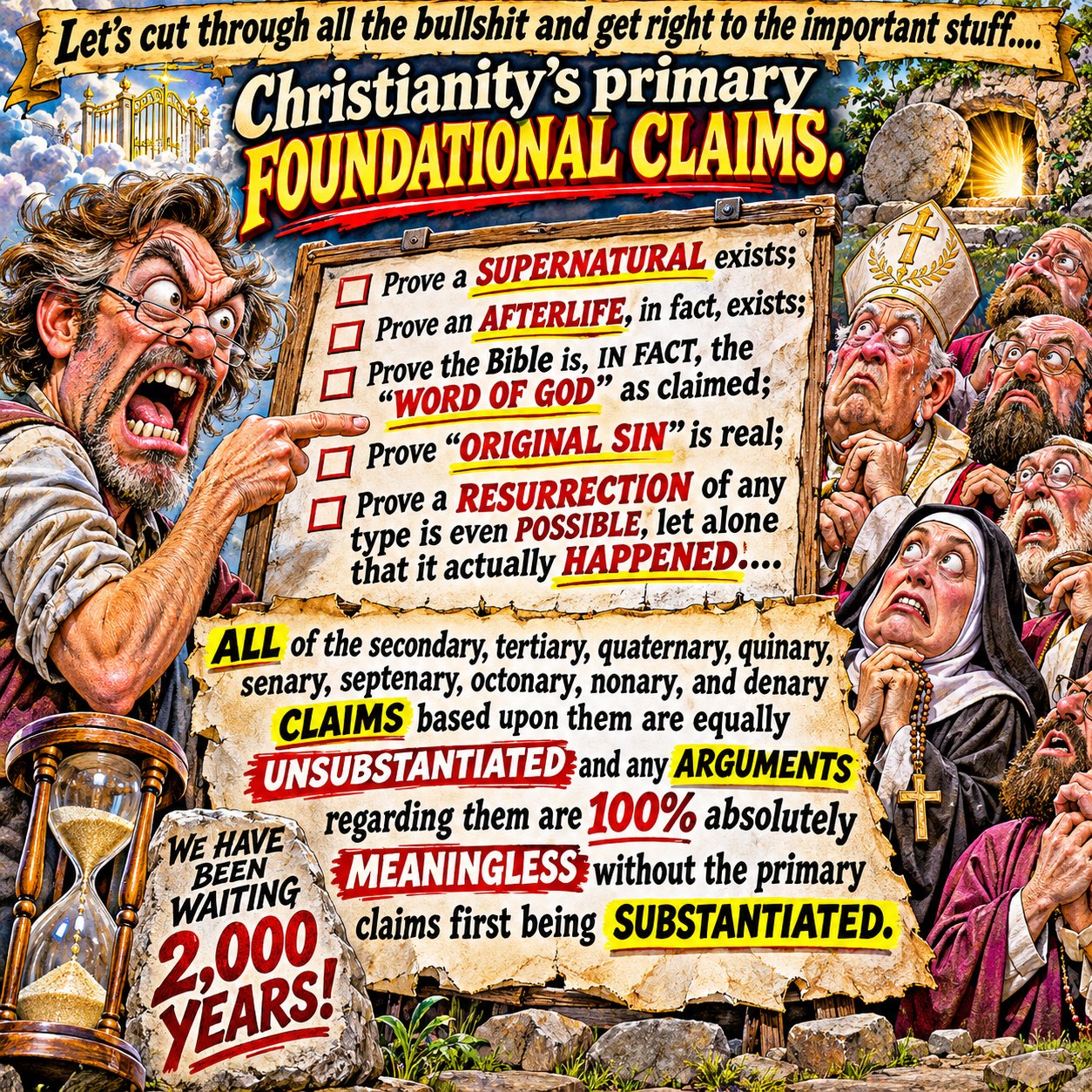
Hey Frank! Let's cut through all the bullshit and get right to the important stuff.... Christianity's primary FOUNDATIONAL CLAIMS.
ALL of the secondary, tertiary, quaternary, quinary, senary, septenary, octonary, nonary, and denary CLAIMS based upon them are equally UNSUBSTANTIATED and any ARGUMENTS regarding them are 100% absolutely meaningless without the primary claims first being substantiated.
Prove a supernatural exists; prove an afterlife, in fact exists; prove the Bible is, IN FACT, the "Word of God" as claimed; prove "Original Sin" is real; prove a resurrection of any type is even possible, let alone that it actually happened.... we have been waiting 2,000 years!