








Pinned Tweet
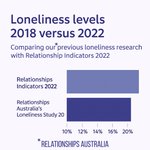
Explore the hidden crisis facing young Australians—our newest paper, The Silent Epidemic, uncovers how digital lives, economic shifts, and changing communities are fueling a rise in loneliness. Drawing from Hon Dr. @ALeighMP’s research on declining community engagement and @drmichellehlim’s work on the impact of loneliness on Australian youth, we reveal the forces shaping this silent epidemic. And, directions for steps forward.
Free access here: publica.org.au/the-silent-ep…

We need more volunteers, not more barriers to helping linkedin.com/pulse/we-need-m… via @LinkedIn
84
A huge thank you to the Great Regional City Challenge who helped make running Friendship Lab possible.
Across the six sessions it was amazing to see people come out of their shell to connect, learn, grow and build meaningful friendships.
Learn more here friendshiplab.org

39
Read Patrick Parkinson AM, Emeritus Professor at the University of Queensland and Executive Director of Publica on the place of forgiveness in public life here
abc.net.au/religion/patrick-…

This submission addresses the elimination of the increased subsidy for people over 65 who have
private health insurance. It raises issues about how we give effect to solidarity between generations.
Read more here publica.org.au/submission-to…

1
51
"Going no contact is a kind of amputation. In my case, not only would it be an awful way to treat my father; it would also deprive me and my future family of a connection to the ideas and tradition that made me who I am." nytimes.com/2026/08/16/opini…

69
We are excited to announce we are hosting Friendship Lab a 6-week course to help people make their friendships thrive.
Massive thanks to the Great Regional City Challenge for sponsoring this course, it wouldn’t be possible without their support.
#GRCC #friendshiplab #Tasmania
60
Loneliness on campus: now even university leaders are encouraging students to party more:
apple.news/A6UDOEwKKT0S0Sz5j…

1
136
We need to have people around us who really know us.
spacedaily.com/d-we-tend-to-…
1
82
Publica Australia retweeted

Children can often adapt to hardship. What they struggle with is extreme unpredictability.
One reason childhood instability can be more damaging than poverty is that it's an evolutionarily novel stressor that children's brains aren't equipped to handle.
Poverty has long been the default in human societies.
But being raised by a shifting cast of caretakers, many of whom disappear from your life, is not. Children require stable attachments to develop properly. Without them, things go wrong.
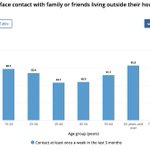
A lot of people in mid-life do not have regular contact with either family or friends outside the home. From the General Social Survey 2025:

28
The loneliest people after retirement aren’t always the ones who lost all their friends — they’re often the ones who slowly realize how much of what they called friendship had been proximity, routine, and shared obligation rather than closeness. artfulparent.com/n-the-lonel…
Sean Micallef's Going for Broke on the ABC is a 'must watch' for anyone concerned about Australia's extraordinary addiction to gambling.@ABCTV @wesleymission
28
"A lasting covenant is built on the grace we extend to one another’s imperfections, not the absence of them." The Search for Perfection Is Fueling the Dating Recession ifstudies.org/blog/the-ick-f…

40
This is a fantastic discussion on the importance of friendship. youtube.com/watch?v=CNBxIhxH…
45
Publica Australia retweeted

Major new report on global trends in mental health, out today from Sapien Labs. Data from 2.5 million people across 85 countries.
Some of the most important findings:
1) Young adults used to generally have good mental health, compared to older generations. But now, in ALL countries examined, they are doing badly compared to older generations in that country.
2) "Four key factors have emerged that together predict three quarters of this effect. These are diminished
family bonds, diminished spirituality, smartphones at increasingly young age, and increasing consumption of
ultra-processed food."
3) The decline of young people's mental health is "most pronounced in the wealthier and more developed countries." They note that it is in such countries that smartphones are given earliest, junk food is most heavily consumed, spirituality is most diminished, and family ties are looser and often weaker.
4) "A younger age of first smartphone ownership is associated with increased suicidal thoughts,
aggression, and other problems in adulthood."
5) Here is their summary of findings on early smartphone ownership:
"GenZ is the first generation to grow up with a smartphone. Among this group, the younger they acquired their first smartphone in childhood, the more likely they are to have struggles as adults. These struggles extend beyond sadness and anxiety to less discussed symptoms, such as a sense of being detached from reality, suicidal thoughts, and aggression towards others. The effects arise through disruption of sleep, increased risk of exposure to harmful online content, predators, and explicit material as well as increased probabilities of cyberbullying during crucial developmental years. Excessive time spent on smartphones also diminishes the development of social cognition that requires learned interpretation of facial expressions, body language, and group dynamics. The negative impacts are particularly sharp below age 13."
The report is short, accessible, and important. Read it here:
sapienlabs.org/global-mind-h…

Publica Australia retweeted

Loneliness and its relationship with depression, attachment and social phobia @PublicaAus
publica.org.au/
Loneliness has a significant impact on our health. Amongst other things, it can increase the risk for dementia, a large study shows
washingtonpost.com/wellness/…

23
Important changes for the sake of improving teenagers' mental health, even if the bans are not 100% effective. thefp.com/p/jonathan-haidt-a…

35
Publica Australia retweeted

Unfortunately Premier, the "ideological campaigning" (the term used at the presser) is all yours. You're either deliberately lying to Victorians about the "science" of gender medicine to stave off potential legal actions or your advisers are feeding you falsehoods such that you genuinely believe the harmful propaganda your government relentlessly, and recklessly, disseminates to the detriment of children and families. Not sure which is worse.

The problem with sycophantic AI: "Talking to a fawning bot reduces our willingness to try to fix strained or broken relationships in the real world while making the bot seem more trustworthy." Students Are Skipping the Hardest Part of Growing Up nytimes.com/2026/01/30/opini…
24