

Urgenciologo | Intensivista | MPH | Epidemiólogo Toxicología | POCUS | Educación Médica |“La pelota ⚽️siempre al 🔟”
Santiago, Chile
Joined September 2011
- Tweets12.4K
- Following2K
- Followers1.2K
- Likes6.1K





Tremendo!!!

HICE UN PES 6 PORTEADO A NAVEGADOR CON ONLINE Y MULTIJUGADOR LOCAL
Es una recompilacion de la version de PSP SUPER MEJORADA. Con 60 FPS, L2 y R2, multijugador local y hasta ONLINE FACIL con SALAS!
Funciona muy bien aunque voy a ver de seguirlo mejorando! pes6.optijuegos.net
89


Vale la pena leer! 🤓

#Thiamine in the ICU: 10 high-yield pearls
1. Unexplained lactate? Think thiamine.
Thiamine is required for pyruvate dehydrogenase. Deficiency blocks conversion of pyruvate to acetyl-CoA, shunting pyruvate toward lactate and impairing mitochondrial aerobic metabolism. Thus, thiamine deficiency belongs in the differential diagnosis for otherwise unexplained lactic acidosis.
2. Thiamine deficiency in the ICU is not rare.
~30-70% of critically ill patients are thiamine-deficient. Many arrive deficient; others develop deficiency during critical illness because of increased metabolic demand, inadequate intake, or losses.
3. The bedside phenotype is more important than waiting for a thiamine level.
High-risk situations include malnutrition, alcohol-related liver disease, bariatric surgery, renal replacement therapy, polyuria/DKA, chronic diuretic therapy, unexplained encephalopathy, unexplained lactate elevation, and sepsis.
4. Starting nutrition can unmask the deficiency.
Glucose administration increases carbohydrate metabolism and thiamine utilization. A malnourished patient may therefore develop rising lactate after initiation of enteral/parenteral nutrition. Refeeding syndrome is not simply a phosphorus/potassium problem; thiamine deficiency can be central to its pathophysiology.
5. Dialysis and polyuria are major clues.
Thiamine can be lost during continuous RRT, hemodialysis, and peritoneal dialysis. Renal losses also rise with polyuria, including the diuretic phase of AKI, post-transplant polyuria, DKA, and chronic diuretic therapy in heart failure.
6. Do not wait for the classic Wernicke's triad.
Altered mental status, ocular abnormalities, and gait ataxia are rarely all present together. I think I have seen it only a few times. In an at-risk ICU patient with otherwise unexplained encephalopathy, absence of the complete triad should not reassure you.
7. A plasma thiamine concentration is not a great “rule-out” test.
Testing is often unavailable and expensive, and blood concentration does not necessarily reflect tissue thiamine status. I don't even remember when I last ordered the test (if ever...). Erythrocyte transketolase activity is physiologically more informative, but its cutoffs are poorly defined. Just recognize the risk population and consider a therapeutic trial rather than wait for laboratory confirmation.
8. The sepsis data are more nuanced than “thiamine works” or “thiamine doesn't work.”
Thiamine is not expected to improve hard outcomes in the overall septic-shock population. Some subgroup analyses and meta-analyses suggest signals for improved lactate clearance and organ function, particularly renal outcomes. I don't consider it a magic drug...
9. Thiamine alone ≠ HAT (hydrocortisone + ascorbic acid +thiamine) therapy.
Do not interpret negative trials of HAT as proof that correcting thiamine deficiency is useless. Large HAT RCTs failed to demonstrate the dramatic clinical benefit initially claimed, and a VICTAS secondary analysis raised concerns about longer-term outcomes. That is a different question from replacing thiamine in a patient likely to be deficient.
10. The kidney may be an important target organ.
Renal tubular cells are highly energy dependent. Across secondary analyses, observational data, and meta-analytic evidence, thiamine supplementation -particularly in deficient patients- shows a signal toward less AKI progression, better renal recovery, and less need for RRT, although individual RCTs have not consistently demonstrated significant benefit in unselected populations.
Rule of thumb:
“⬆️ lactate + risk factor + no good explanation" → think B1 deficiency”
Especially think about it when you see malnutrition/refeeding, alcoholism/cirrhosis, dialysis, polyuria/DKA, chronic diuretics, unexplained encephalopathy, sepsis, or otherwise unexplained persistent hyperlactatemia.
I usually include it in the admission orders for most of my ICU patients along with DVT and GI prophylaxis...!
Thiamine deficiency behaves less like an obscure vitamin deficiency and more like a potentially reversible form of mitochondrial energy failure. Or that's how I like to think about it.
#foamed #foamcc #meded
131

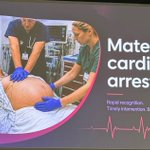
“La regla clásica: decidir la histerotomía resucitativa a los 4 min y extraer al RN a los 5. Pero en la práctica, incluso dentro de un hospital, llegar a ese objetivo puede ser difícil.”
Si no llegaste a los 5 min, eso no significa que ya sea demasiado tarde.#RESUS26

“Si asumimos que la RCP maternO fracazara, puede que tengamos razón. Pero si asumimos lo mismo para el bebé, podríamos estar equivocados.”
En el PCR materno, el RN es un segundo paciente Can 1 posibilidad real d supervivencia y debe anticiparse su reanimación #RESUS26
78
“Maternal Cardiac arrest” “En el paro cardíaco materno no realizamos una histerotomía resucitativa porque hayamos fracasado en reanimar a la madre. La hacemos para crear las condiciones fisiológicas que permitan que la reanimación funcione.”
#RESUS26
73
Las rutinas matutinas 👽

Sabah kahvesi, cilt bakımı gibi rutinlerimiz hayatı daha anlamlı yapar.
Çünkü insan, dünyayı anlamlandırmak için düzene, öngörülebilirliğe ve tutarlılığa ihtiyaç duyar. Rutinler beynimize "dünya düzenli ve öngörülebilir bir yer" sinyali vererek hayatı daha anlamlı hissettirir.


96


