

RWA Holder & Educator #RWA | Not financial advice | DM Always Open
Joined February 2025
- Tweets998
- Following984
- Followers2.2K
- Likes5.5K






It comes as no surprise that this is the fastest-growing sector this year.
RWA perpetuals - which allow for long and short positions on stocks, gold, and stock indices - have seen their total open interest nearly triple since June, reaching a peak of $20 billion.
This $20 billion figure includes leverage; much like crypto perpetuals, users trade based solely on price movements without directly owning the underlying assets.
• Centralized exchanges (CEXs) account for 71%, leading in the categories of stocks, gold, and silver.
• Decentralized exchanges (DEXs) make up the remaining 29%, leading in the stock market segment.

📊 Euro Stablecoin Market Cap Growth by Chain (Past 7 Days)
🟢 Growth
🥇 Solana: +$22.0M
🥈 Arbitrum One: +$643.5K
🥉 Arc: +$14.2K
🔴 Decline
BNB Chain: -$11.3K
Celo: -$31.4K
Stellar: -$65.2K
XRP Ledger: -$80.7K
Avalanche: -$155.8K
Algorand: -$227.5K
Polygon: -$264.9K
Solana accounts for about 97% of all euro stablecoin growth this week, roughly 34x more than #2 Arbitrum One. Seven of the ten chains shrank, but the losses were small, totaling under $0.9M.
The takeaway: euro stablecoin demand is concentrating on one chain, while older euro-stablecoin venues like Polygon, Algorand and Avalanche are slowly bleeding supply.
📍 Source: Token Terminal


💥Chainlink has signed a strategic partnership agreement with LG CNS - the technology arm of the LG Group - to build infrastructure for South Korea’s digital asset market, which is valued at approximately $68 billion.
This agreement builds upon a prior memorandum of understanding (MOU). Chainlink will integrate its full suite of cross-chain tools, data, and orchestration capabilities into LG CNS’s "Digital Asset Platform Solution," targeting financial institutions in South Korea. Key focus areas include won-pegged stablecoins, asset tokenization, and bridging traditional finance with blockchain technology. The two parties will also collaborate on establishing technical standards for South Korea’s digital asset economy.
Why LG CNS is significant:
→ It serves as the primary contractor for "Project Hangang," an initiative by the Bank of Korea focused on digital currency (the initial phase involves approximately 80,000 users across seven banks).
→ It is part of the LG Group, a conglomerate with roughly 186 trillion won in assets and 63 member companies.
Market Context: South Korea has over 11 million eligible crypto users, and the country is currently preparing regulatory frameworks for won-pegged stablecoins.
A key distinction: The agreement is limited to LG CNS’s commercial solutions; it has not been confirmed whether Chainlink will be directly implemented within the infrastructure of Project Hangang or the Bank of Korea’s systems. While LG CNS is a contractor for Project Hangang, these represent two separate areas of engagement.
📍 Sources: Chainlink, LG CNS, The Block

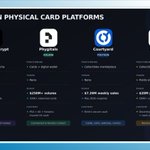
🃏 Onchain TCG (trading card games) has proven product-market fit, but it hasn't proven that it serves collectors.
According to Nick Research, this is currently primarily an onchain wagering market backed by physical cards.
The scale already shows real demand:
→ Collector Crypt: $1.6B+ cumulative volume
→ Phygitals: $250M+
→ Renaiss: 260K+ users
→ Jupiter TCG Gacha: $9M volume in 5 days
The infrastructure also solves real problems: ownership can be tracked, pack results can be verified, vault inventory is auditable, and users can exit through instant buybacks. That's a clear upgrade from trusting a single shop owner.
But user behavior tells a different story. Bitquery tracked Collector Crypt Gacha from Dec 2025 to July 2026:
→ $622.6M wagered, 17,544 wallets participated
→ Only 22% of players recovered more than they spent
→ The median player lost $50
→ 68% immediately sold their cards back for USDC
→ Only 5.9% kept the cards
If nearly 7 in 10 users convert the card back into USDC right away, collecting is clearly not the main activity.
The economics confirm it. A $50 Elite pack showed a 110.7% expected value, but the instant buyback only pays 85% of the card's value. The buyback solves liquidity, but the discount also creates the house edge, bringing the effective expected return to roughly 94.2%.
An underappreciated risk: custody has not become trustless. The NFT may be onchain, but the physical card still sits inside a centralized vault. If that vault suffers fraud, insolvency, theft, or poor management, the ownership record cannot recover the asset.
The author is bullish on the infrastructure but cautious about the current product model. Onchain TCG makes an existing speculative market more transparent, liquid, and efficient, but it doesn't turn speculation into collecting. It's not yet a collector economy until retention is driven by card ownership rather than immediate USDC exits.

🚨 BREAKING: J.P. Morgan Asset Management has expanded two of its tokenized money market funds - MONY and JLTXX - to the Solana blockchain (October 22, 2026). Both funds were previously available on Ethereum.
The two products differ in their structure:
MONY: A private fund operating under Rule 506(c), launched in December 2025.
JLTXX: A U.S.-registered government money market fund, designed specifically to serve stablecoin issuers in accordance with the GENIUS Act.
Eligible U.S. investors can handle subscriptions, redemptions, and token balance management through a single platform: Morgan Money.
Paul Przybylski of J.P. Morgan Asset Management stated: “Our clients operate across multiple networks, and their liquidity should be able to do the same.”
JLTXX directly addresses the challenge of stablecoin reserves. Stablecoin issuers operating on Solana can now hold their reserves in a J.P. Morgan fund directly on the same blockchain they use, eliminating the need to move assets between different networks.

📊 Tokenized stocks: market cap by chain
Total: $4.4B, up 886.1% over the period shown
🥇 BNB Chain: $1.6B
🥈 Solana: $1.1B
🥉 Ethereum: $841.3M
X Layer: $286.0M
Avalanche: $239.7M
Arbitrum One: $194.5M
Robinhood Chain: $148.6M
Base: $48.3M
Ink: $21.5M
Stellar: $17.1M
BNB Chain now leads with about 36% of the market, and the top three chains hold roughly 80% of the total.
The big shift is Ethereum. It dominated at the start of the year, but BNB Chain barely registered back then and has since climbed to #1, with Solana also passing Ethereum.
Also notable: X Layer in 4th, ahead of Avalanche, Arbitrum and Robinhood Chain.

The $39.3B RWA market figure is notable, but the more interesting signal is the $237.5M in disclosed venture funding across 26 rounds so far in 2026.
Superstate’s $82.5M Series B alone accounts for roughly 35% of that total, which highlights where capital is actually concentrating - in the infrastructure layer (issuance systems, ownership records, and distribution rails) rather than pure product plays.
This distinction matters. Venture funding builds the companies that operate the market, while actual AUM is determined separately by investor subscriptions into the products.
Right now, most tokenized assets still face limited usable collateral status on-chain, so the real test over the next 12–18 months will be whether this infrastructure capital translates into sticky, scalable demand or remains mostly narrative-driven.
The research from CryptoRank is a useful snapshot of where the money is flowing.



📊 Tokenized stocks tracking MSTR and STRC: market cap by chain
Total: $473.4M
🥇 Ethereum: $210.9M
🥈 BNB Chain: $115.7M
🥉 Solana: $78.5M
X Layer: $40.4M
Arbitrum One: $17.1M
Robinhood Chain: $6.8M
Base: $2.1M
Ink: $1.7M
Polygon: $195.9K
Tron: $82.7K
Ethereum holds about 45% of the total, and the top three chains (Ethereum, BNB Chain, Solana) account for roughly 86%.
The +25,158,724% growth figure is just what happens when you start from near zero in 2024, so the shape of the curve matters more than the percentage: almost all of this value was added in 2026.
Also worth noting: X Layer at #4, ahead of Arbitrum, Robinhood Chain and Base.
📍 Source: Token Terminal

🗺️ Canton Network ecosystem map: 10 categories, one institution-first chain.
🏛️ Institutional rails: DTCC, Broadridge, HSBC Orion, Tradeweb
🔄 Spot/exchanges: Temple, Cantex, Kairo, Helvet Swap, OneSwap
📈 Derivatives: Titan, Eiden, Raven Market
💰 Lending/credit: ACME, Alpend, Cashen, Realworld, Edel
💵 Stablecoins/payments: USDCx, Brale, HIFI, Minted, Send
👛 Wallets: Loop, Bron, Console
🤖 Agentic execution: Silvana
🛠️ EVM/builder access: Zenith (public testnet)
Plus SocialFi (The Hub) and yield/private markets (AllDeFi, Hecta).
What stands out is the first row. Most ecosystem maps lead with DeFi apps, but Canton’s starts with market infrastructure names like DTCC, Broadridge and Tradeweb. The thesis is to build for regulated institutions first, then layer DeFi on top.

🏦 The DTCC is set to launch a tokenization service this month, with Ripple Prime among more than 50 organizations that helped shape the offering.
Scale: The DTCC’s depository subsidiary holds and processes $114 trillion in securities. The service aims to bring eligible securities on-chain, enabling faster settlements and more efficient collateral transfers.
Progress: Limited production transactions were completed in July, paving the way for an official rollout scheduled for October.
Other participants include BlackRock, JPMorgan, Circle, Fireblocks, Ondo, and Kraken.
A key distinction: While Ripple Prime (formerly Hidden Road) is integrated into the DTCC’s infrastructure, the DTCC has not confirmed whether XRP will be used as a settlement asset or if the XRP Ledger (XRPL) will serve as the underlying network for this service.
Significance: As core Wall Street infrastructure prepares to move on-chain, the race is now on to see who is best positioned with existing connections to these new rails.

Top U.S. Bank Brings Tokenized Deposits to Ethereum
Following its launch on Base in November 2025, JPMorgan has expanded its JPM Coin deposit tokens to the Ethereum network.
• These tokens represent USD deposits held at the bank, enabling the transfer and receipt of funds on-chain 24/7.
• Clients can utilize the tokens for on-chain payments or as collateral in transactions involving tokenized assets, such as stocks, bonds, and fund shares.
• JPMorgan selected Ethereum due to its deep liquidity and client demand. Token ownership remains restricted to institutional clients approved by the bank.
• JPMorgan is extending its reach into public networks rather than migrating its entire private infrastructure to Ethereum. The bank’s proprietary blockchain, Kinexys, remains operational and continues to process over $7 billion daily.

🔗 Stripe × Stellar: closer than most people realize.
It goes beyond a 2014 loan. The connections now run through the whole payment stack:
→ Stripe → Bridge → Airtm: USDC payouts over Stellar
→ Stripe → Privy → Stellar wallet support
→ Privy → Zebec: native enterprise payroll on Stellar
→ Paxos: PYUSD live on Stellar
→ AllUnity → Zebec: EURAU benefits pilot
Plus a leadership link: Stellar Development Foundation's President is the ex-PayPal exec who helped launch PYUSD.
Stellar shows up at several points in the flow: issuance, wallets, payouts, payroll.
Follow the payment flows. 👇
📍 RWA Alpha Terminal


📊 The IMF just published its tokenization findings (October 2026 GFSR), and this chart says a lot: tokenized assets are fragmented across many platforms.
Per the chart (eyeballed estimates):
• Bridgetower: ~18%
• Securitize: ~8%
• Ondo: ~6%
• Circle, Justoken, Tether Holdings: ~4-5% each
• "Other" (the long tail): over 50%
More than half the market is scattered across smaller platforms, with no single platform dominating.
Key IMF numbers:
• Public tokenized assets (excluding repo): about $65B
• Tokenized repo: $300-350B per day, versus ~$13T per day in the U.S. repo market
• Tokenized stocks: only ~$2.3B
• ~80% of tokenized equity trades are for less than one share, and more than half happen outside traditional market hours
The IMF lists four conditions for tokenization to scale safely: legal certainty, consistent regulation, interoperability between platforms, and a safe settlement asset. Without them, platforms risk staying isolated "islands of liquidity."
On the bright side: real demand is already showing up (24/7 trading, fractional ownership), and overnight tokenized prices even show up in traditional equity prices after the market opens. But whoever solves interoperability stands to win big.
📍 Source: IMF, RWA.xyz

Midnight Updates 2027 Roadmap – Supporting Private RWAs
Keep an eye on tokens that have dropped sharply due to hacks; they often show a solid recovery afterward. A prime example is midnight-3:native from Midnight, which recently surged from $0.015 to $0.05.
Regarding the roadmap, following their latest announcement, Midnight appears to be the most promising project within the privacy sector. Key highlights include:
Q1/2026
+ For institutions and payments: Standardizing Midnight contracts and supporting the access keys and security protocols currently used by banks and enterprises. Launching contracts that enable the issuance of private tokens - auditable, yet hidden from the public.
+ For DeFi and individual users: Enabling private lending and borrowing, and connecting to EVM networks (via "NightMode"), allowing Midnight users to transact privately across EVM chains.
➡️ Users can bundle transaction requests and send them via channels like email or messaging apps; the transaction is executed only once the counterparty provides their consent.
+ "Passport" toolkit: Account creation without the need to store a 12-word seed phrase.
+ Transitioning the consensus mechanism, launching midnight-3:native staking, and implementing a bug bounty program for developers who identify protocol vulnerabilities.
+ Optimizing the time required for proof generation and reducing the size of proofs (based on ZK technology).
If you are looking for a project that currently generates revenue or cash flow, Midnight is not the answer. It does not yet derive cash flow from users; development is currently funded by capital provided by Charles Hoskinson and a dedicated token allocation.
➡️ Think of this as the foundational phase - they are building the infrastructure first, with plans to attract users and institutions later.

Tokenization is fulfilling its intended purpose.
Even after U.S. stock markets close, tokenized stocks remain highly active. A significant portion of the total trading volume in this sector occurs during off-market hours:
• Over 70% on BNB Chain.
• Over 60% on Solana and Robinhood.
• Nearly 60% on Base.
Since the SEC introduced an exemption framework for this sector, the total value of tokenized stocks has grown by 15% over the last 30 days, reaching nearly $3.3 billion. The bulk of this activity is concentrated on platforms such as Ondo, xStocks, and bStocks.

🚨 BREAKING: @Mastercard and @BVNKFinance just launched Global Money Platform, bringing fiat and stablecoin payments together through a single API.
It's the first major integration since Mastercard completed its acquisition of BVNK in August 2026.
Banks, fintechs, and enterprises can embed the following into their own products, under their own brand:
→ Multi-currency accounts (fiat and stablecoins side by side)
→ Real-time conversion
→ Stablecoin-linked cards, usable across Mastercard's network of hundreds of millions of merchant locations, with issuing in 130+ countries
→ Local bank payouts via Mastercard Move (17B+ endpoints)
Nuvei and Marqeta are among the first to integrate, alongside Ontop, Beem, and Almond FinTech.
Roadmap: local payout coverage is expected to expand to 40+ currencies across 200+ countries and territories in 2027. The platform will also support agentic commerce and tokenized deposits down the line.
Instead of stitching together separate providers for each step (receive, convert, store, spend, pay out), businesses now get a single infrastructure layer. Mastercard is turning stablecoins into a core part of its payments network, not a standalone product.
📍 Source: Mastercard (Oct 15, 2026)

Today, we're launching Mastercard Global Money Platform with @BVNKFinance, enabling banks, fintechs, and enterprises to offer stablecoin payments, local bank payouts, spend stablecoin-linked cards, and multi-currency accounts through a single integration. Learn more: mastercard.com/us/en/news-an…