

Neuroscience & Sports @UniLeipzig
Leipzig, Germany
Joined August 2020
- Tweets313
- Following205
- Followers171
- Likes167




RagertLab retweeted

#eNeuro Opinion | Is Social Media Use a Blessing or Cure for Motor Function and Skill Acquisition?
doi.org/10.1523/ENEURO.0382-…

RagertLab retweeted

🏓 How does the brain adapt during real-life #MotorLearning?
Carius et al. (2025) used whole-brain #fNIRS with APDs to study motor adaptation during #TableTennis tasks.
🔗 nature.com/articles/s41598-0…


RagertLab retweeted

Tom Maudrich, Sebastian Degener, Patrick Ragert and Rouven Kenville (@RagertLab, @UniLeipzig) investigate the impact of acute blood-flow-restriction #resistanceexercise on somatosensory-evoked potentials in healthy adults!
📜buff.ly/3Z7qDXz


RagertLab retweeted

No needles required – vaccines can be pushed into the body using ultrasound 👇 newscientist.com/article/240…

RagertLab retweeted

“Back to basics”
8 Stages of motor planning during a daily task (grasping a cup)
#brain #sensorymotor
researchgate.net/publication……

RagertLab retweeted

Out now in @BiologicalPsyc1 @SOBP
Our latest thoughts on "Targeting symptom-specific networks with TMS," with @foxmdphd of @BWHNeurology
Thanks to @harvardbrainsci @BrighamResearch @Brain_Circuits
biologicalpsychiatryjournal.…

RagertLab retweeted

🚨 What are the effects of exercise on depression, anxiety and distress?🤔
This #BJSMBlog summarises the #KeyFindings from a recently published paper that demonstrated exercise should become the mainstay of treatment, rather than just an alternative🤯
➡️ bit.ly/43scIvR

RagertLab retweeted

So the last month to apply has started. Have a look at this great opportunity and apply until the end of November for this fully funded PhD program!👍🏻👍🏻👍🏻

Still looking for a fantastic and fully funded PhD program with an excellent research faculty? Have a look at our current open call: cognition.maxplanckschools.o… #passionforscience 🧠❤️🧠

RagertLab retweeted
In this new #fNIRS study, young adults completed gamble bidding tasks while cortical responses were recorded. They confirmed the involvement of frontal brain regions in belief "updating" and demonstrated valence-dependent recruitment during the task. 🔗👀sciencedirect.com/science/ar…

RagertLab retweeted

Fully Funded PhD positions @MPS_cog
MPScog brings together international doctoral candidates with Germany’s best scientists in a fully funded PhD program for Master or Bachelor students.
jobrxiv.org/job/max-planck-s…
#Germany #PhDStudent #ScienceJobs #...
jobrxiv.org/job/max-planck-s…
RagertLab retweeted
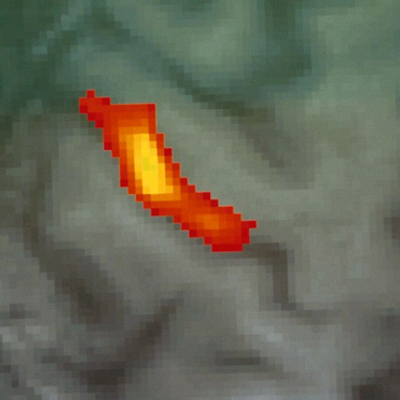
A strong argument against group mean comparisons for brain structure studies yet a strong motivator to dig into relevant networks and individual variations further. nature.com/articles/s41593-0…

RagertLab retweeted

Is cycling enough to stimulate muscle growth in older men?
➖20–45 min per session
➖60%–80% heart rate reserve
➖3–4 sessions per week
After 12 weeks, VO2max increased by +13%.
But changes in muscle size were variable.
Some got bigger:
➖ Vastii +7%, Sartorius +6%
Others got smaller:
➖ Biceps femoris LH -5%, Adductor longus -6%
And most didn’t change (including none in the lower leg):
➖ Rectus femoris (-3%), Gracilis (+3%), Gastroc/soleus (-2%)
physoc.onlinelibrary.wiley.c…

RagertLab retweeted

SfN’s annual meeting is returning to Washington, D.C. with an outstanding scientific program that features lectures, symposia, minisymposia, roundtables, & more. With the expansive Exhibit Hall & networking opportunities, this will be a meeting you won’t want to miss.
RagertLab retweeted

Scientists have constructed the first comprehensive set of functional maps of infant brain networks, providing unprecedented details on brain development from birth to two years old. elifesciences.org/articles/7…

ALT infant-specific fine-grained functional parcellation maps for infants aged from three months to two years.
RagertLab retweeted

“A century of research on neuromodulation interventions”:
Excited that out of 987,979 references, our 2017 @ANA_journals paper with @foxmdphd made it onto the map for the cluster “More recently, research on the use of DBS for PD has been very dynamic…”
sciencedirect.com/science/ar…


RagertLab retweeted

Human brains' walnut-like wrinkles have a large effect on brain activity, in much the same way that the shape of a bell determines the quality of its sound. go.nature.com/3WLFrcE