


Steven Haché retweeted

Un autre frustré qui comprend pas qu’on doit débattre ce qu’on juge nocif. C’est tellement la philosophie des pleutres et lâches de refuser de se confronter aux autres.
La démocratie libérale ne se défend pas en ignorant l’inconfortable et se draper dans la fausse vertu qui finit par miner tout ce que les pleutres et les lâches disent aimer!

Il y a 2 semaines il a félicité Vincent Geloso, économiste sénior à l'IÉDM (un lobby libertarien) qui retweete le suprémaciste blanc Jordan Lasker (alias Crémieux)* et "débat" amicalement avec le très raciste A. Cormier-Denis (Nomos TV). Ça s'invente pas.
*motherjones.com/politics/202…


Steven Haché retweeted

En politique, on a des adversaires, pas des ennemis ! @Ian_Senechal @frankdedomiseur
Steven Haché retweeted

JEAN-RENÉ DUFORT S’EXPRIME AU SUJET DE LA SUSPENSION DE JIMMY KIMMEL
Somme toute une intervention objective de Dufort, meilleure que celle de plusieurs de ses collègues.
Votre avis ?
Steven Haché retweeted

Taking Jimmy Kimmel off the air is unthinkable to me. When I had my free speech issues, Americans told me “That could never happen here. We have the First Amendment to protect us.” Well… it’s happening. #JeSuisJimmy
Steven Haché retweeted

The murder of Charlie Kirk is part of a disturbing rise in political violence that threatens to hollow out our public life.
A free society relies on the premise that people can speak out without fear or humiliation.
No more political violence.
Steven Haché retweeted

Bonjour tout le monde,
Je me prépare à entrer en onde dans quelques minutes pour Les Mordus. Mais je tenais à vous envoyer ce message. C’est très rare que je publie des messages vidéo de moi même sur mon compte X, mais cette fois-ci, c’est important.
Ce moment devrait nous amener collectivement à faire une pause et à reconnaître que les choses sont allées trop loin. Il est temps d’apaiser le ton, de calmer le jeu.
Je n’étais pas un admirateur de Charlie Kirk. Je ne le suivais pas, et si j’ai pu partager certaines de ses positions, j’étais en désaccord avec plusieures d’entre elles, notamment sur le droit de porter des armes et sur bien d’autres sujets. Mais, au fond, cela n’a aucune importance ici.
Nous vivons à une époque où de plus en plus de gens — particulièrement des jeunes — croient que la violence extrême est une réponse acceptable à des idées qui leur déplaisent.
Et si nous continuons dans cette direction, plus personne n’osera prendre la parole, sur aucun sujet. C’est précisément ce que voulait le meurtrier de Charlie Kirk, et ce que veulent ceux qui pensent comme lui.
Un homme a perdu la vie. Des enfants ont perdu leur père. Une épouse a perdu son mari. Ce qui s’est passé est inacceptable.
Steven Haché retweeted

Okay, I'm going to give it a try:
“When people stop talking, really bad stuff starts. When marriages stop talking, divorce happens. When civilizations stop talking, civil war ensues. When you stop having a human connection with someone you disagree with, it becomes a lot easier to want to commit violence against that group.
What we as a culture have to get back to is being able to have reasonable disagreement — where violence is not an option.”
— Charlie Kirk
31 years old. Married. Two kids under the age of five.
When I first heard the news, I didn’t believe it. Then I saw the video. There was Kirk, speaking before an audience, microphone in hand, when a crack splits through the air. His body goes stiff, his neck explodes with blood, his head falls back. Pure chaos ensues.
I didn’t think it was real. Or I thought it was real, but I couldn’t process it — of course it's real, it’s right there — but I wanted so badly for it not to be. I could only watch it once. My stomach turned.
I’m going to spend one sentence directly sharing my views about Charlie Kirk’s political positions: I vehemently disagreed with him on some things, and I thought he offered a great deal of needed clarity, often with courage, on others.
Kirk made a living off of debating people. Most people know him through the viral, 30-second clips of him hitting someone with a closing slam dunk to “win” an argument. Yes, Kirk often framed his content as “owning” the left — but his goal was persuasion. Yes, he often went to college campuses and goaded (then ran circles around) sophomore lit majors on topics he was far more knowledgeable about — but if you watched his events in long form, you’d see something different, something far more empathetic.
He was trying to persuade not just the person he was talking to but everyone watching, and then welcome them into his political movement. He would allow people to frame an argument, and then he’d ask follow-ups; he sought clarity on what they were saying, he made sure he understood them, and then he made his case. I remember the first time I watched a full video of one of his events. Having only been familiar with the 30-second dunking videos, I was seriously surprised by the tone — how often he said “that’s fair” or “that’s a good point” or “I understand why you think that” before he went into action — often in ways I found deeply alluring.
Kirk was especially keen to compel young people, and young liberals, to the conservative cause. And he didn’t just operate where he had advantages; he’d debate political rivals, sitting down with people like Democratic California Gov. Gavin Newsom. He chose a righteous path of talking to people from across the aisle. In his own words, he did what he did because “when people stop talking, that’s when you get violence, that’s when civil war happens.”
He did not use violence; he used words. He did not use pressure; he used intellect. He wasn’t a bully; he was a preacher. He wasn’t seeking enemies — he was trying to recruit allies. He was damn good at what he did, too, and smarter and better read than the vast majority of his critics. Even when he was saying things I disagreed with, I found myself raising my eyebrows and nodding at the sly and devilish way he made his points. I’d always wanted to interview him, in large part because I wanted to see how I could stack up with him on the issues where those disagreements lie. I wanted to see if I could hold my own, or maybe even inch him toward my perspective.
Charlie Kirk used his great gift to inch others towards his perspective, moving an entire generation of voters rightward. He did this by speaking to them, directly, on terms they could relate to. By walking into the lion's den of critics and telling his story. And he was brave — he exposed himself to an unbelievable amount of criticism, he held views that people often didn’t voice before he voiced them, and he faced constant threats on his life (which he spoke about publicly). He was not a coward; he did not hide behind a rifle from hundreds of yards away. He stood up and said his truth, and he did it peacefully.
For this, someone put a bullet in his neck.
I know it’s not wise to make presumptions about motive before we have a suspect in custody. For now, though, I am going to make a presumption — one I feel confident in — that in this era of political violence, someone killed Kirk for his political rhetoric. If that presumption turns out to be wrong, I’ll be the first to correct the record here in this newsletter. But right now, I have to say it’s the outcome I find most plausible and most obvious (initial reports that investigators found anti-fascist and transgender rights messages on bullets in the gun they believe the shooter used support this presumption). I wish, fervently, that I had faith in the current FBI leadership to find his killer and flesh out what happened with an honest investigation — but instead I’ve got a terrible pit in my stomach that they are not equipped for this moment. They are not off to a good start.
I also know it’s unwise to sanctify the recently deceased and pretend Kirk was always the best of us. He was, at his worst, a partisan flamethrower who reveled in saying inflammatory things, who sometimes framed his political opponents as evil enemies. Perhaps that piece of the story is important — that Kirk was capable of, and sometimes enjoyed, turning the temperature up.
But then I see a video of his daughter running into his arms backstage, and I think, “What are we even talking about?” What deranged inclination inside of me wants to analyze his methods of discourse when someone murdered him in cold blood? Why do his political views matter even one iota?
I’ve watched in horror as some people have celebrated or mocked his death. I’ve seen this reaction mostly in spaces like Bluesky, bastions of far-left discourse, and I believe (and hope) they are not the norm. Most people, including most of my liberal friends and the liberal pundits I follow, are horrified — as we all should be. But enough are celebrating, making jokes, or posting derisive comments to leave me sick to my stomach.
So let me put it differently: This could have been me.
I came up in the same era as Kirk. I never got to meet him personally, but I know a lot of people who have. I never had anything close to a platform as large or influential as his, but we swam in some of the same waters. I’ve spoken at events he’s spoken at. I’ve been on podcasts he’s been on. I’ve done TV hits with anchors he’s been interviewed by. He was just a few years younger than me, and I watched his stardom take off as a YouTube personality, podcast host, political organizer and public speaker at the same time I was trying to build my own, albeit very different, media brand.
I see the things people say about someone like Charlie Kirk — that he’s enabling fascism or has blood on his hands — and then I see similar people level the same accusations against me. Not just anonymously on X or in my inbox, but in the comments sections of the very media company I built. I see people say that “being a moderate” is giving way to authoritarianism on the right, that I’m a secret Trumper, that I’m the worst kind of pundit because I pretend to be fair but I’m not, that I’m spreading blood libel, that people will die because of my views. In this business, people call you evil or send their hate mail, and you respond to some but try to ignore most of it. “It doesn’t happen here,” you’ll think. “The threats aren’t real.”
But they are. And it does.
There are a lot of very angry, highly motivated, deeply unwell people out there, some of whom have fixated on me in the past. It’s hard to shake the feeling — the urge to flee. To shut up. To get out of Dodge. The incidents of political violence in are many — they come from all sides — and the problem does not seem to be getting better.
Yesterday, the Tangle Instagram account posted about Kirk’s death. One of the most common responses, which an alarming number of people repeated, was copying and pasting a quote from Kirk about gun rights, in which he argues that we will never live in a society where we have gun rights and no gun deaths, and says the “cost” of some gun deaths every year is a “prudent deal” to maintain our Second Amendment rights to protect against tyranny.
I’m not sure what these commenters intend to convey by copying and pasting Kirk’s quote. I suppose the point is that this quote, this view, means Kirk should die? That his death is deserved? Or perhaps they think it is funny and quippy and clever to post a “gotcha” quote about him while his body lies dead in the hospital from a gunshot wound?
Even if you want to interpret his statement as uncharitably as possible, here is my response: Is the punishment for Charlie’s position the death penalty? Is the punishment for believing something you find abhorrent being killed? I’d like to know more about how this logic works and how I can extend it to other issues. Should every woman who believes in abortion rights be condemned to miscarriages in pregnancy? Is that rationale a just view for pro-life conservatives to hold?
What are we doing here?
I knew from following Kirk that he had two young children. There is a very memorable clip of Kirk going on the Whatever podcast and describing what it’s like being a dad. In the wake of his death the clip is now going viral, and rightfully so. It’s a nice window into who he was. In it, Kirk says that nothing he’s experienced — not flying on Air Force One or meeting presidents or any of his professional successes — compares to the simple pleasure of coming home and having his daughter run up to him and hug his leg. And when you watch him say it, you can tell he really means it. He’s not putting on a character, he’s trying to convince the hosts in front of him — and the listeners of the show — that they will find tremendous meaning and happiness in creating a family. He’s genuinely expressing his love for the life he’s been delivered.
My son was home sick from daycare yesterday when I got the news. So my first instinct was to run upstairs and grab him from our babysitter, to smell his little head and kiss him and nibble on his toes and try to make him laugh and tell him I loved him. I just walked around the house with him for a few minutes to try to breathe.
Then a wave of utter despair and nausea came over me.
My North Star promise is to give you my honest view. It’s to say what I really, truly believe, and nothing more. And most days, the truth of the matter is that I am an optimist — I am hopeful about our country and the people that inhabit it and our resilience against the scourge of division and conspiracy and hate.
But today, this is my truth: I don’t know where we go from here. This country, this society — it feels irredeemable on days like this. I’m watching influential conservative voices declare civil war. MSNBC analysts are on air justifying Kirk’s murder (and justifiably getting fired for it) while guests are suggesting that maybe he was shot by a supporter “shooting their gun off in celebration.” Kirk was the one trying to do it with persuasion, the one trying to go into these bastions of liberalism and talk them to his side; he was, in simple terms, a young guy who held pretty standard Christian views that, 30 years ago, were near ubiquitous in our country (and are still incredibly popular). And now political pundits on national TV are rationalizing his assassination.
Amid all this, a breaking news alert: At least two students have been shot in a school shooting in Denver.
Truthfully, the whole thing just makes me want to quit — to coil up and get out of the arena and do something else. I expressed this feeling to our Editor-at-large Kmele Foster, who urged me to remember that “we are on the side of the angels here” — and I know what he means. We are doing the very thing we need to pull us back from the brink: bringing together disparate political groups, creating dialogue, exposing people to viewpoint diversity in hopes of making us all a bit less extreme. Maybe Kmele is right. But how do I take the stage at our event in California in a few weeks after seeing what I’ve seen now? How do I get on the plane and leave my family?
Charlie Kirk is dead. Assassinated. The words don’t feel real on the page, but there they are.
Two beautiful young children will grow up without their father; vengeance will be promised, and maybe even delivered. We have now had several chances to realize where we are and do something about it — Trump’s assassination attempt, the killing of Brian Thompson, the killing of Melissa Hortman — but we moved on. We buried it or joked about it or, God forbid, celebrated it. The rational among us hoped it would get better. Then we went right back to the most extreme, divisive, incendiary rhetoric we had.
When we can see clearly the threat before us, what will we do? What are we made of, really?
I pray. I hope. I beg that we can find a new path — but my take, my truth, is that I fear we’ve stepped into the abyss.
Steven Haché retweeted
On marque cette année 10 ans de "Je suis Charlie". Et ce qui est arrivé depuis : culture de l'annulation, censure, interdiction de livres, domination des voix + hargneuses & tribales sur les médias sociaux.
Qui dit démocratie dit idées différentes. Et ouverture à les échanger.
Steven Haché retweeted

Charlie Kirk, figure polémique du mouvement conservateur social des États-Unis, semble avoir été tué pour ses prises de parole. Parlons-en.
Steven Haché retweeted
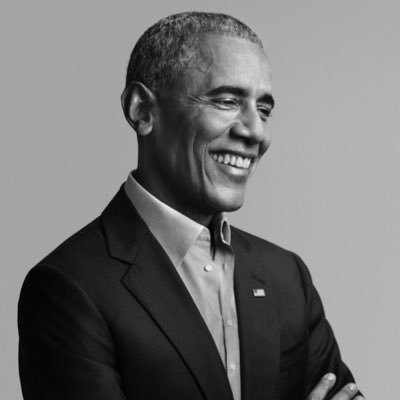
We don’t yet know what motivated the person who shot and killed Charlie Kirk, but this kind of despicable violence has no place in our democracy. Michelle and I will be praying for Charlie’s family tonight, especially his wife Erika and their two young children.


Steven Haché retweeted

RIP Charlie Kirk. It doesn’t matter what your opinion is of Charlie or his politics if you don’t view this as one of the darkest days in American history than you are part of the problem.

Steven Haché retweeted

Les Cowboys fringants annoncent le décès de leur chanteur Karl Tremblay, à la suite d'un cancer. On n'oubliera jamais sa force et son courage sur les plaines d'Abraham.

Assis sur scène et « magané » (ses mots), le chanteur des Cowboys fringants Karl Tremblay montre tout son courage au #FEQ et donne tout, porté par 90 000 spectateurs.
Steven Haché retweeted
We did it Norm, we won.

I am bilingual but can't do standup in two languages.Only @MikeWardca can. He is a genius and was fined $40,000 for offending THEM. THEM


Steven Haché retweeted

Le port du masque obligatoire en 2020...
et le port de la ceinture obligatoire en 1976 au Québec.
Le Progrès-Dimanche du 9 mai 1976 :
#Plusçachangepluscestpareil
