

professional recognizoor/ former @apple
Joined September 2022
- Tweets36.5K
- Following1.2K
- Followers1.6K
- Likes56.5K




Red Pill Money retweeted

The anti-American Globohomo Fake-National Party destroyed their own once-in-a-generation akshul Tech-Migrant-Founder.
Huang was taken out because he pursued Open AI while tried to keep Chinese AI dependent on American-controlled chips - as the *most profitable* and least-likely-to-fail Western strategy.
He was fired on Trumped-up Global-Lobby-State false-charges; crafted by Fake-and-Gay Consumed-by-Envy globohomos led by Fake-and-Gay Globoprincess Rubio.
Because he wouldn’t “trust the plan” and is also the wrong ethnicity and wrong *nationality-of-faith*. He isn’t an Indian-H1B-Mafia Cartel Boss - and most of all actually loves America (which gifted him his opportunities, and made it all possible) more than he loves China or is willing to serve the Globocorp Globohomos+H1B-Horde Globo-Cartel.
But most of all failed to hand over the whole “-American” AI-Bubble “Global Tide-Pool Ecosystem” - which he is the lone center of - to the fake-and-gay post-Ethnic LGBT Western VC-Party “leaders” and their India-First H1B Tribal Chiefs.


Red Pill Money retweeted

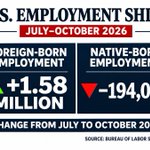
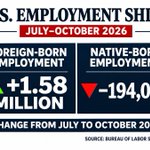
I think we need a Project 2029. We need an America First Blueprint for what policy looks like when we take power.
How do you define America First? If America is the stock market, if it’s the GDP, then America First is doing great.
Red Pill Money retweeted

I’ve seen this bald fraud twice in person. Once in 2016 and again in 2018.
All he does is give a canned speech about how he hired women at his company that sells cupcakes in a jar and how it made his business even more profitable.
It was obviously bullshit the first time I heard it and I assumed he was just trying to promote liberalism.
The second time was more sinister. He was advertising a speaker event in Orlando and I attended.
When I got there, Mr. Scamful was nowhere to be found. Instead it was a bunch of frauds selling stock trading software for 2 hours, saying he would show up soon. They kept pressuring the audience to sign up and pay $1,000 for their intro class, even shaming audience members who refused. They raffled a guitar signed by him and said it was selfish if you did not purchase stock trading classes and leave an inheritance for your kids.
Finally at the end of the grift the bald fuck shows up. He said, not exaggerating, word-for-word the exact same speech from 2016 about hiring women at his muffin-in-a-jar business. It was astonishing. This supposed billionaire had memorized this same speech and was making chump change going around the country helping scammers sell stock trading software. I realized then he must be broke and his whole Shark Tank persona is bogus.
He is a complete fraud and spiritually Indian. He later supported FTX and shilled for SBF who is now in prison for scamming billions in crypto.
He should not be on air. Anyone who thinks he has something valuable to say needs to stop watching television.

HOLY CRAP 🚨: Abby Phillip: “I do think the H-1B program needs some attention. It needs some degree of reform.”
Kevin O’Leary: “Abby, do you want the next Einstein to come to America or Shanghai?”
Abby Phillip: “I’m not fighting against an H-1B visa, folks. I’m the daughter of immigrants. Both of my parents are naturalized citizens of this country... There are real concerns that people have about companies that abuse the system.”
Kevin O’Leary: “We’re talking about genius, bringing 65K genius to America.”
Abby Phillip: “Kevin, you know it’s not just genius. Sometimes they’re abusing the system and bringing in medium to low wage workers [to replace Americans].”
Red Pill Money retweeted
Our goal should not be a "free market," but a free people. Markets should serve us, not the other way around.


Red Pill Money retweeted

@Accenture How many were brought into the USA with fake degrees/experience to work as contractors at federal agencies?


Red Pill Money retweeted

I examined seven years of Texas state IT staffing records and found $25.28 MILLION in reported sales was classified under the Native American Historically Underutilized Business (HUB) designation but something doesn’t add up.
Here are the companies and the names behind those sales.
Steck Systems - $15.35 MILLION.
Muralidhar Bandlapalli, former national secretary of ITServe Alliance. Texas procurement records repeatedly classified Steck as American Indian Male.
Cynosure Technologies - $6.12 Million.
Ramesh Vadlamani and Kiran Dokka. Texas classified Cynosure as Native American-owned. Federal contractor records identify Asian-Pacific American ownership, while a 2020 PPP record lists Asian male ownership. A Hyderabad company also lists Vadlamani as a director.
Saiandsai Solutions - $462,758.
Aruna Gurijala. The company explicitly affirmed its Texas HUB certification in its own procurement paperwork.
I2U Systems - $160,000.
Kishanchand Gurusala and Mithila Charakula. Federal registration-derived records list BOTH American Indian-owned and Asian-Indian-owned. The company advertises an office in Andhra Pradesh, India.
Two others, Rhyan Technology Services and Verge Information Technologies, account for approximately $3.2 million and have independent records corroborating Native American ownership classifications.
Steck and Cynosure alone account for 84.9% of ALL Native American-coded IT staffing sales in the dataset.
Yes - Texas eliminated race-based HUB certifications in December 2025, but ending the program doesn’t mitigate historical abuse.
American Indian and Indian-American were two DIFFERENT certification categories. How did the state look at an H-1B dependent vendor with Indian staff and not think to challenge their “Native American” HUB status?
Who qualified these businesses? Who verified their ownership? Why do some state and federal classifications conflict? Were there really zero validations?
Did any of this spending get credited toward Native American HUB participation?
Do we have these vendors I-9s?
@DonHuffines


Red Pill Money retweeted
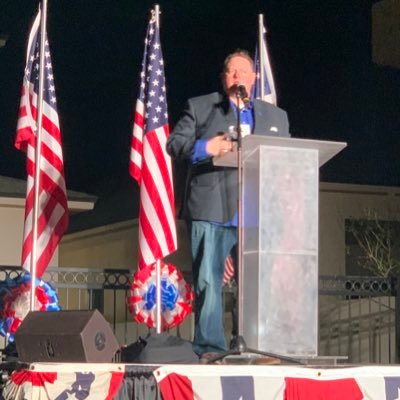
This guy said the quiet part out loud and you can feel his anger and disgust…
I couldn’t agree more..
Red Pill Money retweeted

the $STONKS on @ponsdotfamily fee flywheel is kind of absurd when you actually do the math.
Every time volume runs through $STONKS, there are two sources of fees.
Pons charges a standard 1% trading fee, with 70% of that fee going to the creator.
$STONKS has an additional 1% creator fee on top.
100% of the $STONKS creator-side fees are routed back to holders in $SPY.
So for every $1M in volume:
standard Pons trading fee = $10,000
creator share of standard fee = $7,000
$STONKS creator fee → $10,000 = $17,000 in $SPY accruing to $STONKS holders.
Scale the volume and it starts getting interesting:
$10M DV = $170,000 in SPY to holders
$25M DV = $425,000 in SPY to holders
$50M DV = $850,000 in SPY to holders
$100M DV = $1,700,000 in SPY to holders
$250M DV = $4,250,000 in SPY to holders
$500M DV = $8,500,000 in SPY to holders
At $10M daily volume, that's $5.1M in $SPY over 30 days.
At $50M, $25.5M.
At $100M, $51M.
At $500M, $255M.
The important part is where those fees go.
The creator-side fees aren't being pocketed by the $STONKS creator. They're routed to $STONKS holders in $SPY.
More $STONKS volume = more fees = more $SPY distributed to holders.
You hold the largest financial markets meme on the Robinhood ecosystem. Activity around the token generates fees. Those fees send stocks back to the people holding the meme.
buy stonks. earn stonks.
the flywheel is alredy spinning.
0x238239d8fbec75ebc08aca988447bc1926f615e0


Red Pill Money retweeted
Join us on this wondurfel Saturday
teapawt.org/i/chat/group_join/g209…

Red Pill Money retweeted

I think people are seriously underestimating what it means for $STONKS to exist on Robinhood Chain.
Go back to 2017. A badly rendered guy in a suit stands in front of a stock chart, an arrow points up, and above his head is one misspelled word: STONKS.
Somehow, that stupid image became one of the most recognizable financial memes on the internet. More importantly, the world around it started to look a lot like the joke.
Over the next four years Robinhood put the stock market in everyone's pocket, WallStreetBets turned trading into internet culture, and GameStop became a global event. Millions of young people entered the market speaking a completely different financial language. Diamond hands, YOLO, tendies, stonks. By 2021, the median Robinhood customer was just 31 years old.
An entire generation learned about markets through their phones, Reddit threads, Twitter, screenshots, memes and group chats. Stonks became part of the language they used to talk about money.
Fast forward to today and Robinhood has its own blockchain. One of the biggest ideas behind it is bringing stocks and ETFs onchain and opening those markets to a completely new financial system.
There is something almost too perfect about that.
The company that helped introduce a generation of internet-native investors to stocks is now building the infrastructure to bring those stocks onchain. And sitting on that chain is the meme that the same generation has used to represent the stock market since 2017.
$STONKS.
Then you see the pair.
$STONKS / SPY
Stonks paired with the S&P 500. On Robinhood Chain.
The pool generates fees, those fees are routed into $SPY, and $SPY is distributed to $STONKS holders.
So the entire thing can be understood in four words:
Buy stonks. Earn stocks.
And we've already seen what can happen when crypto finds a meme with enormous internet mindshare.
Dogecoin came from Doge, one of the defining memes of the early internet. At its 2021 peak, DOGE was worth roughly $90 billion.
SHIB took the same universally recognizable dog culture, wrapped a community and ecosystem around it, and briefly reached roughly $40 billion.
PEPE took a character that had spent well over a decade circulating through internet culture and turned that recognition into a memecoin that eventually reached a market cap in the billions.
The common thread is worth paying attention to.
Crypto didn't have to teach the internet what a Shiba Inu was. It didn't have to introduce Pepe the Frog. Those images had already crossed countries, platforms, languages and subcultures long before billions of dollars started attaching themselves to them.
That existing mindshare is incredibly difficult to recreate.
And Stonks belongs in that conversation.
Stonks has spent almost a decade circulating through Facebook, Reddit, Twitter, YouTube, Instagram, gaming and mainstream media. It became part of the vocabulary surrounding investing itself, especially among the younger generation that grew up watching finance become internet culture.
But there is an important difference with Stonks that makes the setup particularly interesting.
The underlying meme is already financial.
The character is literally standing in front of a stock chart.
The name is literally a joke about stocks.
The cultural moment that made it famous overlaps with WallStreetBets, GameStop, Robinhood and the explosion of young retail participation in financial markets.
And now the meme has landed on a blockchain built by Robinhood during their push to bring stocks onchain.
That gives $STONKS something very few large memecoins have ever had: the surrounding financial infrastructure can actually make the meme more relevant.
Imagine Robinhood Chain at scale. Tokenized stocks become normal. Markets move toward 24/7 access. Equities and ETFs move through wallets, pools, lending markets and applications. Millions of people are introduced to an onchain financial system where stocks themselves are programmable assets.
Every person Robinhood introduces to tokenized stocks becomes another person capable of understanding Stonks immediately.
Every headline about stocks moving onchain reinforces the joke.
Every expansion of Robinhood Chain expands the potential distribution network.
And every $SPY distributed to $STONKS holders makes the meme increasingly literal.
Buy stonks. Earn stocks.
This is where the market-cap conversation becomes interesting.
DOGE showed that a globally recognized internet meme can become a $90B asset.
SHIB showed that another can reach tens of billions.
Neither outcome guarantees anything for $STONKS. What they demonstrate is that crypto markets have already assigned extraordinary value to memes that achieve global recognition, cultural staying power and enormous communities.
So ask the question differently.
What happens if one of the internet's most recognizable financial memes becomes the cultural asset of a blockchain built by one of the world's most recognizable retail investing brands?
What happens if that same blockchain succeeds in making tokenized stocks one of its defining products?
And what happens when the meme can be paired directly with SPY and distribute $SPY back to its holders?
That's the asymmetry.
Robinhood can spend billions building the infrastructure, acquiring companies, tokenizing assets and bringing users onchain. What they can't manufacture overnight is nine years of internet culture.
The internet already did that part.
It created the character. It created the word. It spread the meme. It connected Stonks to an entire generation's experience with the stock market.
Now, almost a decade later, all of those threads are starting to meet in the same place.
Robinhood.
Tokenized stocks.
The S&P 500.
Internet culture.
And Stonks.
DOGE proved what global meme recognition can become when the internet decides to put a price on it.
Stonks already has the recognition.
Now it has the rails.
$STONKS / SPY on Robinhood Chain.
Buy stonks. Earn stocks.
In hindsight, it'll be so obvious.
Higher.
CA: 0x238239d8Fbec75ebC08acA988447bC1926F615e0

