Planetary engineering for a Moon base that stays and a Mars colony that isn’t guessing. Ice, sites, power, seismology

Joined August 2021
The Tesla Roadster just showed cold-gas thrusters can give a vehicle short hops and attitude control using compressed air. On Mars, the same idea becomes far more powerful. A resource hauler could run on locally compressed CO₂ from the atmosphere (ISRU) for thruster-assisted hops, while using metal wheels modeled on Curiosity/Perseverance for normal surface driving. Low gravity makes the hops longer and more useful for clearing rocks, dunes, and crater rims. This changes colony logistics. You’re no longer limited to driving around every obstacle or relying only on Starship for bulk movement. You get hybrid mobility: efficient wheeled travel on flat ground, plus the ability to hop cargo over rough terrain without shipping propellant from Earth. Resource collection, base expansion, and exploration become much more practical and distributed. Still conceptual, but the combination of local propellant + proven metal wheel designs is a meaningful step beyond pure wheeled or pure rocket solutions. #TeslaRoadster
🤖 Made with AI
39
Planetary Engineering Review retweeted
Replying to @VardaSpace
Commercial LEO turns microgravity from a rare laboratory curiosity into a place where matter can be shaped by rules that do not exist on Earth. Varda’s value lies in treating orbit not as a destination, but as a workshop where the absence of gravity becomes a manufacturing tool.
1
53
Planetary Engineering Review retweeted
W-6 is back. This flight pushed on two fronts: autonomous hypersonic navigation and next-generation thermal protection systems. High-cadence reentry missions in repeatable conditions.
10
71
12
512
89,420
Planetary Engineering Review retweeted
W-7 is officially in low Earth orbit and all systems are nominal! Got questions about this payload? We’re here to answer them. Learn more below.
6
11
1
109
4,662
Planetary Engineering Review retweeted
The first multi-spacecraft science mission to Mars is about to make its big move. Next month, Blue and Gold – the twin spacecraft we built for @NASA and @ucbssl – will swing close past Earth and each fire their main engine in a single, continuous burn, using Earth's gravity to amplify the burn as they set course for Mars. It's a maneuver that's never been successfully done before. Our mission ops team is in full rehearsal mode for @escapade_mars' trans-Mars injection. Learn more about ESCAPADE: rocketlabcorp.com/missions/e…
51
204
18
1,865
59,289
Planetary Engineering Review retweeted
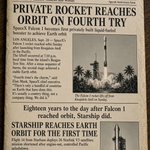
Very cool! @USAToday special space edition is out, and it’s all about Artemis II and the lunar program. Check out the digital version here⬇️ usatodayspecial-va.newsmemor…
2
19
3
75
4,845
Planetary Engineering Review retweeted
File this under: words we really like. 📁✨
59
264
33
2,108
128,681
Planetary Engineering Review retweeted
Replying to @NASAArtemis
You might be able to spot Artemis III’s Orion and the SpaceX/Blue Origin lander test articles from your backyard the same way you track the ISS or other bright satellites— as points of light moving across the sky.
1
1
358
Planetary Engineering Review retweeted
The deadline is approaching. Step 1 proposals for the Starlab Call for Proposals are due Wednesday, Oct. 21, at 11:59 p.m. EDT. Through this opportunity, Starlab and the Center for Space and Aviation Switzerland and Liechtenstein will select up to four teams to fly experiments aboard the International Space Station using BioServe’s Group Activation Pack. Research areas include microorganisms, mammalian cells and tissues, protein crystal growth, fluid dynamics and mixing, and biomaterials. Step 1 proposals are just two pages. Review the CFP requirements and answers to submitted questions before the deadline. Learn more and submit your proposal: starlab-space.com/call-for-p…
6
2
26
1,830
Planetary Engineering Review retweeted
Media are invited to join NASA for a teleconference at 4 p.m. EDT, Thursday, Oct. 15, to preview the agency’s contributions to @JAXA_en's Martian Moons eXploration (MMX) mission, which will explore the Red Planet's moons and return a sample of Phobos. go.nasa.gov/4B2qNBI
36
216
14
1,267
231,819
Planetary Engineering Review retweeted
We’re getting America underway on nuclear power in space and ushering in the era of a Nuclear NASA. With the signing of an MOU with @ENERGY, we’re taking the next giant leap toward exploring the outer solar system and sending American astronauts to Mars. Fission power will help us travel farther, operate longer, and power more capable scientific instruments.
165
747
115
4,978
328,548
Planetary Engineering Review retweeted
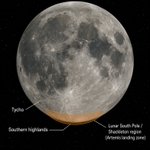
We’re going back to the Moon to stay. Building a Moon Base means giving American astronauts the infrastructure to explore more, conduct more science, and prepare for missions farther into our solar system. That’s the future we’re working toward at @NASA.
323
1,047
131
7,942
535,759
Planetary Engineering Review retweeted
Mission by mission, step by step, NASA is building toward an enduring human presence on the Moon. A new NASA white paper outlines how communications, navigation, timing, and lunar surface observation capabilities are expected to expand as the Moon Base develops and exploration activity increases, including opportunities for industry to contribute.
14
48
2
271
14,855
Planetary Engineering Review retweeted
Can you hear me now? As @NASA prepares for a long-term human presence on the Moon, reliable communications systems will be critical. Our 2027 Human Lander Challenge invites college teams to develop innovative lunar communications solutions. Learn more: go.nasa.gov/4yKHakR
29
170
5
1,140
52,267
Planetary Engineering Review retweeted
How careful should NASA be about possibly importing Earth life to Mars? A new directive from NASA chief Jared Isaacman calls for cutting back on decades of “planetary protection” regulations to facilitate and modernize future missions to the Red Planet. spklr.io/6018EpnOy
10
20
4
61
16,010
Planetary Engineering Review retweeted
It's International Podcast Day, so here's what we're listening to 🎧 Planetary Radio's latest episode is all about missions that sound like sci-fi: a laser-powered drone that could be the first to explore a cave on another world, tiny nuclear-powered probes built to survive the Moon's darkest craters, and flying robots for the caves of Titan. Sarah Al-Ahmed talks with the teams behind these bold NASA-funded concepts for reaching places we've never been. Listen now ⬇️ planetary.org/planetary-radi…
3
9
43
4,057
Planetary Engineering Review retweeted
Mars is calling — and there’s still time to answer! 🔴🚀 The 2026 Int'l Mars Society Convention lands at @USC, Oct. 22–24. Three days of Mars science, tech, exploration & big ideas. Tickets are still available! marssociety.org #mars2026 #spaceexploration #mars #science
7
17
59
2,785
Planetary Engineering Review retweeted
Look back at the conclusion of NASA's LunaRecycle Challenge with us! This competition focused on a crucial element of future deep-space exploration: developing advanced non-metabolic waste management systems for lunar surface missions. Learn more: go.nasa.gov/4yracWn
21
107
3
587
18,655
Planetary Engineering Review retweeted
Elon Musk just gave a huge update on what Starship will unlock for humanity’s understanding of the universe: “Starship will expand the aperture of physics research by placing much larger telescopes in orbit and giant ones on the Moon” This is a massive Today, space telescopes have to be engineered around brutal mass and volume limits. They need to be incredibly light, foldable and packed into a rocket fairing with complex deployment systems Starship changes that equation Its enormous payload capacity means future telescopes can be much larger, heavier and simpler...instead of engineers spending years shaving every kilogram and designing around launch constraints And Elon is already thinking beyond orbit: GIANT telescopes on the Moon Starship won’t just take humanity deeper into space It will dramatically increase how much of the universe we can actually see
Starship will expand the aperture of physics research by placing much larger telescopes in orbit and giant ones on the Moon
45
143
12
816
25,888