

Theology ☩ Philosophy ☩ Ethics ☩ Old Books “Let your reasonableness be known to everyone” (Phi. 4:5)
Christendom
Joined May 2025
- Tweets2K
- Following527
- Followers1K
- Likes5.3K




Premise 1. Grace perfects nature.
Premise 2. Specific love of one’s people and place is of nature.
Therefore, grace perfects specific love of one’s people and place.
That’s what is Christian about it. In other words, Christians—as renewed images of God—are all the more earnest to honor God in elements of the original creation that are good.


Got really sick this week. No voice for three days. In God's providence, there was already one of our pastoral interns doing the sermon. But I still bring you the weekly standards ...
The Westminster Larger Catechism Q. 16.
How did God create angels?
A. God created all the angels spirits, immortal, holy, excelling in knowledge, mighty in power, to execute his commandments, and to praise his name, yet subject to change.
Col. 1:16; Ps. 104:4; Matt. 22:30; Matt. 25:31; 2 Sam. 14:17; Matt. 24:36; 2 Thess. 1:7; Ps. 103:20-21; 2 Pet. 2:4.


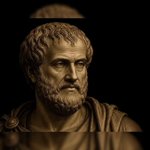
Aristotle relating ethics to politics, as if the seed of right conduct to the larger plant. Note the parallel to Plato's analogy of the larger city to the soul in order to discover justice.
“Shall we not, like archers who have a mark to aim at, be more likely to hit upon what is right? If so, we must try, in outline at least, to determine what it is, and of which of the sciences or capacities it is the object. It would seem to belong to the most authoritative art and that which is most truly the master art. And politics appears to be of this nature; for it is this that ordains which of the sciences should be studied in a state, and which each class of citizens should learn and up to what point they should learn them … For even if the end is the same for a single man and for a state, that of the state seems at all events something greater and more complete whether to attain or to preserve; though it is worth while to attain the end merely for one man, it is finer and more godlike to attain it for a nation or for city-states. These, then, are the ends at which our inquiry aims, since it is political science, in one sense of that term.”
Ethics, I.2

The Westminster Larger Catechism Q. 15.
What is the work of creation?
A. The work of creation is that wherein God did in the beginning, by the word of his power, make of nothing the world, and all things therein, for himself, within the space of six days, and all very good.
Gen. 1; Heb. 11:3; Prov. 16:4.

This morning's sermon.
The Proving of God's Provision — Malachi 3:8-12 youtu.be/ReADud07yN0?si=SyB4… via @YouTube
That thumbnail.
The Rise of Biblical Theology: Part 6 of Causes of Biblicism youtu.be/Mn4ora0vcAE?si=RVSy… via @YouTube
When you don't order your right-wing leaders on TEMU, the real ones can tell you in two words what's going on. And no, he's not just talking about France. France in a parable at this point. The principle is simple. If they're not commanding the Crusades as we speak, they're on the same payroll as Macron.

Plot twist. Christianity is properly final. Liberalism is not. The very inability to concede that the one has a right to this that the other has not is itself a cardinal doctrine of modern liberalism—e.g., the egalitarian leveling of all things including truth claims. But actually liberalism is worse than merely imperialistic. As the most triumphant (for now) modern ideology, it confuses proper political ends with busying itself with “mankind’s fate.”

1. Welcome to history. This has been a norm. Yet missionaries have gone.
2. The logic then is: In order for the Church to do foreign missions, our nation must allow any religious influx.
3. Neither temporal nor eternal kingdoms exist to exalt the fairness of the lowest common denominator.
Let there be no doubt that none have conflated church and nation more than those who have carped most at right-wing politics as idolatry and overrealized eschatology.


🔥

💎 🚨 📖 🦃
New surprise release before Thanksgiving, available for pre-order (release date: Nov 2, 2026):
The Great Works of Christ in America by Cotton Mather, in 3 volumes
The opening volume traces New England’s beginnings and the lives of its leading governors and magistrates. Through accounts of settlement, hardship, and civil leadership, Mather commemorates the convictions and labors of those who sought to establish a Christian commonwealth in the New World. His narratives introduce readers to the people whose faith and perseverance shaped the colonies, while recounting the difficulties that attended their undertaking. Combining historical narrative with reflections on providence, this volume sets the founding aspirations of New England before later generations as a legacy to remember, examine, and preserve.
The second volume brings together Mather’s lives of New England’s eminent ministers and his history of Harvard College. Portraits of pastoral faithfulness stand alongside accounts of the college’s founders, benefactors, and distinguished scholars, revealing the close connection between Christian learning and the ministry of the churches. Mather records the preaching, studies, trials, and personal character of men whose labors helped establish and sustain New England’s congregations. His account of Harvard follows the institution’s development and its service in preparing successive generations for public usefulness. Together, these books commemorate a culture in which scholarship and piety were cultivated for the advancement of Christ’s kingdom.
The concluding volume examines New England’s synods, church order, and doctrinal concerns, followed by accounts of remarkable mercies and judgments. It closes with the controversies, afflictions, and wars that tested the colonies, as Mather describes God’s care over his church in America. Accounts of ecclesiastical assemblies illuminate the churches’ efforts to maintain sound doctrine, resolve difficult questions, and preserve their common life. Narratives of unusual providences reveal Mather’s conviction that divine government extended to every circumstance. The final book recounts internal disturbances and outward conflicts, completing his portrait of a people whose history he described via the promises, warnings, and consolations of Scripture.
6×9
Hardcover with Dust Jacket
Volume 1: 302 pages
Volume 2: 770 pages
Volume 3: 744 pages


One of the last things I do in my dissertation is to show various Christian theologians of the past deducing numerous divine attributes from previous conclusions of natural theology. But Aristotle could be shown to do the same:
“There is, then, something which is always moved with an unceasing motion, which is motion in a circle; and this is plain not in theory only but in fact. Therefore the first heaven must be eternal. There is therefore also something which moves it. And since that which moves and is moved is intermediate, there is something which moves without being moved, being eternal, substance, and actuality … But since there is something which moves while itself unmoved, existing actually, this can in no way be otherwise than as it is. For motion in space is the first of the kinds of change, and motion in a circle the first kind of spatial motion; and this the first mover produces. The first mover, then, exists of necessity; and in so far as it exists by necessity, its mode of being is good, and it is in this sense a first principle. For the necessary has all these senses – that which is necessary perforce because it is contrary to the natural impulse, that without which the good is impossible, and that which cannot be otherwise but can exist only in a single way … And life also belongs to God; for the actuality of thought is life, and God is that actuality; and God’s self-dependent actuality is life most good and eternal. We say therefore that God is a living being, eternal, most good, so that life and duration continuous and eternal belong to God; for this is God.”
Metaphysics, XII.7

On this day of the Translan Chronicles getting hype and Trump getting ready to back down on the firing squad (as easily predicted), I am freshly aware of the far-reaching consequences of the Big Eva boogie-man of “moralism,” by which millions of Christians were persuaded that condemnation of cultural trash and self-preservation are dirty and compromise the gospel. But know for certain that that movie is demonic and that man is not one of us.
Aristotle against naturalism and subjectivism in one.
“In general, it is absurd to make the fact that the things of this earth are observed to change and never to remain in the same state, the basis of our judgement about the truth. For in pursuing the truth one must start from the things that are always in the same state and suffer no change.”
Metaphysics, XI.6

Tweet of the week so far.
I'll add that these (e.g., this one in Charlotte over a year ago) are state-sponsored executions because the judges know what they're doing by letting violent 20+ time offenders out on the general population. They have their orders. The same bosses paying for genocide over here are paying for the same over there. I fault the Right not for too much force, but for too little, too many performative words, too little understanding that you can't fight a war piecemeal and as if you are still in a functioning civil society with your enemy.


The Westminster Larger Catechism Q. 14.
How doth God execute his decrees?
A. God executeth his decrees in the works of creation and providence, according to his infallible fore-knowledge, and the free and immutable counsel of his own will.
Eph. 1:11

Sermon this morning.
The Good News of God’s Unchanging Love — Malachi 3:6-7 youtu.be/Q_5SnwlbqBQ?si=8o1G… via @YouTube

Sunday school this morning.
The Loss of Logic and Metaphysics: Part 5 of Causes of Biblicism youtu.be/SUOrcWe9bYk?si=lyQQ… via @YouTube
