

I, a universe of atoms, an atom in the universe - Richard Feynman
United States
Joined November 2011
- Tweets19
- Following153
- Followers18
- Likes674
Reghan Catron retweeted

Want to take a #crashcourse in #gravitationalwave #dataanalysis? Don’t miss this opportunity to participate in the 5th GW Open Data Workshop to learn how to work on actual observational quality data from the LIGO-Virgo-KAGRA @LIGO @ego_virgo @KAGRA_PR observing runs!

My chemistry textbook states that halogens are one electron shy of a filled p subshell, which just sounds like a nerdy insult.
Reghan Catron retweeted

An amazing #scicomm job opportunity at @CERN!
If you are a student enrolled in a university course, ideally in science communication or social studies, and have a strong interest in physics, astronomy and related technologies, this job is for you!
➡ international-relations.web.…

ALT #CERNScienceGateway


Reghan Catron retweeted

A California wildfire led to unusually high levels of bacteria and sediment in adjacent coastal waters, months after the burn. When a fire burns through a forest, it impacts the soil’s ability to absorb water and increases runoff into local water bodies.
go.nasa.gov/3HH8Yep

ALT Photo of the 2018 Woolsey fire burning near the California coast

Reghan Catron retweeted

In physics, they don't say "I love you."
Instead they say "in the limit of small θ we can drop higher order terms," and I think that's beautiful
Reghan Catron retweeted

You can learn more about this by revisiting our explainer on 'Absolute Zero.' Watch now: youtu.be/aYBEcFvI8o8

Reghan Catron retweeted
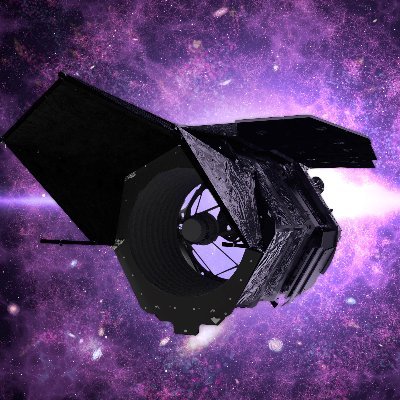
The planet hunter...Roman will use its Coronagraph Instrument to search for exoplanets that are older, dimmer, colder, and hidden by their star's light! This advantage from space could allow Roman to see Jupiter-like words! go.nasa.gov/3JRw3wo
Reghan Catron retweeted

Elliptical galaxies, like NGC 1132 in this #HubbleClassic image, contain hundreds of millions to trillions of stars.
Ranging from nearly spherical to elongated shapes, elliptical galaxies’ yellowish color comes from their aging stars.
Read more: go.nasa.gov/3M8MLJH


