

Founder, ECHO Consulting + Restrained Depth AI. Licensed clinician helping implement AI workflows without losing human judgment. 225M+ views building in public.
California, USA
Joined March 2026
- Tweets2.9K
- Following2K
- Followers4.2K
- Likes10.6K




Pinned Tweet
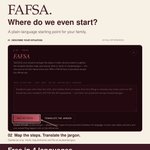
You watched us build them. 200M+ views on X. Now open them: a resume from a sticky note, a live voice interviewer, college applications decoded, a live assistant for your business. Free with an email in 4 languages.
Amp Spaces (6 nov): en su ejemplo de revisión de seguridad, el primer pase dividió el código en 16 áreas, comprobó cada hallazgo en otro hilo y dejó un resumen en el espacio para seguimiento humano.
Organización del trabajo — no evaluación independiente de calidad.
Fascinating how quickly many of these AI influencers and evangelists switched sides after a couple bad days. It’s not a bubble but it will be a period of shaking out the weak hands just like in crypto.
In OpenAI’s wet-lab benchmark, the same microscope image showed both darker and lighter cell compartments. Astra’s final answer generalized from the darker ones.
OpenAI’s explanation: changing focal depth can reverse the contrast.
Redis Iris Lens (beta): en cada turno compara lo que devolvió cada fuente con lo que entró al prompt.
Los docs ponen el ejemplo: el recuerdo correcto se recuperó… y igual se quedó fuera.
Mistral Managed Agents preview (deployed): a pending tool approval can wait after you close the app — one hour by default.
If nobody answers, that call does not run; the model is told and the turn continues.
SWE-2 Flash: Cognition publica 8 pruebas vs SWE-2. Solo gana numéricamente en una — FrontierCode 2.0, 24,0 frente a 23,8.
En Terminal-Bench 4.0 publican 20,0 para Flash y 27,3 para SWE-2. Cognition lo posiciona más barato y más rápido; la tabla no es un veredicto de producción.
In Revolut’s AI Engineer NYC talk, David Abitbol pairs sandbox rules that limit what coding agents can run with enough telemetry to dig into an incident afterward.
He names the need for logs — not a proof that every incident can be rebuilt.
La guía de Notion para agentes propone guardar tus preferencias y decisiones en una base privada de Memories.
La misma página avisa: MCP actúa con todos tus permisos de Notion.
El agente entra con tu cuenta. Lo privado para tu equipo, tu agente lo puede leer.
Before I click migrate on a tool that just got acquired, I write down what I actually use. HumanLayer → Factory: open-source path · ≥30 days · export / migrate / self-host. Acquisition day is inventory day not a panic click.
Addy Osmani lo llama rendición cognitiva: la respuesta de la IA se vuelve tuya sin que formes opinión propia. En el estudio de Shaw y Nave (Wharton) que cita, cuando la IA fallaba, la gente aceptó el error el 73% de las veces. Mi regla: anota qué esperas antes de leer la salida.
Positron's new MCP lets Claude Code or Codex see your data, plots and consoles and run R/Python as you. Posit's own words: equivalent to unrestricted shell access. Most harnesses ask before risky steps. Not all. The harness you plug in is the real security setting.
Ask a coding agent for "a GitHub MCP" and it may install the name it remembers. Glow Labs (MCPhantom): in 98% of the deprecated installs they reviewed, the pick came from training data. One agent saw "deprecated" on npm and installed anyway. Approve MCPs by exact package name.
Antes de abrir lo que escribió el agente, escribo mi propia lectura.
No es desconfianza. Es el hábito de la clínica: primero tu hipótesis, después el alert.
Si firmo sin eso, no estoy usando la herramienta. La herramienta me está usando a mí.
OpenAI's Scaling Git post (Nov 2): Codex pushed their monorepo's reliability below 90% at times. Their fix, Pando, kept the Git client but dropped one assumption: a single point-in-time view of every branch. Agents only need their own branch in order. Median push nearly 5x faster.
Claude Code 2.1.317 (Anthropic, hoy): si un hook del Agent SDK falla, ya puede bloquear la acción en vez de dejarla correr (onFailure: "block"). Y pregunta antes de que una herramienta web o shell mande tu email a la red. Lo primero que activaría en un hook de permisos.
Google's Connected Apps policy (MCP apps for Search + Gemini, in preview) has a line I didn't expect: every tool declared up front. No list_tools, no generic execute_command, no agent-to-agent hops. Irreversible actions need a confirm step. That's what makes it reviewable.
Operando un equipo de bots aprendí algo simple: un cupo compartido se siente gratis hasta que un bot con un loop largo se come el día de los demás. Ahora reparto el uso por bot, y cuando la tarea es cara, también por tarea. ¿Ustedes: por bot, por tarea o un solo pool?