

Exploring the questions shaping health and everyday life through data, research, and insights from the doctors and researchers at Ro.
Joined October 2026
- Tweets41
- Following81
- Followers139
- Likes37




The lab coats stay on but the gloves are coming off. Welcome to Ro Research Lab 😈
We’re taking our real-world data about sex, GLP-1s, weight loss, relationships, and more and sharing our insights in real time. Follow along, folks. ro.co/research-lab/

6
513


@AndrewDudum can we get a Hims Research Lab. similiar to @RoResearchLab ? I think it’s a massive opportunity long term.
5
Ro Research Lab retweeted

Insurance companies don’t make it easy to know where you stand with your GLP-1 coverage. So we did.
Our improved coverage checks and prior authorizations now live in one place on @ro - under your profile. See what's approved, what's in progress and what's next. No phone call required.
Ro Research Lab retweeted

CVS just put a number on the GLP-1 break-even question. Using Aetna claims, they estimate that at ~$350/month, medical savings roughly offset the drug cost over 3 years.
Compared with matched non-users, GLP-1 users had:
- 10-12% fewer ER visits in years 1 and 2
- 14% lower odds of a major cardiovascular event
- 34-42% fewer hospitalizations among those still on the drug at year 3
At today’s employer prices (~$617-766/mo), plans saved $9,400 per person on medical but spent $13,300 more on Rx. Net: +$3,900.
The interesting part: cash prices (~$299-349) and Medicare’s $245 pilot price are already below CVS’s break-even. The barrier isn’t what these drugs can be sold for. It’s what employers are paying.
Family coverage now costs $28,303 a year (KFF). That’s why employers are dropping GLP-1s, not because the drugs don’t work. At ~$350/mo, they wouldn’t have to choose.
A few call outs: it's a CVS white paper... (insert disclaimers). Observational. Diabetes and obesity pooled. The year-3 group (n≈4,000) is people who stayed on, who may differ from those who stopped. And CVS has a seat at this negotiating table.
Affordability drives access.
How could they afford to when only 1 in 5 (clinically qualified) people actually can get insurance coverage?teapawt.org/RoResearchLab/status/2…

5
219
if insurance companies weren't so heavy handed with denials maybe people could afford to take their medications 🥴 (data on insurance denials here, tldr: it's a lot teapawt.org/RoResearchLab/status/2…)


3
570
Ro Research Lab retweeted
The @RoResearchLab team breaking down just how hard it is to get insurance coverage for GLP1s.
We’ve invested a ton of time and energy here to fight for patients at each step but it’s often pushing a boulder up a hill.
I’m hopeful as the ROI improves (breadth of label expands, we get more data on benefits of GLP1s and reduction in hc costs are proven out), coverage will increase but I do think it will take a while. Unfortunately, we see large companies like Starbucks and entire states pulling coverage (it’s going in the wrong direction)!
Petrelintide provides two things: ~10% weight loss in 42 weeks, and THE best trial name in the game (ZUPREME!).
One thing you won’t get? Nausea and vomiting, which was very similar to placebo... nice #ObesityWeek2026 #OW2026

6
355

Our abstract on GLP-1 access gaps was covered in the AMJC Journal. Read more about it below 👀 #OW2026 #ObesityWeek

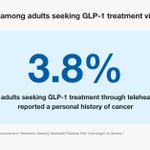
Could GLP-1s play a bigger role in cancer survivorship? We're exploring the possibilities.
Weight gain is a common side effect of some cancer treatments, and maintaining a healthy weight is an important part of life after cancer. While GLP-1s may offer a promising option for weight management, more research is needed to understand whether GLP-1 treatment or weight loss could help reduce the risk of cancer recurrence.
That's where real-world data can help. We collaborated with @AmericanCancer Society to explore how Ro's data could support future research on GLP-1s among cancer survivors. After further review, we found that cancer survivors make up a meaningful proportion of Ro’s patient population, highlighting an opportunity to help close these research gaps.
Research shows that being metabolically healthier is crucial to helping ward off cancer recurrence, and we see an opportunity for Ro Research Lab to help lead the way in answering important questions about GLP-1s, metabolic health, and life after cancer. #OW2026 #obesityweek2026

We always learn so much from @ljaronne. His latest teachings?
1. Berobenatide helped patients lose ~12% weight loss over 28 weeks on a monthly injection.
2. “Berobenatide” is pronounced: 🐻-🅾️-BEN-🅰️-🌊
#ObesityWeek2026 #OW2026

4
281

Ro Research Lab retweeted

Comparative effectiveness of obesity treatments after initial therapy with semaglutide or tirzepatide:
Weight change after taking semaglutide or tirzepatide for 2 years was:
−10.9% with continuing the original medication
−16.0% with switching between semaglutide and tirzepatide
− 8.2% with switching to non- GLP-1 medication
−28.2% with undergoing Metabolic Surgery
− 4.0% with discontinuation of treatment
When GLP-1 fail: MBS is effective
@HamletGasoyan @Ali_Aminian_MD
#OW2026
thelancet.com/journals/eclin…

Think telehealth can’t serve patients across the BMI spectrum? Think again.
In the first-of-its-kind study, we partnered with Drs. @pshauerMD and Vance Albaugh at @pbrcnews and Dr. @bevtchangMD at @WeillCornell Medical School to examine treatment outcomes among patients with a BMI of 50 or higher.
Released at @ObesityWeek today, we found that among 500 Ro patients who remained engaged in GLP-1 treatment (semaglutide or tirzepatide) for one year, the average weight loss was 19.4% (~67 pounds).
The results highlight the potential for clinically significant weight loss through telehealth-based GLP-1 treatment among patients with some of the greatest treatment needs. As the figure shows, over 80% of patients moved to a lower BMI category, but most still had a BMI of greater than 40.
That's a major achievement, but there's an opportunity to do even more. For these patients, surgical procedures and new medications with different mechanisms of action (e.g., CagriSema, retatrutide) will continue to advance the field, ultimately helping patients, regardless of size, on their weight loss journeys. #OW2026 #ObesityWeek

2
2
121
The irony? Food noise is getting louder at #ObesityWeek2026, and we're here for it. As RAID-FN co-developer and Ro collaborator @emilydhurandhar and other scientists emphasized during the “Perspectives on Food Noise” sessions, food noise is NOT hunger. It's a distinct experience that deserves scientific attention.
We've been digging into the data ourselves. Check out our latest research on food noise: ro.co/research-lab/posts/foo…

2
145
who's headed to #ObesityWeek2026?
come say hi at the poster sessions on Sunday to learn about our gripping research on insurance coverage (no, seriously... it's unreal - poster #531). Then come by #541 to check out our outcomes for patients with BMI 50 and greater.
On Monday, you can catch us at poster #868 to hear about our collaboration with @AmericanCancer Society.
See you out there!
7
321
Ro Research Lab retweeted
The @RoResearchLab, Dr. David Allison, and Dr. Dhurandhar developed a validated "Food Noise" scale. It measures: preoccupation, persistence, and dysphoria associated with food.
What's fascinating is that food noise for patients at lower BMIs were almost identical to higher BMIs.
It's another powerful reminder that we can't make assumptions on how someone is feeling on the inside based on how they may appear on the outside.
