

Award-winning, bestselling Florida-based author. U/W cave explorer & sidemount diving expert. Furdad to dogs & cats. Click link for more info & to buy my books.
Florida, USA
Joined February 2012
- Tweets9K
- Following1.2K
- Followers5.1K
- Likes7.6K







Pinned Tweet
In fiction, this is the moment everything changes.
The passage narrows.
The light thins.
The last easy decision is already behind you.
From here on, every choice compounds.
Turn back too late and you don’t just lose ground — you lose options.
This is where thrillers are born.

There is a certain freedom in being suspended between the surface and the bottom. The sunlight filters through the water, dancing across the sand below. The world above becomes a distant shimmer, while everything around you takes on a different sense of scale.
I have always enjoyed the contrast between the quiet of a scene like this and the complexity of the equipment that makes the dive possible. Two sidemount cylinders, regulators, lights, and the rest of the gear become part of the experience, allowing the diver to explore a world most people never get to see.
But what keeps me coming back isn't the equipment or even the depth. It's the experience itself. The feeling of moving through clear water, watching the light shift across the bottom, and knowing there's always another place worth exploring.
Sometimes, the best part of an adventure is simply being there.

Most changes don't announce themselves. A sentence starts feeling wrong before you know why. An idea becomes less convincing one small detail at a time. A story begins heading in a direction you didn't intend long before you realize you've lost the thread.
The same is true in exploration. The important signal isn't always dramatic. Sometimes it's simply a feeling that something has changed. Learning to recognize those small signals matters. Not because every change means something is wrong. Because noticing gives you the opportunity to find out.
"You could paddle right over it"
Imagine paddling over a spring without knowing it's there. That's possible at Hidden Spring. From the surface, there's little to announce what's beneath the water. But below is an opening into the limestone, and inside the cave is something particularly unusual. The fossilized spine of an ancient dugong. It's hard to imagine a better reminder that Florida's springs connect the present to a much older world. Freshwater flows through ancient limestone. A cave preserves the remains of an animal that lived here when Florida's environment was dramatically different. And people paddle above it today without ever knowing what's underneath.
Some of Florida's most interesting places are the ones you can't see from the surface.
Explore Hidden Spring / Bone Cave:
hiddenriversofflorida.com/hi…
#HiddenRiversOfFlorida #HiddenSpring #BoneCave #HolmesCreek #FloridaGeology

This is adorable. “I’m comfortable right here, but I’m keeping an eye on you.” He’s stretched out on the bed, completely relaxed, while his little feline roommate has claimed the pillows in the background.

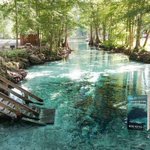
Some springs invite you to look beneath the surface. The Spring Run of the Devil's Spring System is one of those places. The water is incredibly clear, the limestone is visible beneath the surface, and the run gives only a hint of the much larger world that continues underground.
I've spent a lot of time exploring Florida's springs and cave systems, and those experiences are what led to The Hidden Rivers of Florida: Discoveries. There's something special about seeing a place from the surface while knowing there's an entirely different landscape hidden below it.

How many springs do you think are hiding along Holmes Creek? When you're paddling the creek, it's easy to think of it as simply a beautiful North Florida waterway. But look at a map. The creek is surrounded by springs, sinkholes and cave systems connected to the Floridan Aquifer. Some are obvious. Some are tucked away. And some are so well hidden that you could paddle right over them without knowing they're there.
That's the bigger story I'm trying to document with Hidden Rivers of Florida: The springs aren't isolated places. They're part of a much larger underground system.
Explore the area:
hiddenriversofflorida.com/ch…
Which Holmes Creek spring should I feature next?
#HiddenRiversOfFlorida #HolmesCreek #FloridaSprings #FloridaCaves #FloridaPaddling

Sometimes you don't have to go underwater to find a hidden spring. Cypress Spring is reached by traveling along Holmes Creek. As you paddle through the tannic water, the landscape looks like a typical North Florida creek. Then the water changes. Clear spring water appears beneath you, and suddenly you're looking into the blue depths of one of the area's most beautiful springs.
It's a perfect example of why Florida's springs are so interesting. You can explore them from a kayak. You can swim in them. You can photograph them. And beneath the surface, another world begins.
Explore Cypress Spring:
hiddenriversofflorida.com/cy…
Have you made the paddle to Cypress Spring?
#HiddenRiversOfFlorida #CypressSpring #HolmesCreek #FloridaPaddling #FloridaSprings

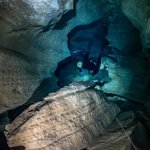
The farther you go, the more the cave changes. What looks like a single passage in a cave can quickly become a maze of shapes, layers, and openings. Massive slabs of rock divide the passage, while the guideline disappears into the darkness ahead.
This is what I love about cave exploration. You never see the entire story at once. Your light reveals a section of the passage, your eyes adjust to the formations around you, and then something else appears beyond it. The cave keeps unfolding as you move through it. There is a certain humility in that. You aren't there to conquer the cave. You're there to experience a place that existed long before you arrived, and to leave it exactly as you found it.
Sometimes the best part of exploring is realizing how much there is left to discover.

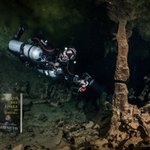
A sidemount diver, a camera, and a piece of underwater history. This is one of those dives where the environment tells the story. The structure below has become a reef of sorts, covered in marine life and surrounded by divers exploring what remains. And there's something fitting about seeing a sidemount diver hovering above it. With the cylinders positioned alongside the body, the configuration keeps the diver streamlined and leaves the front of the body relatively open. Useful when you're maneuvering around structures, wreckage, or other underwater features.
But the equipment is only part of the picture. The real reason we're there is to explore, observe, and document places like this before they change even more. The ocean is constantly rewriting its own history. We're lucky to get a glimpse of it.


Some formations look as though they were deliberately placed there. This is one of the more unusual formations I've encountered in the Hidden Passages exploration. A tall column with an almost perfectly clean break through it. Was it once a single continuous formation? Did something happen to separate the two sections? Or is what we're seeing simply the result of thousands of years of growth and erosion?
Those are the kinds of details that make exploration so fascinating. You don't just swim past them. You start wondering about the story behind what you're seeing. And sometimes, the questions are just as interesting as the answers.

A guideline disappearing into the darkness is one thing. A guideline leading upward toward a hidden cenote is something else entirely. This passage in Cozumel was part of the exploration that eventually became Beneath the Jungle of Cozumel: Hidden Passages. Following the line meant more than simply moving through another section of cave. It meant tracing a route toward a place that had remained hidden beneath the jungle.
That is what I love about exploration. Sometimes you're not looking for a destination. You're following a clue. And sometimes that clue leads somewhere you never expected.

There were so many potential leads. We spent two and a half hours poking our heads into each one. Most of them didn’t pan out. They were nothing but short runs into dead-ends. There were a couple of tunnels that seemed promising. Both were small and low. The first one didn’t get as small. I put about six hundred feet of line in it before coming to a dead-end with no viable leads. It was unlike Dos Coronas where we would end up at the end of a tunnel and find several cracks and holes. The end of this passage was surrounded by smooth walls. There was no way I had missed a lead there.
The second tunnel I found did a few things that made me think it would be where I found the connection. It gently sloped down away from the main tunnel, bringing us from the eighteen feet of depth we had in the main tunnel to twenty-six feet of depth at the end. It was also located between the other tunnel I had just found and lined and Dos Coronas, putting us about forty or fifty feet closer. It wasn’t just curved smooth walls. There were possible leads in this tunnel. The floor continued to slope down to the right along with the ceiling. The crack between them was filled with sand. I wondered if that could be the connection. Nothing else jumped out at me.
Excerpt from Beneath the Jungle of Cozumel: Connecting the Crowns
More than 8,000 feet of cave passage beneath Merritt's Mill Pond. Twin Cave doesn't have the name recognition of Jackson Blue. But beneath the surface is a substantial cave system that stretches for thousands of feet. And that's one of the things I've discovered while building Hidden Rivers of Florida. Some of the most interesting places aren't necessarily the ones everyone knows. They're the ones you find when you start looking more closely. Twin Cave is one of those places.
Explore Twin Cave →
hiddenriversofflorida.com/tw…
How many of the lesser-known springs and caves around Merritt's Mill Pond have you explored?
#HiddenRiversOfFlorida #TwinCave #MerrittsMillPond #FloridaCaves #FloridaSprings

Sometimes the cave makes the route obvious. Sometimes it makes you work for it. Here, the guideline threads through a maze of massive rock formations, with the passage narrowing and changing around it. This is where good trim and precise control matter. In a complex cave environment, you don't want your equipment becoming part of the problem. A streamlined sidemount configuration lets you keep your cylinders close, maintain your position, and move deliberately through the passage.
The goal isn't to rush through. It's to hover, observe the passage, manage your position, and move with the cave rather than against it. Because sometimes the most interesting sections of a cave are the ones that make you stop and figure out exactly how you want to move through them.

The first time something feels wrong, you notice it. The tenth time, you may call it normal.
Maybe the restriction always feels a little tighter than you expected. Maybe visibility is usually worse here. Maybe your equipment always makes that noise. Maybe you always push your gas reserve a little farther.
Nothing bad has happened. So eventually, the unusual becomes familiar. And familiar starts to feel acceptable. That's normalization. The danger isn't necessarily the first deviation. It's what happens when repeated deviations stop getting our attention. We begin to adjust our expectations instead of asking whether the conditions themselves should be accepted.
Experience should teach us what normal looks like. But it should also teach us to recognize when normal isn't necessarily safe.
Just because you've gotten away with something before doesn't make it a good habit.

Some cave passages demand attention for what lies ahead. Others make you look at the rock around you. This passage has both. The ceiling is sculpted into layers and folds, while the diver works his way beneath a low section of limestone, following the line into the darkness beyond.
It's easy to focus on the diver when looking at a cave photograph. But sometimes the real story is in the rock. The thousands of years of water movement that created a landscape like this beneath the surface.
That's one of the things that keeps me fascinated with cave exploration. Every passage has something to tell you.

There is something about a cave that changes when you can see both worlds at once. Above the water, the passage is quiet and almost untouched. Below the surface, another landscape continues into the darkness. This is one of the things that keeps drawing me back to caves. The surface is only a boundary. What looks like the end of the world from one side can be the beginning of another from the other. A guideline disappears into the distance. Rock formations reveal themselves only when the light reaches them. And somewhere ahead, the passage continues beyond what the camera can show.
Exploration is often like that. You don't get to see the whole story at once. You see enough to know there's more, and sometimes that's all the reason you need to keep going.

Sometimes we move forward based on what we think we already know. We remember how something looked last time. We assume the next step will work because the previous one did. We fill in the gaps without realizing we’re doing it. Exploration has a way of exposing those assumptions.
Writing does too. A scene that seemed finished may need another look. A story that felt clear can reveal a contradiction. An idea that made sense yesterday may look different after some distance. Checking isn’t a lack of confidence. It’s part of the process.
Before moving forward, it’s worth asking:
Do I actually know this, or am I simply remembering it that way?
