




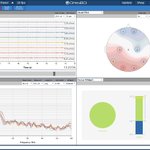
Preservation of temporal privacy in body sensor networks sciencedirect.com/science/ar…
Risk Mitigation Strategy Infographic chatgpt.com/s/m_68c3a6112bc4…
OpenAI certifications details chatgpt.com/share/68c3a0ac-b…


Covert communication clarification chatgpt.com/share/68c35465-3…

Orlando Pair Sentenced For Copyright Infringement Of Microsoft Products And Conspiracy To Commit Wire Fraud justice.gov/usao-mdfl/pr/orl…

Jury Finds Non-Fungible Token Developer Guilty Of Defrauding Investors And Laundering Proceeds Through Solana And Ethereum Blockchains justice.gov/usao-mdfl/pr/jur…
Justice Department Announces Formation of Task Force to Combat Anti-Semitism justice.gov/opa/pr/justice-d…

Privacy in the Brain: The Ethics of Neurotechnology | Technology Networks technologynetworks.com/neuro…


The IETF Blog recently chatted with new Internet Research Task Force chair Dirk Kutscher about his views of where the IRTF is now and what the path ahead looks like. ietf.org/blog/new-irtf-chair… via @ietf
Attorney General Moody and Florida State University Fight to End Human Trafficking legalnewsline.com/stories/65…
Ronard Cedeno retweeted

Advances and Challenges in Combustion Control of Radio Frequency Oscillating Plasma Discharge @scilightpress #Science #Technology #News
Open Access
sciltp.com/journals/ijamm/20…

Ronard Cedeno retweeted

Telkom Kenya in Sh570m network technology deal
Telkom Kenya has signed a Sh569.6 million ($4.4 million) deal with Japanese service-based tech firm Rakuten Symphony and US-based telco Airspan Networks to develop an advanced mobile network technology dubbed Open Radio Access Network (Open RAN).
Open RAN is a new approach to building radio access networks that allows for interoperability between cellular network equipment from different vendors. It promotes flexibility and innovation in network design and deployment, unlike the traditional closed network technology where telcos rely on a single vendor for all their network equipment.
Telkom said the Japanese and US governments will fund the project through a technology grant administered by Rakuten Symphony and Airspan Networks.
The telco said the project partners would set up a testing facility and conduct field and network tests as part of efforts to advance the fourth and fifth-generation (4G and 5G) networks, Open RAN, as well as artificial intelligence (AI) in Africa.
AI technology allows computers and machines to simulate human intelligence and problem-solving tasks.
“Under the tripartite partnership, Airspan will provide 4G and 5G radio units while Rakuten will provide an operating support system platform, as well as the Open RAN software stack to run and optimise the 4G/5G open RAN network elements,” said Telkom.
“Telkom will provide the requisite human capital and facilities.”
The firm said the long-term objective of the project is knowledge transfer and training of local developers and engineers.
Telkom CEO Mugo Kibati termed the partnership a significant milestone in positioning Kenya and Africa as a research, development, and testing hub of cutting-edge technology.
The Japanese and US Governments, through Rakuten Symphony and Airspan Networks, will invest $3 million (Sh388.4 million) and $1.4 Million (Sh181.2 million) in the project, respectively.

Ronard Cedeno retweeted

MOD and UK MOD have started a cooperative research on the technology demonstrator of a Japan and Great Britain Universal Advanced RF system (JAGUAR). The JAGUAR, a state-of-the-art radio-frequency (RF) sensor system, enables us to instantly observe a wider area than before with

Ronard Cedeno retweeted

A Comprehensive Insight into Telecom Infrastructure: From Tower to Core
As the digital ecosystem expands, the need for robust, scalable, and intelligent telecom infrastructure has never been more critical. This visual overview illustrates the entire architecture of a modern telecom network—tracing the journey from the radio site to the service and application layer.
Key Components Covered:
1. Radio Access Network (RAN):
Begins at the tower with antennas, RRUs, BBUs, and AISG interfaces—facilitating wireless communication. Powered and managed by ATS, DCDU, and routers at the site.
2. Transmission & Transport Network:
High-speed data transmission enabled via microwave links and optical fiber. Critical nodes such as routers and gateways (SGW, PGW, UPF) ensure seamless transport.
3. Core Network:
Acts as the nerve center of telecom operations. Integrates mobile core functions, edge computing capabilities, content delivery systems, and advanced security protocols.
4. Service & Application Layer:
Supports cloud platforms, data centers, network slicing, billing, charging, and security solutions—empowering diverse digital services.
5. Network Operations & Management:
Utilizes OSS/BSS, EMS/NMS, and AI/ML-driven tools to ensure real-time monitoring, predictive maintenance, and service optimization.
Common Physical Infrastructure:
Includes patch cords, CPRI/eCPRI links, Ethernet interfaces, and structured cabling housed in secure racks and cabinets.
This layered architecture is fundamental to delivering reliable, high-speed, and intelligent mobile services—from 4G LTE to next-gen 5G networks.
For professionals and aspiring engineers, understanding this end-to-end structure is vital for contributing to future-ready telecom solutions.
#Telecommunications #NetworkInfrastructure #5G #CoreNetwork #RAN #TransmissionNetwork #EdgeComputing #AIinTelecom #DigitalConnectivity #TelecomEngineering #FutureOfNetworks

