
Researcher in Global Health and Development, Rethink Priorities. Opinions my own. He/His
London, England
Joined December 2021
- Tweets74
- Following321
- Followers119
- Likes227




Lead chromate is a pigment which is highly toxic, has safe alternatives, and yet continues to be used in many countries. Shockingly, it's accession to the Rotterdam convention (which controls trade in chemicals) is being blocked by a bureaucratic tangle.
cgdev.org/blog/children-are-…

80
I wrote a short blog in defense of what I see as the most important point to be taken from effective altruism. May be preaching to the converted on here though!
medium.com/@rorytodd98/why-y…

In a new paper, we show continuing exports of lead paint pigment from countries including the US, Canada, the UK, and Spain, despite these countries placing strong restrictions (even bans in UK/EU) on its use in their own territories.

Non-toxic alternatives to lead chromate—a toxic paint pigment—have existed for decades.
But @RoryTodd12, @leecrawfurd, & @rachelbnfield find that rich countries like the US & UK still export it to poorer nations, despite banning or restricting it at home:
bit.ly/4jusvlJ

1
2
104
Important report - wealthy countries including Germany, Italy, and France, continue to export lead chromate (pigments which are toxic and easily substituted), despite it being banned for use within the EU.

⚠️New Report⚠️
Exporting Lead Poisoning: The Toxic Trade in Lead Chromates
👉tinyurl.com/4xyn9tv3
This #ILPPW2024 we must
🧪address double-standard that allows wealthy countries to export lead chromates &
🚨regulate this toxic trade.
⏰Time to
#FinishTheJob &
#BanLeadPaint.

ALT The cover of a new IPEN report titled "Exporting Lead Poisoning: The Toxic Trade in Lead Chromates", released in October 2024. The image features colorful paint containers and brushes, testing for lead in playground equipment, and a child holding a sign stating, "Children's playgrounds must be lead-safe".
New paper with @rsilv_dc!
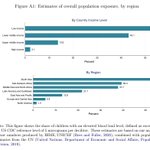
We know that ~ 1/3 children globally has lead poisoning, but not much more, because few govs do screening or monitoring.
We show that tools for testing exposure are $$$ + impractical for LMICs, calling for more R+D. (1/4)
cgdev.org/blog/why-world-nee…
The Guardian covering the final statement of the CGD working group on lead poisoning, signed by NGO leaders, experts, and many others in education and global health.
50 million a year until 2030 can put us on the path to ending childhood lead poisoning.
theguardian.com/global-devel…
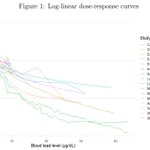
With the recent attention on lead poisoning and its effects on heart disease, aggressive behavior, cognition, and learning (see new CGD research on latter - cgdev.org/blog/can-lead-pois…), you might be wondering why exposure remains so high in many countries. An introduction:
(1/16)


Been working on this one for a while! In new CGD paper we find that lead exposure (affecting > 1/2 of children in low-income countries) explains ~ 20% of gap in learning outcomes b/w rich and poor countries.
Paper:
cgdev.org/publication/how-mu…
FT coverage: ft.com/content/18bdb66d-862a…

Measures to reduce lead poisoning present an effective and tractable means to raise learning levels in poor countries (alongside a myriad of other benefits).
With brilliant @leecrawfurd, @susannahhares, @rsilv_dc and @JustinSandefur!

My first blog with @CGDev published today, in partnership with @MalalaFund. Thanks to @RadhikaNagesh, @AreebahShahid, Huma Zia &
@leecrawfurd.
cgdev.org/blog/covid-19-scho…
