

research fellow @OSW_pl / @OSW_eng, bylines @kultliberalna @tygodnik, alumnus @IMCEERES @unitartu @UofGlasgow
Warszawa
Joined March 2013
- Tweets2.3K
- Following1.2K
- Followers1.4K
- Likes2.5K





Filip Rudnik retweeted

Russia has achieved a significant political success. The Russian demand—made in the context of resolving the conflict with Ukraine—to address the European security architecture (effectively seeking its revision) and to provide security guarantees to Russia has been taken up by American negotiators and the President.
Of the five areas of discussion, all but one—crisis communications (i.e., permanent security consultations, greater military transparency, reciprocal measures to reduce escalation risk, and enduring framework for security and stability)—contain potential pitfalls and risks.
The list of topics was clearly inspired by Russian demands, which had already been articulated in the ultimatum Russia issued to the U.S. and NATO in December 2021, prior to the start of its aggression against Ukraine. We discussed this in a piece for @OSW_eng
osw.waw.pl/en/publikacje/ana…
The core of this proposal was the creation of a de facto buffer zone—a partially demilitarized area along NATO’s eastern flank—and the reversal of most of the military consequences resulting from NATO’s enlargement in 1999 and 2004. Moscow is now likely to push for similar concessions, including:
1. Guarantees that post-Soviet states will not be admitted to NATO, and an end to military cooperation with them. 2. A ban on the deployment in Europe of weapons systems (particularly missiles) capable of striking targets deep within Russian territory. 3. The withdrawal of Allied forces from NATO’s eastern flank states. ...
4. A prohibition on the deployment of nuclear weapons outside the territories of the states that possess them (the U.S., the United Kingdom, and France). 5. Refraining from military activities (exercises, patrols, etc.) in the vicinity of Russia’s land and maritime borders, as well as its airspace (within zones to be defined by Russia itself).
Clearly, given the existing strategic imbalance in Russia’s favor—with its deployment of nuclear weapons and intermediate-range missiles in the immediate vicinity of NATO, and its capacity for the rapid redeployment of forces from its Asian territory—any notion of symmetrical restrictions would be purely illusory.
Russia is well aware that its demands are unacceptable to European nations, particularly those on NATO’s northeastern flank. It is banking on an increase in internal tensions within the Alliance, a halt to the redeployment of U.S. forces to the eastern flank, and the shifting of blame onto the Europeans for the lack of progress in the peace process.

President Trump today advanced an important discussion with several European leaders about the need for a broader European security architecture that can help establish the conditions for lasting peace.
Building on his leadership and the substantive work undertaken this week in Brussels with Ukraine, NATO, and our European partners, @SEPeaceMissions and I wanted to share some of the objectives guiding our ongoing discussions.
For more than 30 years, Europe and Russia have struggled to establish a sustainable security framework. Decades of mistrust, competing security concerns, and the devastating consequences of this war make this an extraordinarily difficult challenge, but one that is essential to lasting peace.
Our objective is to develop practical arrangements that address the security concerns of all sides, reduce the risk of future conflict, and create a more stable and predictable security environment.
We are exploring five principal goals: permanent security consultations, reliable crisis communications, greater military transparency, reciprocal measures to reduce escalation risks, and an enduring framework for long-term European security and stability.
Any arrangements must fully respect the sovereignty, territorial integrity, and independent decision-making of every nation. Each country will retain authority over its own security and alliances, and no country would have a veto over another’s sovereign choices. NATO will remain central to European collective defense, and this initiative would build upon existing institutions and commitments.
We will continue consultations through the Shell Bay format with Ukraine, NATO, the EU, and our European partners, expanding engagement to ensure that all relevant perspectives and ideas are considered. We will also engage Russia as part of the peace negotiations.
Next week in Abu Dhabi, the United States will convene the first trilateral peace discussions with Ukraine and Russia since February. All parties remain intensely engaged in preparing for substantive and productive negotiations. We will consult closely with our European partners on the sidelines and, if progress is made, aim to move toward a broader multilateral format with their direct participation.
These ideas continue to evolve, and we welcome thoughtful input. Creating the right structure will be critical to ending this war and transitioning from conflict toward conditions that make possible a durable peace.
This is difficult, detailed work. There are no easy solutions. But the opportunity to help end this devastating war and build a foundation for a more peaceful, secure, and prosperous Europe for generations to come makes it a challenge well worth undertaking.
We will see how these discussions develop and continue working intensively with all parties toward President Trump’s objective of a comprehensive and lasting peace.
Filip Rudnik retweeted

📣C'est fini! Przegrana Nord Stream 2 w TSUE. Orzeczenie kończy wieloletnią batalię o wyłączenie spod unijnych przepisów podmorskiej części gazociągu biegnącego z Rosji do Niemiec
@PR24_pl

La #CJUE confirme le rejet du recours de Nord Stream 2 contre la directive étendant les règles du marché du gaz de l’#UE aux gazoducs provenant de pays tiers #Énergie 👉curia.europa.eu/site/upload/…


Filip Rudnik retweeted

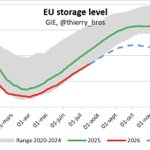
European gas prices are fast approaching €100/MWh for the first time since 2022 🇪🇺📈
The continued disruption to LNG flows through Hormuz, coupled with Europe’s low storage levels and rising winter heating demand, have contributed to the recent gains
The result? #Inflation

Filip Rudnik retweeted

O dominacji energetycznej 🇺🇸, a w szczególności o szansach/korzyściach, ale i związanych z nią wyzwaniach dla Europy, piszę w artykule na łamach "Pomorskiego Thinklettera".
Dziękuję @Obywatelski za zaproszenie do wzięcia udziału w publikacji. @ECFRWarsaw
Polecam też uwadze teksty Koleżanek i Kolegów z @OSW_pl , które ukazały się w bloku "Energia w centrum globalnej rywalizacji" @agata_loskot @mlkedzierski @RudnikFilip @MKalwasinski
Linki w komentarzach.

Filip Rudnik retweeted

W nowym „Pomorskim Thinkletterze” mocna reprezentacja @OSW_pl
Razem z @agata_loskot @RudnikFilip @mlkedzierski piszemy o polityce energetycznej Chin, Rosji i Niemiec oraz wyzwaniach dla bezpieczeństwa energetycznego UE.
To ważny kontekst dla głównego pytania, wokół którego zbudowano cały numer: jak zapewnić Polsce bezpieczny, odporny i konkurencyjny system energetyczny? Ponad 20 tekstów, wiele ciekawych głosów i perspektyw. Warto zajrzeć👇
kongresobywatelski.pl/pomors…

Filip Rudnik retweeted

1/ Important lesson for the EU: China is ripping 🇪🇺&🇺🇸 technology out of its existing wind farms, and the reason is security.
We went through 1,686 🇨🇳 procurement documents and found evidence of a massive rip-and-replace campaign, targeting foreign controllers and software🧵
Filip Rudnik retweeted
5.Offering Moscow high-level political dialogue and vague concessions (at the expense of Ukraine’s security and that of some NATO allies) will have the opposite of the intended effect. It will be seen as proof of weakness and a manifestation of Europe’s desperation.
Filip Rudnik retweeted

Reuters: "The European Commission proposed a one-year delay to the EU's methane emissions rules for oil and gas imports on Wednesday, after pressure from governments including France and the United States.
The rules, due to take effect on January 1, 2027, would have required foreign oil and gas suppliers to the EU to monitor and report methane emissions, a potent greenhouse gas."
reuters.com/business/energy/…


🇫🇷 prezydent dołącza do krytyków rozporządzenia metanowego. Macron wzywa do opóźnienia wejścia w życie przepisów o rok, ze względu na bezpieczeństwo dostaw:
"French President Emmanuel Macron has written to the European Commission urging it to postpone new methane reporting rules for oil and gas importers, arguing they could create legal risks for importers as energy supplies tighten
The EU's new rules, due to come into effect on January 1, will require monitoring and verification of methane emissions for oil and gas deliveries to the bloc, aiming to curb leaks of the potent greenhouse gas and imposing fines if companies breach the regulation"
reuters.com/business/energy/…

Filip Rudnik retweeted

A thread worth your time. @RudnikFilip makes a compelling case that Moscow may have secured far more than it offered. Tangible gain in the form of concrete sanctions relief in return for uncertain diesel deliveries, no significant ease for global markets, and marginal effect for the US. At the same time Russia was offered the ability to portray Ukrainian refinery strikes as harmful to US interests which could prove even more valuable, potentially complicating Ukraine’s campaign against Russian installations.

Filip Rudnik retweeted

Russia’s business carrot for Trump brings first effect.
Here is a quick explainer of why Trump-Putin diesel deal is a propaganda win for Russia and no real result for the US.
Trump agreed with Putin on deliveries of 0.8 mln tons of Russian diesel to the US (under a sanctions exemption) by November, and another 4 mln tons by April 7, 2027. Trump wants to lower high US diesel prices before the midterm elections.
Paradoxically, Russia itself faces a diesel problem: Ukraine’s regular attacks on its refineries have cut its output by about a third.
In July–September alone, Russia imported around 0.6 mln tons of diesel from Belarus and at least 176k tons from South Korea.
Putin’s decision to export diesel to the US:
👉is an investment in his relations with Trump
👉will pressure Ukraine not to hit Russian refineries
👉is a breach in the sanctions regime on Russia.
The US consumes around 15 mln tons monthly, so 300k tons is only 2% and 500k tons 3.3% of US consumption.

ON TRUMP-PUTIN "DIESEL DEAL" - a few remarks:
One thing is clear - the US administration let the Russians play them. Why? /1
In return, RU got a sanctions waiver. OFAC issued a license allowing trade in Russian diesel until Apr 27. Compared with the waivers the US has been issuing for trade in Russian oil this year, this is a much more favorable arrangement for Moscow, because it is long-term. 6/
Filip Rudnik retweeted

Choc ciesnina Ormuz staje sie coraz bardziej otwarta dla eksportu ropy z Zatoki Perskiej to eksport diesla z regionu wciaz jest znaczaco nizszy niz przed wojna. Sytuację na rynku oleju napędowego komplikuje rosyjskie embargo na sprzedaż paliw za granicę. Pomimo osiągnięcia tydzień temu w ramach G7 porozumienia z USA i europejskiego zobowiązania do uwolnienia rezerw Europa, w tym Europa Srodkowa wciąż ma problem. Przekłada się on na wysokie ceny diesla, a te (razem z także wciąż zbyt wysokimi stawkami za gaz i elektryczność) podsycają wcześniejsze kontrowersje i obawy o sytuację zimą. O tym wszystkim razem z @DebiecKrzysztof & co w nowej analizie @OSW_pl - link w pierwszym komentarzu


