

Helping runners 40+ get stronger & run faster • 200+ runners coached • Running and strength coaching • Free training guides ⬇️
Joined November 2022
- Tweets30.9K
- Following1.4K
- Followers18.9K
- Likes53.6K





Pinned Tweet
A few tips on running fast for older athletes:
• You arguably never need to sprint all out. I’m very careful about hitting max velocity. In the videos I’m somewhere between mile pace and sprinting, which is plenty fast for most purposes.
• Warm up well. I’ll always run beforehand, do some drills, then gradually introduce 3-5 seconds of speed before the main set.
• It’s totally fine to start your strides slower. Marathon to 5k pace isn’t really “speed,” but it’s a good bridge toward it, especially when managing minor injuries.
• Run with strong, controlled, relaxed form. It doesn’t need to be perfect, just efficient.


Bill Bowerman popularized the “hard easy” approach. Charlie Francis called it “high low.”
I conceptualize it as “training flow,” where training stress resembles a wave, with peaks of high/moderate stress and troughs of low stress.
The frequency and height of those peaks depend on the runner and the training.
But basically, your easy runs set up your hard runs, and vice versa.

1/5 FLUID MICRO-PERIODIZATION
Rather than following a rigid schedule regardless of the athlete's current condition, research suggests that a more effective approach may be
👇
2
11
1,379
2 things I learned in my first year of running back in 2016 and 2017. You improve by 1) running faster and 2) running longer.
That was easy to learn.
What took a lot longer to learn is that harder isn’t necessarily better, and more isn’t necessarily better. You want regular workouts and regular long runs, not ones that crush you.
By controlling your training load, you can recover from them and do them week after week after week. Months of consistent training pay off, and suddenly you’re a lot better at running.
It’s the repeated stimulus over time that yields the adaptive response, not how hard you push yourself in any one session. For most runners, that means doing just enough volume in your workouts and keeping your long runs nice and easy.
It seems so obvious now, but it took me a while to learn.
6th pair of ASICS I’ve bought in the past 15 months. The best looking pair yet, in my opinion.
Most importantly, they feel good and they feel FAST.


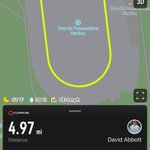
Track workout
10 x (400, 400)
Nice one! Just the right amount of spice. “On” pace was 10k or a touch faster, “Off” pace at marathon-ish. Took a few reps to feel it out and get into a groove. Workout Wednesday is the best weekday.


David Abbott retweeted

Incorporating ISOs:
-Down push up holds on upper days
-Extreme iso lunge on lower days
-Wall sits on off or auxiliary days
-Spring ankles every day
Takes maybe an extra 6-8 minutes depending on your athletes (who will become ‘bulletproof’ if they stick to this plan)*

I’ve visited Kyoto over 10 times. It’s one of my favorite cities in Japan. But it is super packed with tourists, and taking the buses around is exhausting.
I’d suggest the following:
• Take a taxi (if you have the money) or rent an e-bike (if you’re more adventurous) to get around. If you’re crazy like me, you can also do a “running tour” and see a lot.
• Spend one day in Gion, where you can just walk around and see a lot at a leisurely pace.
• Spend one day in Arashiyama. Ditto.
• Spend one day taking a trip to Nara and/or Osaka.

This is why “speed workout” is a catch all for interval training. Because in fact a runner training for a half marathon or marathon is getting faster with 5k-10k pace intervals (like 5-6 x 1000m at 5k pace), for example, relative to the rest of their running.
Actual sprinting and closer to it (middle distance pace) can be very efficacious when sprinkled in throughout the year. It’s just that a lot of recreational runners aren’t accustomed to something like 4 x 20 seconds at 90-95% of max speed with 6-8 minutes rest.

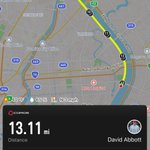
Half marathon distance run
Nice! Kept a steady effort the entire way, legs felt good from the beginning. Thank you Japanese national holiday for the opportunity to run later on a Monday morning.


Tried these Mizunos on today. Very nice shoes, felt as fast as any racing shoes I’ve worn. I didn’t pull the trigger because they were a bit tight across the instep, but they’re definitely worth checking out.

3
36
4,278
You may say, “Why do I need to sprint? I’m a distance runner.”
Speed is one of the biggest levers in your training alongside volume. The faster you can run, the faster you can race.

I’ve been seeing the same clinician (an acupuncturist who does deep tissue massage and various treatments) for 13 years. Has treated me for every running/weightlifting injury imaginable.
When I ask him about rehab exercises to get stronger, he always recommends stretching/Tai Chi type of stuff.
My understanding is that the value of stretching is that it improves range of motion, gets things loose and can improve local blood flow, which helps with recovery. So it definitely has value, and I’ve incorporated it into my training.
Strength training is how you get stronger. Do both.

ストレッチをしてもスポーツ傷害は予防できない?
ことを示唆するSports Medのシステマティックレビュー・メタ解析論文
19研究、9,000人以上を対象(メタ解析は15研究、9,002人)
・4〜24週間のストレッチ介入による傷害予防効果は認められず
・筋、腱、靱帯・関節包の傷害についても予防効果は確認されず
・一方、骨の傷害リスクは増加する傾向
・比較対象や傷害の種類、解析条件を変えて検証しても、ストレッチによる明確な傷害予防効果は認められず
結論:
ストレッチの継続による傷害予防効果は確認されなかったものの、エビデンスの確実性は低い。 また、運動直前の急性的な効果は未検証であり、研究対象も主に14〜60歳の男性による静的ストレッチに限られるため、他の集団やストレッチ方法への一般化には注意
link.springer.com/article/10…

“I use both metric and imperial units in my running, and sometimes do km ↔ mile conversions in my head during workouts just for fun.”

Jogging is great. I do a lot of it. But jogging isn’t sprinting for speed purposes, even though both fall under “running.”
Bodyweight squats are great. I do a lot of them. But squatting with your own bodyweight vs a barbell loaded with 2–3x your BW produces an entirely different training effect, even though both fall under “strength training.”
Same with doing 20 minutes of jump rope versus hurdle hops. Two different training effects, even though both are considered “plyometrics.”
Recruitment of high threshold motor units is a specific physiological process. It occurs with very high force demands and rapid force production.
Maximizing speed and power requires near maximal efforts with long recovery periods (watch sprinters and powerlifters train), which runs counter to high volume, fatiguing exercise.
A distance runner should focus mostly on endurance, because that is the sport. But periodically doing the opposite training (top end power and speed development) can improve your ability to run faster at every pace, while also improving your durability through stronger muscles, tendons, bones, etc.
Adam nailed it. 400m repeats are not a “speed” workout. Not even close.
400m repeats can be a great workout. They’ll improve your fitness & running performance, no doubt.
Maximal speed is developed by sprinting as fast as you can for 5–8 sec w/ long recoveries between efforts

Distance runners tend not to embrace the concept of short, fast reps with long recoveries.
They want to sweat and feel exhausted and “productive” like they do after a long run.
Speed is built on quality though, and quality vanishes in the presence of too much fatigue.

The amount of distance runners who struggle to relate to a sprint workout is amazing.
They'll look at sprinters running 4 x 200m at 90% with 8 min rest and say "That's a cake walk! We do 20 x 200 with 30 seconds rest."
I love y'all guys but extensive tempo is not the same thing as a speed endurance workout.
Respiratory distress and metabolic toxicity are NOT the same. Please stop it!
The long slow distance run is the foundation of building endurance and durability, and I would argue that runners should keep their long runs all easy until they reach a certain level of fitness.
A 4:00-4:30 marathoner can run that distance on just easy long runs and some faster intervals, whereas a 2:32 marathoner looking to crack 2:30 is going to need a bigger stimulus from their long run.
Doing long runs way too hard is where a lot of marathon buildups get spoiled, especially in the last month before the race.

When people ask me “Where to eat in Tokyo?” I feel a bit ashamed because I rarely eat out & don’t have many recommendations. There are a zillion options.
One place I can confirm is the business is this Chinese halal place called Lanzhou Ramen in Ikebukuro. Amazing food, I’ve eaten here several times.


3
28
2,285
Consistency is everything, and you have to give yourself a chance to be consistent.
Where most people fail is setting expectations way too high from the start.
“I’m outta shape. I need to start running 3-5 miles at a good pace every morning.”
When in fact all you really need to do is commit to a 30-45 minute brisk walk with some light jogging intervals. Do that every morning.
The former gets you burned out, injured, or discouraged pretty quickly. The latter gets you feeling good about yourself, establishing a routine, and building momentum.
Once you have some momentum, consistent training becomes a lot easier.

