

misanthropic ne'er do well and writer of words no one reads. do not fucking DM me! ©️Ryan Fiennes https://teapawt.org/t.co/4k1o0vNxdf
Joined November 2024
- Tweets6.5K
- Following408
- Followers399
- Likes59.9K


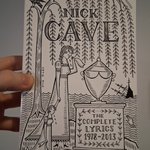


Currently reading this. Not a fan of fantasy books but my soulmate bought me this and it's got great humour!

1
7
133

I've been reducing the amount of books I own these last couple of years, probably reduced my collection by two-thirds, but I had to pick these up—nice and cheap, too! 😆


2
61
Love it ✍️

A Beautiful Distraction From The Explosions
Poetry for the #vss365 #console
#writingcommunity #HeidiGloom #vsspoem


1
2
113


Ryan Fiennes retweeted

Happy 5th Birthday Impossible Knots. Extended second edition with a bonus novelette available now. These words led me to a lot of wonderful people here. I'll always be thankful for that. Anyways, be well. #writingcommunity #writing
amazon.com/dp/B0HBS2B1VS

Ryan Fiennes retweeted
#fiction #writing
Prologue.
There was something about the pool after hours. The underwater light bending in the sway that the crystal blue water made from the minute waves caused by Daphne’s feet dangling as she sat on the ledge. The dull hum of the late summer night. Crickets and cicadas moaning in the electric lavender darkness.
Killian lay on his back beside her, shirt off, skin sticky with the day’s sweat and chlorine, staring at the sky that refused to go completely black. Ursa Major hung above them, throbbing brightly.
“You ever hear the story about the porcelain boy?” he asked, passing her the bottle of apricot schnapps.
Daphne took a slow sip, the sweet burn cutting through the chlorine taste still in her mouth. “I can’t say that I have.”
Killian kept his eyes on the stars.
“There was this kid who thought he could be an astronaut. Spent every night staring up at the sky, convinced if he stared hard enough he could become part of it. His mother called him her porcelain boy because she could see he was both delicate and strong. The boy liked this so much he began to believe that he was actually porcelain. One summer he started growing sunflowers in the backyard. Said they were his rockets. Tall, bright, reaching for the same thing he was. He’d sit out there at night talking to them like they understood.”
“Then the poison rain came. The sunflowers started rotting from the inside. One by one they bent and collapsed. He kept watering them anyway. Kept talking to them. Then one night the lightning bugs came. They began to eat the rot. Thousands of them, glowing, lifting the decay upward. The porcelain boy stood in the middle of it all and began to see constellations in them — Orion’s belt with a line of cold fire, Cassiopeia’s chair with flickering wings, the long curve of Draco winding through the black like a question that never got answered.”
Killian paused, voice dropping lower.
“This must have angered the Gods or whoever controls such things, because suddenly it began to rain harder than the boy had ever seen. As if the sky was fighting itself. Delivering itself from death like Jonah being vomited from the belly of a monster. Alive.”
Daphne looked at him, holding the bottle loosely in her hand.
“Then what happened? Did the boy dissolve in the rain like the sunflowers?”
Killian gave a small, tired smile that stopped halfway up his face.
“The boy thought for a moment amid the squall. When he looked up he could see the fireflies swirling through all the madness. A little bit of light fighting so much blackness. He opened his mouth and began catching droplets on his tongue. It was sweet like chocolate dripping like a Dali painting from the sky. After all, he was made of porcelain. He figured he was immune to the poison. He closed his eyes as the rivulets ran through him until he too became weightless.”
He paused for a long beat. Daphne handed him the bottle of schnapps.
“Some say his dream came true. The boy's name was Perseus.”
Killian pointed to the sky. Daphne’s eyes followed.
“That’s him right there, flickering next to Cassiopeia, hard to find unless you know exactly where to look. Every August, during the Perseids, farmers and sunflower fields swear they feel his ghost passing through the late-summer breeze. Some even say the rain smells a little sweeter in August.”


Ryan Fiennes retweeted
Chapter 2.
The Power of a Bullet.
There’s a funny thing about time and when a moment slows to a stop. That is in fact eternity. The problem with that is when it does restart. The clock moves faster than it did before, erasing the static between stations.
But how do you measure the white noise? The space in between that holds everything?
After all, there are no constellations without blackness.
Gary could have measured it by a lifetime. Like paper hitting water in a dark room. Nothing and then so much something.
The sound of a gun firing twice, and there she was. In bloom.
He felt weird bringing flowers to a stranger in the hospital, but he felt he owed her and somehow she felt like more than a stranger now. She had been nonresponsive since the blood loss. He sat in a chair across the hall because he didn’t want to startle her if she woke. After all, he’d only seen her once when she brought him eggs, coffee, and smiles.
Kierkegaard was right, Gary thought. The single individual must make the leap. But what if the leap is into nothing? What if you keep leaping and the abyss just laughs, reinventing a new bottom? A constant of deeper and darker. An endless void.
The carnations from the gas station looked ridiculous in his hands. He kept turning the plastic wrapper, making it crinkle. In his lap lay a battered paperback of Kierkegaard’s The Sickness Unto Death, the pages soft and worn.
He tried to read to her, but nurses and doctors kept interrupting, machines beeped, and the words kept sliding off the page. Kierkegaard wrote about despair as the self that cannot be itself. The self that wants desperately to be rid of itself. Gary laughed once, bitterly, under his breath. He was the perfect proof. He tried so hard to be rid of himself in so many ways. It always ended the same, with him lost in the cosmos of his Hippocampus.
He wondered if she would remember him. It all happened so fast, he began to wonder if any of it was real. But he was there, and she was there. He pressed the carnations to his nose and breathed in their cheap, honeyed scent. It was the only thing keeping him anchored. He then wondered if she liked flowers. Perhaps she preferred gardens.
After a while, he walked to the foot of the bed and watched her breathe. He smiled at her quiet beauty, set the flowers on the table beside her, and spoke a silent prayer. Then he left.
Outside, the snow had softened to flurries. He drove slowly through Ludlow’s side streets with Helen and the weight of everything heavy on his mind. When he got home, he showered, climbed into bed, set his alarm for the evening news, and tossed through a restless sleep.
The headline on the evening news was already calling it “The Diner Shooting.” Grainy security footage played on loop. They stated that one of the suspects was in custody and one of them was still at large. The anchor also added that the suspect in custody was in critical condition. No mention of Helen. No mention of the hero who stabbed him with a fork.
At that moment, he relived it.
The sweaty metal tight in his grip, then the strange freedom of letting go once the fork was properly placed. He had acted without thinking. One misstep and everything would have gone another way. His heartbeat faster now, processing the feeling in the quiet safety of retrospect.
Nietzsche was right, Gary thought. Become who you are. Sometimes that means becoming the animal. Sometimes the abyss blinks, and we are born in such a blackness.
Born in it. Not dragged into it. A sudden, violent delivery. The kind of birth that leaves you gasping and guilty yet so alive. He had felt it then: something ancient and starving clawing its way out of him, using his hand, his fork, his rage. The abyss hadn’t just stared back. It had opened its mouth, and its voice, its laughter, its scream… all of it belonged to Gary.
He turned off the TV and lay in the dark, listening to the pleasant, off-kilter rhythm of the radiator clanking. His thoughts swirled. A new hunger stirred in him, and it was one that wasn’t there before the diner. He was new again. The shake of falling in love. The hunger of lust. The rage of blood screaming from a vein, screaming for its life before dying without mercy. He felt all of it at once.
The thick, undeniable hunger pooled low in his belly. He closed his eyes and let his hand drift beneath the sheets. He moved slowly at first, almost reverently, as if touching something sacred and dangerous. The memory of her smile mixed with the flash of the fork in his hand, the warmth of her blood on his fingers, the way her body had jerked against him. The animal stirred again, restless and alive.
He didn’t fight it. He gave in, gripping himself the way he had gripped the fork. The radiator hissed a breathy moan in time with the friction of the sheet as the creature ran free. When it finally broke over him, it came in long, shuddering waves. But when his pulse slowed and the room returned, the animal was still there. Alive and watching.
#writing #fiction

Howling.
Prologue.
The story moves on whether you’re ready or not.
If time were real at all, it would be incapable of waiting. The abyss is never patient. It yawns when it’s tired and eats when it’s hungry. But somehow it never sleeps. It is a constant now that devours our temporary nothingness, bit by bit.
We are all animals wearing suits of skin, pretending the mirror shows us something holy. We carry ghosts in our pockets like loose change and call it memory. We kill for love, fuck for forgetting, and still wonder why the snow keeps falling indifferently, covering everything we tried to leave behind.
This is not a love story.
This is what happens when the animal wakes up.
Genesis.
Technically they met in Ludlow in early 2000, both of them crawling back home with degrees they couldn’t use and debts they couldn’t pay. Gary had just quit a dead-end copywriting job in Chicago. Helen had left a bartending gig in Minneapolis after her roommate stole her rent money and her boyfriend. They returned to the same warped city they’d grown up in, but it wasn’t as bright as they remembered. Everything looked slightly broken and melted — as if Salvador Dalí had painted it after three days without sleep. Streetlights dripped slow gold onto cracked sidewalks. Clocks sagged off brick walls. The town was desolate, but it still had a pulse.
Gary was twenty-four, working nights at the rail yard moving freight no one cared about. Helen was the same age, pulling doubles at the diner on River Street. They were both exhausted quite often, both a little angry at the world for not delivering on its promises, and both secretly convinced they were meant for something bigger than this. They’d grown up parallel to one another, living somewhat identical lives, yet they’d never crossed paths until one fateful day in early 2000.
Helen stood behind the counter in a faded apron, flaxen hair disheveled just so from eleven hours she’d worked so far. Like she had planned it. Everything he’d been looking for was suddenly standing in front of him, pouring coffee with the calm certainty of someone who already knew how this story ended. Gary kept the animal inside him at bay that first morning like he often did when situations made him nervous. He played possum. Schopenhauer suffering silently and irrationally. He ordered black coffee and eggs over easy with a side of pumpernickel toast, trying not to stare.
He ate slowly because he wanted to watch her. She moved effortlessly about the space, pulling him with her wind. He broke a piece of pumpernickel toast and dipped it in the lukewarm yolk. A cacophony of silverware scraping ceramic hovered beneath the crinkling of morning news and tired small talk. One man muttered to himself, shaking his head in disappointment at the Yankees and White Sox box score. Nobody wins quite like the Yankees. Nobody loses like them either. Another lady rearranged words in the daily jumble.
Is it Sunday? Gary wondered to himself, devouring another bite of yolk-soaked pumpernickel. It felt like Sunday, although time has a way of disguising itself with feeling.
Everything was in its right place.
Then the door exploded open. The bell screamed like a schizophrenic locomotive. The light in the room flickered with the surge.
A young man and a younger woman rushed toward the cash register. The woman held a bag while the man barked at Helen to empty the drawer. Time slowed the way it does in bad dreams. Helen’s hands moved calmly, almost mechanically, pulling bills from the register as if she’d rehearsed this moment a hundred times in her head. Gary sat frozen, fork halfway to his mouth, wadded pumpernickel on his palate, heart hammering against his ribs. For one surreal second their eyes met across the counter — hers steady and unafraid, his wide with something between terror and awe.
She smiled at him. Just barely.
At first, he thought, Who robs a diner?
Then he thought about the New York Yankees and how upset people get when they lose. Like they’re part of the team or something.
The Yankees reminded him of his first girlfriend and suddenly he was back in her basement. It was summer and the room smelled of sex and mildew. She loved the Yankees more than anything.
Then he realized no one was doing anything to help, and, quietly, between the rush of blood from Helen and the man holding the gun, the animal was born inside him. He looked down at the fork on his plate, and all the stars in the universe aligned.
He was no longer Gary, but a vessel of violence.
He gripped the fork white-knuckled tight and picked up his plate. He stood and walked toward them unnoticed. Both of them animals obviously new to larceny.
Who robs a fucking diner? He said again to himself. A devilish smirk crested on his face like a wave.
When he was close enough to them, he flung the plate like a Frisbee at the woman. It grazed her chin and shattered against the wall, causing them both to look toward the clatter.
Once the man with the gun craned his neck, Gary stabbed him in the throat with the fork.
The man shrieked. The gun fired twice. The woman screamed his name.
Tommy!!!!!!
The sound was deafening in the small diner, an ugly crack that shattered the morning like cheap glass. Gary watched it unravel in slow motion. The bullet exited the barrel of the gun, punching through Helen’s side just below her ribs as she stood behind the counter, still holding the cash drawer. Her body jerked like a puppet with cut strings. A bright red flower bloomed across the faded apron.
One of the bullets had gone clean through her and buried itself in the wall behind her. Her eyes, wide opium pistils, met Gary’s in disbelief. The other ripped through her guts and lodged itself somewhere in her intestines. She looked down at the bloody bloom with a strange, almost curious expression, then back up at Gary before falling slowly to the ground.
The man with a fork in his throat fell almost simultaneously as blood sprayed from his carotid artery. Gushing with every waning pulse. The woman cried out in babble and scurried to embrace him on the floor. Gary picked up the gun and screamed, “Somebody call an ambulance.”
Gary vaulted the counter and embraced Helen on the floor. One arm around her back, the other pressing hard against the wound. Blood pulsed warm between his fingers.
The bell on the door screamed again and the lights flickered when the woman fled the scene.
“You’re okay,” he whispered, voice cracking. “You’re okay, you’re okay.”
Her flaxen hair stuck to her forehead. She looked up at him, eyes wide and strangely calm. She smiled.
“That was stupid,” she breathed, trying to laugh away the severity of the moment.
“Yeah,” Gary said, laughing even though nothing was funny. “Yeah, it was.”
“Did you save me?” She wondered.
Gary stared into her eyes, watching her breathe slowly and in a controlled manner.
She smiled before closing her eyes. The paramedics arrived and pulled her from his grasp. They worked on her a moment before rushing her away to the hospital.
Outside, the snow kept falling, soft and indifferent. Inside, the floor was still red with blood. Sirens wailed away in the distance.
#writing #fiction


