

@SBakerMD
Account based inUnited States
About this account
- Account based in
- United States
- Connected via
- United States App Store
Account-level information from X, not a live location or the device used for a specific post.
Multi sport world record setting athlete, physician, Founder https://xitter.cf/t.co/mxJyq8oV2I: online clinic for treating chronic diseases, author of “The Carnivore Diet”
St Petersburg, FL
Joined October 2015
- Tweets90.9K
- Following861
- Followers379K
- Likes138K







Dr Shawn Baker 🥩 retweeted
They told the men their brains would fail.
In the 1960s George Cahill and Oliver Owen put obese subjects in a hospital and fed them nothing for five to six weeks. The orthodoxy was clear: the brain burns roughly 100–120 grams of glucose a day. Without food, protein would be stripped from muscle to make that glucose. After a couple of weeks the subjects should have been fogged, weak, and in trouble.
Instead, after the first week, hunger faded. Mental clarity returned. Energy came back. By day 40 they were sharper than when they started.
Cahill measured what was crossing the blood-brain barrier. Glucose extraction had fallen. Ketones—β-hydroxybutyrate and acetoacetate made from body fat—had become the brain’s main fuel. Blood glucose sat low. Ketones sat high. The brain switched fuels without missing a beat.
That switch is what lets a person survive months without food. Without it, the constant demand for glucose would have burned through lean tissue far too fast.
Nitrogen losses dropped, protein was spared, and the body ran on fat.
The brain is not locked to sugar. It is a hybrid that prefers ketones once they are available. Cahill showed it sixty years ago in men who were not supposed to stay clear-headed. They did.

Dr Shawn Baker 🥩 retweeted
Richard Morgan had spent most of his life as a baker and battery maker. No structured training. No athletic past. At 73 he sat on an erg to kill time and a coach noticed his natural stroke. He never stopped.
By his early 90s he was a four-time indoor rowing world champion. He had rowed the equivalent of nearly ten times around the planet, mostly in a backyard shed. Researchers put him in a lab at 92 and measured what late-starting training had done.
His 165 pounds were roughly 80% muscle and 15% fat. Peak heart rate hit 153 during a 2,000 m trial—among the highest recorded for anyone in their 90s. Oxygen uptake kinetics looked like those of a healthy 30- or 40-year-old. Forced vital capacity and peak power sat well above what the textbooks predict for his age.
He trained about 30 km a week on the erg, mostly easy, with a couple of harder sessions and basic strength work. The body adapted. Muscle stayed. The cardiovascular system stayed responsive. Performance kept rising long after most people assume the window has closed.
The usual story is that you have to start young or you miss the boat. Morgan started in his seventies and collected world titles in his nineties. The systems that matter for rowing—power, oxygen delivery, muscle mass—proved more plastic than the decline curves suggest.

Dr Shawn Baker 🥩 retweeted
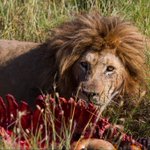
Briana Pobiner spent months trailing lions in Kenya to answer a simple question: after a kill, is there still enough meat left for someone else?
Critics of the passive scavenging idea had argued that lions finish their prey so thoroughly that early hominids would have found only scraps—barely worth the risk or the walk. Pobiner waited until the cats were done, then recorded what remained on the bones. She worked in a lion-dominated savanna with relatively low hyena competition, closer to the conditions some models propose for early East African habitats.
On larger kills (zebra- and wildebeest-sized), 95 percent of the bones still carried at least some edible flesh. Half of them retained bulk muscle—more than 10 percent of the original mass. Even a “defleshed” zebra carcass could still yield roughly 30-plus pounds of meat, enough to meet the daily caloric needs of an adult Homo erectus several times over. Smaller prey left far less.
Lions do not consume every last ounce of muscle before they move on, especially on bigger animals. The leftovers are not negligible. Combined with marrow and brain, which felids leave largely untouched, a single abandoned kill could have supplied a meaningful amount of high-quality animal food without requiring a full hunt.
This does not prove early hominids only scavenged. It does show that waiting for lions to finish was not an empty strategy. In the right habitats and seasons, the meat was still there.

Dr Shawn Baker 🥩 retweeted
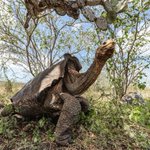
Giant tortoises spent millions of years perfecting one defense: a shell that stopped lions.
Baz Edmeades argues in Megafauna that this same shell became irrelevant the moment tool-using hominins arrived. A large rock or a sharp stone edge could open what claws and teeth could not. The animals were slow, non-aggressive, and carried substantial meat in a package that did not run away. Once the method was figured out, 200-year-old tortoises turned into low-effort, high-yield food.
Giant tortoises had lived on the African mainland for a long time. They disappeared near the beginning of the Pleistocene, roughly two million years ago—well before the later wave of mammalian megafauna extinctions and before the rise of Homo sapiens. Edmeades sees the timing as more than coincidence. The innovation of using stones as tools and weapons gave early hominins access to a resource that had previously been effectively protected by its armor. Evolution had no time to respond.
The same pattern repeated elsewhere. On islands reached later by modern humans, endemic giant tortoises were among the first large animals to vanish. Slow reproduction, no fear of new predators, and the ability to be stored alive made them especially vulnerable once people arrived with the capacity to break shells.
Edmeades treats the tortoise story as an early illustration of a larger shift. Before hominins, defenses improved at the speed of natural selection. After tool use, a single behavioral innovation could neutralize an ancient adaptation overnight. The shell that had worked against every previous predator failed against a primate that could pick up a rock.
The result was reliable animal food with minimal risk—an early, low-skill route to meat that required neither speed nor the ability to take down large mammals.

Dr Shawn Baker 🥩 retweeted
Tim Russert collapsed at his desk in June 2008. He was fifty-eight.
He had known coronary disease. His doctor had him on a statin and blood-pressure medication. He exercised on a bike most days. Weeks earlier he had passed a stress test at a high workload with no symptoms. His LDL cholesterol, on the drug, sat at 68. That was the number his doctors considered controlled.
He was also significantly overweight. His waist was large. His triglycerides were high. His HDL had spent years in the twenties and had only reached 37. The combination was noted. The waist was the one his internist later called the single strongest predictor of mortality.
The autopsy showed an enlarged heart and a fresh clot in the left anterior descending artery. A plaque had ruptured. The numbers on the paper had been acceptable. The plaque was not.
He was doing what the guidelines asked. The plaque still ruptured.

Dr Shawn Baker 🥩 retweeted
Aajonus Vonderplanitz was given weeks to live at twenty-one.
He had gone through surgery for a stomach tumor, then radiation, then chemotherapy. The treatments left him with multiple myeloma, blood and bone cancers, and a body that was failing. Doctors stopped offering options. He stopped accepting them. He left the hospital and began drinking raw carrot juice and raw milk. The decline slowed. He later added raw meat. He said the change was the one that mattered.
He spent the next decades eating the same way: raw beef, raw fish, raw eggs, raw cream, raw butter, and vegetable juices. He called it the Primal Diet. He wrote books describing what he had done and what he claimed others could do. He fought legal cases to keep raw milk available. He lived on the diet himself.
In August 2013 he was at a farmhouse in Thailand. He walked onto a balcony to empty rinse water from a wound on his hand. The railing gave way. He fell and died days later at sixty-six.
He had refused the last treatment the doctors offered. He had kept eating the food he said had kept him alive. The railing broke.

Dr Shawn Baker 🥩 retweeted
In 1928 Vilhjalmur Stefansson checked into Bellevue Hospital and stayed a year.
He had spent long stretches in the Arctic eating only meat and fish. Physicians said it would destroy his kidneys, raise his blood pressure, and leave him deficient. One predicted he would last four or five days. He and a second explorer, Karsten Andersen, switched from a mixed diet to nothing but meat under constant observation. Steak, roast, tongue, marrow, brains. Liver once a week. About 80 percent of the calories came from fat. They walked daily. They wrote. They had no vegetables, no bread, no fruit.
Both men finished the year in good health. Blood pressure stayed normal. Kidney function stayed normal. They lost a little weight and reported feeling more energetic. When the lean was too high and the fat too low, they became ill; when the fat was restored, the symptoms disappeared. The supervising physicians published the findings. The expected damage did not appear.
Stefansson had already lived the diet for years on the ice. The hospital simply watched him do it again under the lights.

Dr Shawn Baker 🥩 retweeted
Baked at 400 degrees for 20 minutes (including pre-heat) seems to be the sweet spot for bacon at my house

Dr Shawn Baker 🥩 retweeted
In 1898 the Belgian ship Belgica was trapped in Antarctic pack ice for the winter. The crew lived on tinned meat and other stored rations and began developing scurvy—fatigue, swollen limbs, bleeding gums, and depression. One man died.
The expedition’s American doctor, Frederick Cook, had previously spent time in Greenland and observed that Inuit living almost entirely on fresh game did not get scurvy. He ordered the men to eat fresh penguin and seal meat (often raw or lightly cooked) instead of the preserved stores.
Those who complied improved.
Ship’s captain Georges Lecointe later described coming out of a near-comatose state after eating a piece of penguin meat and feeling markedly stronger within hours. The crew’s overall condition improved once fresh meat became the main food.
Those who continued to refuse it fared worse.
Cook’s conclusion was direct: scurvy sat in the gap between tinned food and fresh meat. Cooking and preserving destroyed something essential that raw or lightly prepared fresh meat retained. The Belgica men had no fruits or vegetables available. Their recovery depended on the animals they could kill and eat on the ice.

Dr Shawn Baker 🥩 retweeted
When humans left hunting and gathering for grain agriculture, the skeletons tell the story. Average height dropped several inches. Dental disease, anemia, and infectious disease rates rose sharply. The new “have-nots”—the early farmers—were shorter, weaker, and sicker than the meat-eating populations they replaced. The ones who kept access to animal foods stayed taller and more robust.
The pattern held for thousands of years. Pastoralists and warriors who ate meat and animal fat consistently outperformed the grain-dependent peasantry in strength and health. Grain was what you ate when meat was scarce or deliberately withheld.
Today the labels have flipped, but the biology has not. Modern elites fund and promote observational studies that downplay meat while elevating grains, seed oils, and ultra-processed carbohydrates as the virtuous choice for everyone else. The same playbook that once kept peasants on bread now uses manipulated science to convince the public that the foods of scarcity are actually optimal.
Meat was never the luxury. Grain was the compromise.

Dr Shawn Baker 🥩 retweeted
Bear’s thoughts on being vegan
Source: @BearGrylls
Dr Shawn Baker 🥩 retweeted
John Yudkin (1910–1995) was a British physiologist and the founding Professor of Nutrition at Queen Elizabeth College, London. He is best known for his 1972 book Pure, White and Deadly (originally Sweet and Dangerous in the US), which argued that rising sugar (sucrose) consumption—not saturated fat—was a major driver of obesity, type 2 diabetes, heart disease, dental caries, and other conditions.
He had been making the case since at least 1957 based on epidemiological data and experiments. He noted that sugar intake correlated more strongly with coronary mortality than fat intake in many comparisons, and that patients with atherosclerotic disease consumed more sucrose. He also observed that sugar was a relatively recent dietary addition (becoming widespread only in the last few centuries), while animal fats had been a staple far longer. He wrote that there is no physiological requirement for sugar and that “if only a small fraction of what we already know about the effects of sugar were to be revealed in relation to any other material used as a food additive, that material would promptly be banned.”
The book and its author faced strong pushback from the sugar industry, processed-food manufacturers, and advocates of the saturated-fat hypothesis (notably Ancel Keys). Funding and publication faced interference, and his reputation suffered; he died in 1995 largely overlooked by the mainstream of his era. Later work on fructose metabolism, insulin resistance, and the outcomes of the low-fat era has led many to view his warnings as prophetic. The book was reissued in later editions with an introduction by Robert Lustig.

Dr Shawn Baker 🥩 retweeted
Consistency getting better, still need another 5% power or so until I’m happy- 10 minute cycle at 238 watts

Dr Shawn Baker 🥩 retweeted
I
The craziest X-ray I’d seen in my entire orthopedic surgery career!
It’s the spring of 2007 and I’d been on a pretty intense trauma surgical deployment to Bagram air base in Afghanistan. We had been crazy busy with trauma up to our ears as we were the main referral center for the entire Afghan war theater.
We treated everyone, US forces, NATO forces, injured civilians to include little kids, Afghan army and even some of the enemy forces that were captured. The trauma itself was unlike anything you’d ever see outside of war. Mangled body parts from high powered explosives were pretty common.
One evening we received casualties from an IED (roadside bomb) blast. One guy had been injured pretty critically, lost his legs and was unfortunately not going to live. The other guy who was sitting next to him in the truck when they hit the bomb was also injured but would survive.
This is where it got weird for me. He was complaining of left leg and foot pain. As was usual we x-rayed everything that hurts ensuring that we got all the joints above and below the area of pain so that we don’t miss any injuries. He knee had definite ligament injuries but no evidence of any knee fracture.
His foot, on first glance looked like he had a couple of metatarsal fractures, but they had a pretty strange appearance to me. Up to that point in my career I’d seen many thousands of x-rays and this one just wasn’t making sense as to what was really going on.
Fortunately we had access to a CT scanner, which we often used for complex fractures to figure out best treatment plan.
We got him in the CT scanner and once we looked at the images, we found out why the x-rays had looked so bizarre.
He didn’t have any fractures. What had happened was his buddy who was right next to him in the car was blown up and his foot got blasted apart and was now deeply imbedded into our patients foot, that’s why I couldn’t initially figure it out.
This type of thing happens from time to time in blast injuries when multiple people are victims. Things like femoral heads (the hip ball) get blasted into people’s back and so on. It was the first (and only) time I’d ever seen something like that.
Fortunately for that guy the surgery to remove a foreign body part from his foot and his knee ligament repairs went very smoothly. Over 20 years later I’m still amazed by some of the stuff we saw over there!

Giant tortoises spent millions of years perfecting one defense: a shell that stopped lions.
Baz Edmeades argues in Megafauna that this same shell became irrelevant the moment tool-using hominins arrived. A large rock or a sharp stone edge could open what claws and teeth could not. The animals were slow, non-aggressive, and carried substantial meat in a package that did not run away. Once the method was figured out, 200-year-old tortoises turned into low-effort, high-yield food.
Giant tortoises had lived on the African mainland for a long time. They disappeared near the beginning of the Pleistocene, roughly two million years ago—well before the later wave of mammalian megafauna extinctions and before the rise of Homo sapiens. Edmeades sees the timing as more than coincidence. The innovation of using stones as tools and weapons gave early hominins access to a resource that had previously been effectively protected by its armor. Evolution had no time to respond.
The same pattern repeated elsewhere. On islands reached later by modern humans, endemic giant tortoises were among the first large animals to vanish. Slow reproduction, no fear of new predators, and the ability to be stored alive made them especially vulnerable once people arrived with the capacity to break shells.
Edmeades treats the tortoise story as an early illustration of a larger shift. Before hominins, defenses improved at the speed of natural selection. After tool use, a single behavioral innovation could neutralize an ancient adaptation overnight. The shell that had worked against every previous predator failed against a primate that could pick up a rock.
The result was reliable animal food with minimal risk—an early, low-skill route to meat that required neither speed nor the ability to take down large mammals.
Briana Pobiner spent months trailing lions in Kenya to answer a simple question: after a kill, is there still enough meat left for someone else?
Critics of the passive scavenging idea had argued that lions finish their prey so thoroughly that early hominids would have found only scraps—barely worth the risk or the walk. Pobiner waited until the cats were done, then recorded what remained on the bones. She worked in a lion-dominated savanna with relatively low hyena competition, closer to the conditions some models propose for early East African habitats.
On larger kills (zebra- and wildebeest-sized), 95 percent of the bones still carried at least some edible flesh. Half of them retained bulk muscle—more than 10 percent of the original mass. Even a “defleshed” zebra carcass could still yield roughly 30-plus pounds of meat, enough to meet the daily caloric needs of an adult Homo erectus several times over. Smaller prey left far less.
Lions do not consume every last ounce of muscle before they move on, especially on bigger animals. The leftovers are not negligible. Combined with marrow and brain, which felids leave largely untouched, a single abandoned kill could have supplied a meaningful amount of high-quality animal food without requiring a full hunt.
This does not prove early hominids only scavenged. It does show that waiting for lions to finish was not an empty strategy. In the right habitats and seasons, the meat was still there.
Dr Shawn Baker 🥩 retweeted
One nice thing about living in Florida is they don’t charge you extra for a stupid grocery bag like they did on the West coast
Richard Morgan had spent most of his life as a baker and battery maker. No structured training. No athletic past. At 73 he sat on an erg to kill time and a coach noticed his natural stroke. He never stopped.
By his early 90s he was a four-time indoor rowing world champion. He had rowed the equivalent of nearly ten times around the planet, mostly in a backyard shed. Researchers put him in a lab at 92 and measured what late-starting training had done.
His 165 pounds were roughly 80% muscle and 15% fat. Peak heart rate hit 153 during a 2,000 m trial—among the highest recorded for anyone in their 90s. Oxygen uptake kinetics looked like those of a healthy 30- or 40-year-old. Forced vital capacity and peak power sat well above what the textbooks predict for his age.
He trained about 30 km a week on the erg, mostly easy, with a couple of harder sessions and basic strength work. The body adapted. Muscle stayed. The cardiovascular system stayed responsive. Performance kept rising long after most people assume the window has closed.
The usual story is that you have to start young or you miss the boat. Morgan started in his seventies and collected world titles in his nineties. The systems that matter for rowing—power, oxygen delivery, muscle mass—proved more plastic than the decline curves suggest.
They told the men their brains would fail.
In the 1960s George Cahill and Oliver Owen put obese subjects in a hospital and fed them nothing for five to six weeks. The orthodoxy was clear: the brain burns roughly 100–120 grams of glucose a day. Without food, protein would be stripped from muscle to make that glucose. After a couple of weeks the subjects should have been fogged, weak, and in trouble.
Instead, after the first week, hunger faded. Mental clarity returned. Energy came back. By day 40 they were sharper than when they started.
Cahill measured what was crossing the blood-brain barrier. Glucose extraction had fallen. Ketones—β-hydroxybutyrate and acetoacetate made from body fat—had become the brain’s main fuel. Blood glucose sat low. Ketones sat high. The brain switched fuels without missing a beat.
That switch is what lets a person survive months without food. Without it, the constant demand for glucose would have burned through lean tissue far too fast.
Nitrogen losses dropped, protein was spared, and the body ran on fat.
The brain is not locked to sugar. It is a hybrid that prefers ketones once they are available. Cahill showed it sixty years ago in men who were not supposed to stay clear-headed. They did.
Hibernating brown bears have roughly double the cholesterol and triglycerides of healthy humans—yet show no atherosclerosis or heart disease.
During winter hibernation, free-ranging brown bears (Ursus arctos) experience plasma cholesterol levels around 12 mmol/L (versus ~5 mmol/L in humans) and elevated triglycerides, along with obesity, physical inactivity for months, and other metabolic stressors that would typically promote vascular disease in humans.
Histopathology of coronary arteries and aortic arches from adult bears has repeatedly shown no fatty streaks, foam cell infiltration, inflammation, or atherosclerotic lesions—even in animals that have lived through multiple hibernation cycles.
Key protective mechanisms identified in research include:
• LDL particles that are larger and have 5–10× lower affinity for arterial proteoglycans (the binding that helps drive plaque formation in humans)
• Higher plasma cholesterol efflux capacity
• Stabilized or more cardioprotective HDL composition (including increased HDL2b)
• Greater antioxidant capacity and reduced inflammatory/oxidative markers during hibernation
These findings come from multiple studies on Scandinavian brown bears, including work in Scientific Reports, the Journal of Lipid Research, and related papers.
The takeaway is straightforward: high circulating cholesterol and triglycerides do not automatically produce atherosclerosis. Context—lipoprotein structure, function, inflammatory status, and overall metabolic handling—matters. Bears offer a natural model of high lipids without the expected vascular damage.
