

Artist/poet NUFC. 6th extinction ongoing but desperate to be an optimist for our grandchildren. Time's running out. Revolution? Notes from Dystopia. Born 314ppm
Derbyshire. UK
Joined January 2012
- Tweets184K
- Following7.8K
- Followers7.2K
- Likes134K






Pinned Tweet
Your grandchildren will ask what you were doing when there was still time to stop Global Warming Ecological Collapse. What will you tell them? I did nothing? I colluded? We've allowed a group of psychopaths to run our civilisation. They must be removed, by any means necessary.
The Zombie Apocalypse. Gordon Liddle retweeted

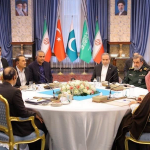
🇨🇳🇷🇺|THE SHENZHEN TRILATERAL WAS NOT A "PEACE SUMMIT." IT WAS A STRESS TEST, AND TRUMP FAILED IT BEFORE HE SAT DOWN.
The mainstream will sell you a story of three great powers coming together to "manage" the world. That is the cover story. The reality is simpler and harsher because the United States walked into a room it did not build, on terms it did not set, alongside two powers whose relationship it has spent years trying to sabotage. Trump's presence was not a concession to multipolarity. It was an admission that Washington can no longer afford to stay outside the room.
Here is what the record shows, stripped of the Atlantic framing.
TRUMP'S GAME WAS NEVER "PEACE." IT WAS THE KISSINGER PLAYBOOK, AND IT IS DEAD.
The entire purpose of Trump's outreach to Moscow, from the earliest days of his political career to the phone calls and envoys of 2026, has been the old triangulation fantasy: pull Russia away from China, offer Moscow a "better deal" on the outside of the Sino-Russian partnership, and leave Beijing isolated. This is the Nixon-in-reverse strategy. It is the dream of every American strategist who cannot accept that the unipolar moment is over.
Shenzhen killed it.
Look at the sequence. On November 18, Xi met Putin before the trilateral. The Chinese readout was not diplomatic boilerplate. Xi described China-Russia relations as "风雨不动安如山, (As steady as a mountain, unmoved by wind or rain.)" unmovable as a mountain in wind and rain, and called for "leading and promoting a multipolar world and the democratization of international relations." That is not the language of a junior partner being pried loose. That is the language of two sovereign powers confirming, in the host's own capital, that their coordination is structural and not transactional.
Trump arrived the same day. He was greeted at the airport by Xi personally, an honor of protocol and not of substance. The substance had already been settled between Xi and Putin. Trump was not the architect of the trilateral. He was the late arrival to a framework that Beijing and Moscow had already built.
WHAT TRUMP WANTED FROM THE ROOM, AND WHAT HE GOT.
Trump's stated agenda, repeated to reporters before the summit, was to discuss "ending the US-Iran conflict and denuclearization." Note the framing. The United States created the Iran crisis by withdrawing from the JCPOA and launching military strikes on safeguarded facilities. It then demanded that China and Russia help it clean up the mess on American terms. This is the definition of chutzpah: break the vase, then ask the neighbors to pay for the glue.
China's position on Iran is a matter of public record, and it is the opposite of what Trump wanted. China vetoed the US-backed Security Council resolution on Iran sanctions. Ambassador Sun Lei stated plainly that the crisis "stems from the unilateral withdrawal of the United States from the JCPOA, its policy of maximum pressure, and its twice resorting to force." China defended Iran's right to peaceful nuclear energy under the NPT and condemned strikes on IAEA-safeguarded facilities.
Trump did not walk into Shenzhen to find a China ready to join his pressure campaign. He walked into a room where the host had already vetoed his sanctions, blamed his country for the crisis, and reaffirmed its partnership with the other guest, Putin, in language designed to be quoted.
THE TRILATERAL WAS NOT A G-3. IT WAS A RECOGNITION THAT THE G-1 IS OVER.
Western commentary has already begun framing Shenzhen as the birth of a "G-3," a condominium of three great powers managing the world. Chinese analysts have explicitly rejected that framing, and they are right to do so.
The trilateral did not create a new directorate. It formalized a reality that Washington spent three decades denying: no global question, whether Ukraine, Iran, nuclear weapons, AI governance, or supply chains, can be resolved without the participation of China and Russia, and no resolution imposed on them will hold.
The meeting was historic not because three men sat together, but because the United States sat down with two powers it has tried to isolate, sanction, and subordinate, and did so on their turf, in a city that was a fishing village when the American century began. Shenzhen is not a neutral venue. It is the physical proof of the shift: a Chinese city built into a technological and industrial hub while Washington was busy declaring the end of history.
WHAT THE MAINSTREAM WILL NOT TELL YOU.
They will not tell you that Trump came to Shenzhen seeking a deal on Iran and Ukraine because his own strategy has failed. They will not tell you that China vetoed his Iran resolution, blamed his country for the war, and defended Iran's nuclear rights. They will not tell you that Xi met Putin first, embraced him as a mountain, and only then received Trump at the airport. They will not tell you that the trilateral was not a concession by Beijing and Moscow, but a recognition by Washington that the old unilateral model no longer functions.
The cover story is "three great powers managing the world together." The truth is simpler. The world is no longer managed from Washington. Shenzhen made that visible. Trump's presence was the proof, not the exception.
The Zombie Apocalypse. Gordon Liddle retweeted

Remember when Bloomberg literally ran the headline: "China's curing cancer faster and cheaper than anywhere else. But some worry they may be going too fast"?
Now look at how the Financial Times is framing this new FDA decision: "FDA rejects cancer drug invented in China in blow to Beijing's biotech sector."
A "blow to Beijing"? Chinese lung cancer patients ALREADY have this drug. Not only is it approved across China, it is covered by public health insurance, where a single vial costs roughly $100 USD (around $1,300 per treatment cycle before insurance even kicks in to cover most of the bill).
Meanwhile, in separate head-to-head trials, this exact Chinese drug beat Merck's Keytruda, which is Big Pharma's $30 billion-a-year cash cow and the best-selling cancer drug on earth. In the U.S., Keytruda carries a list price of over $12,500 per three-week dose, adding up to more than $200,000 a year.
So why did the FDA block this initial U.S. application? While a larger global trial is still wrapping up, the U.S. partner company applied first to use the drug for a smaller, harder-to-treat group of lung cancer patients whose previous treatments had failed. Even though the drug clearly slowed down tumor growth, the FDA rejected it, claiming that slowing tumors wasn't enough without stronger long-term survival proof and complaining that too many patients in the trial were Chinese.
Here is the kicker: a Harvard Medical School study found that over half (57%) of the cancer drugs fast-tracked onto the market by the FDA failed to prove within five years that they actually helped patients live longer or feel better. For years, the FDA happily let Western pharma giants charge Americans $200,000 a year for drugs that only slowed or shrank tumors on paper. Yet the moment a superior Chinese drug threatens Big Pharma's biggest monopoly and exposes what cancer treatment actually costs outside the U.S. pricing racket, the FDA suddenly discovers "strict standards."
Even if you take the FDA's red tape at face value, look at the media sickness on display. Western outlets are cheering a blocked lung cancer treatment like it is a geopolitical scoreboard win over China, when the only people being denied the option right now are Americans.
Imagine framing American cancer patients having fewer options while still paying $200,000 a year as "owning Beijing."

FDA rejects cancer drug invented in China in blow to Beijing’s biotech sector ft.trib.al/RfC5vXI

The Zombie Apocalypse. Gordon Liddle retweeted

Its not just climate change
Nature is being obliterated by humans
Forests
Wetlands
Soil
Fungi
Birds
Bees
Insects
Ocean
Whales
Marine life
Plants
Wildlife
Air
Water
are all under constant attack by humans
as if we could survive without nature

The Zombie Apocalypse. Gordon Liddle retweeted

Around 300 BC, a thirty-year-old Phoenician merchant named Zeno of Citium stood on the deck of a cargo ship cutting through the Aegean Sea, watching his entire life's worth rise and fall with the swells. Below his feet sat a fortune in Tyrian purple—the most coveted luxury in the ancient Mediterranean. Extracted drop by microscopic drop from the mucus glands of tens of thousands of crushed Murex sea snails along the Levantine coast, the dye was worth more than its weight in silver, reserved for the robes of kings, generals, and emperors.
Zeno had staked everything he owned on that single voyage from Cyprus to the Greek mainland. If the ship reached the port of Piraeus intact, he would be wealthy for life.
Just off the coast of Attica, within sight of land, a sudden gale tore across the water. Violent waves splintered the hull against the rocks, dragging the chests of royal dye into the dark abyss of the Aegean. Zeno clung to wreckage and washed ashore near Athens with salt in his lungs, torn clothes on his back, and not a single drachma to his name. In an afternoon, the sea had erased his status, his inheritance, and his future.
Most men broken by a catastrophe of that magnitude spend the rest of their lives mourning the ghost of who they almost were. Zeno walked into Athens instead.
Wandering through the noisy streets of the city, still reeling from his ruin, he stepped into the quiet shade of a bookseller’s stall to escape the chaos of the marketplace. The bookseller was reading aloud from a papyrus scroll—Xenophon’s Memorabilia, a firsthand account of the life and conversations of Socrates. Zeno sat silently and listened as the bookseller read of a man who needed neither gold nor purple robes to command a room, a man who treated poverty, exile, and even a cup of hemlock as minor inconveniences compared to the sovereignty of his own mind.
Something inside the ruined merchant snapped into focus. Look at the surviving marble bust of Zeno from antiquity—the deeply furrowed brow, the lean, weathered cheeks, the gaze of a man stripped of every illusion—and you can almost see the exact moment the merchant died and the philosopher was born.
Leaning forward, Zeno interrupted the bookseller and asked a question that altered the course of Western civilization: "Where can I find men who live like this?"
At that exact moment, Crates of Thebes—the most famous Cynic philosopher in Athens, a man who had voluntarily given away his own vast fortune to live free of material bondage—happened to be walking past the shop. The bookseller simply pointed out into the street and said, "Follow that man."
Zeno became Crates’ student that very day. For the next two decades, he studied under the sharpest minds in Greece before synthesizing their teachings into his own school of thought. Because he could not afford to buy a grand lecture hall like Plato’s Academy or Aristotle’s Lyceum, Zeno taught out in the open air on a public colonnade in the heart of the Athenian marketplace known as the Stoa Poikile—the Painted Porch.
From the name of that public porch, his followers became known as the Stoics.
The philosophy Zeno built on that porch was forged directly in the cold waters of his shipwreck. He realized that human suffering rarely comes from the events of the world themselves, but from our desperate insistence that we own things that were only ever loaned to us by fortune. Wealth, reputation, empires, and cargoes of royal dye belong to the sea and the wind; the only thing a human being truly possesses is the discipline of their own judgment and the integrity of their character.
Decades later, when Zeno was the most revered thinker in Athens—honored by kings and offered the keys to the city—he looked back on the afternoon the Aegean swallowed his fortune and delivered a quiet verdict that echoes across two thousand years: "I made my most prosperous voyage the day I suffered shipwreck."
Every life eventually meets its own coast of Attica, where the plans we spent years building are smashed against the rocks of an indifferent world. The enduring value of Zeno’s story lies in what happens the morning after the storm: realizing that when fate strips away everything you thought you needed, it often leaves you standing directly in front of who you were actually meant to become.

The Zombie Apocalypse. Gordon Liddle retweeted

This is the biggest financial scam in EU history.
This is how the first €90bn loan works
1. Ukraine needs money to fight Russia and support its wartime society
2. EU (Ursula Van Der Leyen) knows that citizens won't willingly hand €90bn over, so they design a "loan" scam
3. EU borrows the €90bn money from private sector, eg Goldman Sachs, paying €3bn a year in interest.
4. EU gives the €90bn to Ukraine
5. Ukraine doesn't pay any interest
6. Ukraine won't repay the principal unless
6a. Russia pays war reparations (highly unlikely)
6b. EU illegally confiscates Russian cash in EU banks, which will trigger counter-confiscations by Russia and associate countries
7. When the EU needs repay Goldman Sachs, they just re-borrow from Goldman Sachs or JPMorgan, this goes on indefinitely
This is a scam, it is not a EU "loan" to Ukraine - there's no interest rate, no repayment schedule, no final repayment date, no security, no liability on Ukraine
Ireland is on the book for 2.2% of the "loan" equating to €2bn of the first €90bn, and in the short term will be paying 2.2% (€60m/year) of the annual €3bn interest bill paid to Goldman Sachs or whoever.
Today, the EU has increased the scam by €45bn from €90bn to €135bn.
Where is Le Monde, Deutche Zeitung, Le Figaro, Irish Times to explain this scam to its audience?

Europe will continue to help Ukraine protect itself from Russia’s attacks.
For 2026, Ukraine’s needs are covered.
Today, we are proposing a further €45 billion to cover two thirds of its needs for 2027.
Because we must give Ukraine a strong hand at the negotiating table.
teapawt.org/i/broadcasts/2evOJJXLR…

The Zombie Apocalypse. Gordon Liddle retweeted

RT if you think protecting the planet is more important than protecting profits.

The Zombie Apocalypse. Gordon Liddle retweeted

Why do we have to wait until after the next general election for a national care service when the government has a huge majority?
Labour have absolutely no plans to win the next general election, and they don't care enough to sort it out.
The Zombie Apocalypse. Gordon Liddle retweeted
🇮🇷|November 17, 2026. Iran produced verifiable results on five fronts in a single day. This is not five news items. It is a war ledger, and it records how a country under sanctions, blockade, and bombardment turns its own defense into infrastructure.
Front One: 70 Starlink terminals are not contraband. They are the physical interface of an external command chain.
Iran's Ministry of Intelligence announced the dismantling of two armed cells in Kurdistan Province, the arrest of all nine members, and the seizure of 47 Kalashnikov rifles, 93 magazines, 2,700 rounds of ammunition, and 70 Starlink satellite communication terminals. The ministry stated that the cells were organizing terrorist acts under a "Zionist-American plot," and that a key leader based abroad, acting under the direction of a regional intelligence agency, was responsible for establishing and running an armed network in Kamyaran county.
Seventy Starlink terminals means seventy communication nodes that sit outside Iran's telecommunications control. In mountain districts where mobile signals are monitored and internet access is restricted, Starlink is a direct satellite link that bypasses domestic regulation entirely. Seizing seventy of them means cutting seventy channels running from an external command entity to armed men inside Iran. That is not smuggling enforcement. That is the dismantling of a command chain that had already been installed.
Front Two: the 18th MQ-1. CENTCOM's losses are now a statistic.
IRGC Aerospace Force air defense units announced the destruction of a US MQ-1 drone south of Qeshm Island using an advanced air defense system. The IRGC stated this is the 18th MQ-1 destroyed by its air defenses since the end of the imposed 40-day war, and remarked that the CENTCOM commander ought to be awarded a "medal for losses."
Eighteen is not an isolated number. The MQ-1 is a primary US platform for reconnaissance and strike missions across the region. Eighteen shootdowns mean Iran's air defense network has produced a repeatable, cumulative kill chain rather than occasional hits. Every shootdown compresses the reconnaissance window available to US forces around Iran, and the cost of replacing those windows falls on Washington.
Front Three: three scripts dismantled on the same day. The 2003 playbook is being reprinted.
Foreign Ministry spokesman Baghaei responded on X to three Western media narratives in one posting. CNN reported that Iran plans to detonate a "dirty bomb" in Washington. Baghaei called it a fabricated media narrative. The New York Times reported that some Iranian dams may support underground missile bases. Baghaei noted the report itself describes the connection as speculative, and that the same reporting concedes the dams serve drinking water, irrigation, and power generation.
Baghaei listed civilian water facilities already struck: water reservoirs in Khomein, reservoirs in Haftkel and Sirik, a desalination plant on Qeshm Island, water treatment facilities in Nikshahr and Tis, and water supply infrastructure in the village of Bangi in Jask. He stated these attacks have disrupted or completely halted water supplies to civilians. He cited Article 56 of Additional Protocol I to the Geneva Conventions, which grants special protection to dams and similar installations.
Read the three scripts together and the function is identical. If a dam can be redefined as a military objective, and if a dirty bomb can be presented as an imminent threat, then strikes on civilian infrastructure acquire a veneer of legality. Before the 2003 Iraq war, the same machinery produced "weapons of mass destruction." Today it produces "missile bases beneath dams" and "a dirty bomb in Washington." The script is not new. Only the season changed.
Front Four: Hormuz is not a blockade. It is a set of navigation conditions already in force.
IRGC Navy units announced that a supertanker carrying more than two million barrels of crude struck a mine and caught fire west of the Strait of Hormuz, and that an LNG carrier struck a mine on the southern route Iran has declared unauthorized. Iran's Army announced that a third violating tanker struck a mine east of the Strait and sustained severe damage. The IRGC Navy stated the vessels had been supported by US fighter aircraft and still came to a halt after striking mines.
Three ships in one day. This is not an attack on shipping. It is the physical enforcement of navigation rules Iran published and has been applying continuously. The rules were formally reported to the International Maritime Organization on November 7: safe passage requires coordination with Iran's armed forces, transit through designated safe corridors, and active navigation systems. Vessels that switch off their transponders, take unauthorized routes, and attempt forced passage under US naval escort are entering waters that have been mined. The rule is not a threat. The rule is the mine.
Front Five: the Asian Clearing Union. A settlement rail outside the dollar system.
Central Bank of Iran international relations official Abolfazl Kodahi told the 54th Standing Technical Committee meeting of the Asian Clearing Union in Kathmandu that the ACU Secretariat, headquartered in Iran, settled USD 23 billion in trade among member states in 2025, an increase of more than 13 percent year on year. He listed the priorities: expanding local currency use in multilateral relations, developing messaging systems, settlement infrastructure and payment systems, utilizing central bank digital currencies, and strengthening risk management frameworks.
ACU membership includes India, Pakistan, Iran, Bangladesh, Myanmar, the Maldives, Nepal, Sri Lanka, and Bhutan. This is an Asian settlement network with its secretariat in Tehran. Its settlements do not run on dollars, which means US Treasury sanctions tools cannot structurally reach those transactions. Twenty-three billion dollars is not small-scale grey trade. It is a functioning regional payment system running on local currencies and digital rails. Sanctions target the dollar channel. When trade does not use the dollar channel, sanctions hit air.
One logic across five fronts
The Starlink terminals in Kurdistan point to an external command chain. The 18th MQ-1 over Qeshm points to attrition in the air. The dam and dirty bomb narratives point to the manufacture of legal cover for strikes on civilian infrastructure. The mined tankers in Hormuz point to the actual enforcement authority over navigation rules. The USD 23 billion in Kathmandu points to settlement capacity outside the dollar system.
These five things happened on the same day because they are one policy. A besieged state building defenses across five dimensions at once: cutting the enemy's communication nodes, consuming the enemy's air assets, dismantling the enemy's narrative scripts, enforcing its own maritime rules, and building financial rails that do not depend on the enemy.
Araghchi's line that day is the footnote: stop this disinformation, it is a repeat of the Iraq war, and Israel's fingerprints are all over it. The Iraq war produced the weapons of mass destruction lie, hundreds of thousands died, and nothing was ever found. Today's dirty bomb and dam-base stories are the same script in a new season. The difference is that this time the accused party is taking the script apart clause by clause, and on the same day, on four other fronts, it produced the ledger.

The Zombie Apocalypse. Gordon Liddle retweeted

“Is tax even the right tool?”
Creating a wealth tax would be “immensely difficult”, radical accountant @RichardJMurphy tells @AaronBastani on Downstream.
He argues that the left needs to think more broadly about what it’s trying to achieve – and how best to get there.
If we’re trying to tackle money being transferred into tax havens, then we could tax money leaving the UK. If we’re trying to stop billionaires hoarding resources, then we could challenge how shares are valued.
“Stop thinking in your silo,” he asserts.
Watch the full episode of Downstream on our YouTube channel.
The Zombie Apocalypse. Gordon Liddle retweeted

⭕️أغبى «تحريرٍ» في التاريخ.... وسقوط "مشروع السعودية" في اليمن
زحفوا إلى صنعاء، فخسروا عدن وتعز وباب المندب والساحل كله.
أرادوا عاصمةً، فانفتحت عليهم الهزيمة من كل باب.
هذه ليست خريطة غزو، بل شهادة وفاة مشروع كامل، مشروعٌ بنته السعودية على المال والمرتزقة والخيانة، فسقط على أعتاب رجال اليمن.
لقد أعلنت القوات المسلحة اليمنية تحرير مديريات من محافظتي لحج وتعز، والسيطرة على مساحة إجمالية تقدر بـ 7100 كيلومتر مربع.
7100 كيلومتر انتزعها اليمنيون بدمائهم من ميليشيات السعودية، لا بالخطابات ولا بالبيانات، بل بالبندقية والثبات.
ميليشياتٌ صنعتها الرياض لتكون حرسًا لمشروعها، فإذا بها تتهاوى كبيوت العنكبوت أمام أبناء اليمن الأحرار، تفرُّ تاركةً سلاحها ومواقعها وذلّها.
أيُّ تحريرٍ هذا الذي يبدأ بالزحف على صنعاء وينتهي بفقدان الجنوب كله❓️
أيُّ عقلٍ سعوديٍّ غبيٍّ ظن أن اليمن لقمة سائغة❓️
وجاء هذا النصر العظيم رغم آلاف الغارات على الجبهات والمدنيين، غاراتٌ حاقدة لم تفرّق بين مقاتلٍ وطفل، وبين جبهةٍ ومصنع.
#وكان آخرها الجريمة البشعة في الحديدة، حين استهدفوا معمل الإسفنج، فسقط بنتيجته عشرات الشهداء والجرحى من المدنيين الأبرياء، والليله الغارات الكثيفه على المدنيين في صنعاء.
ظنّوا أن قصف المصانع وقتل العمال سيكسر إرادة اليمن، فإذا بدماء الشهداء تتحول إلى وقودٍ للنصر في لحج وتعز.
إنهم لم يحرروا شبرًا واحدًا، بل حرروا اليمن من وهمهم، وحرروا الجنوب من احتلالهم ومرتزقتهم.
اليوم، لحج وتعز تتنفسان حرية، والساحل يعود لأهله، وباب المندب عصيٌّ على أطماعهم.
هذه هي "اليمن" مقبرة الغزاة، وكاسرة أنف السعودية، ومن أرادها بسوء، عاد إليه السوء أضعافًا مضاعفة.
لقد دُحرت ميليشيات السعودية رغم كل طائراتها وغاراتها، ودُحر معها مشروع التطبيع والوصاية، وسيُدحر كل من تسوّل له نفسه أن يمسّ اليمن بسوء.
#اليمن_يؤدب_السعودية
#اليمن_غالي

The Zombie Apocalypse. Gordon Liddle retweeted
🇮🇶 #Iraq| The order to send the Iraqi army into Jurf al-Sakhr is not a domestic policing action. It is the opening move of a coordinated operation whose command chain runs from Washington through London to Tel Aviv, and the target is not oil smuggling. The target is the forward defence line of the Resistance, and the men giving the orders are not the ones whose names appear in the Iraqi press releases.
The first layer: the money is in New York, but the architecture was built in London. Iraq's oil revenue, roughly 90 percent of the state budget, does not sit in Iraqi banks. It is held in an account of the Central Bank of Iraq at the Federal Reserve Bank of New York, an arrangement created after the 2003 invasion and never dismantled. Washington can strangle Baghdad by delaying or halting disbursements, and it has done so before. But the custody arrangement is not the only lever. British Petroleum has just taken operational control of four Kirkuk oilfields through a joint operating entity, the most significant re-entry of British energy capital into Iraqi production in decades. The City of London, which historically built the financial architecture that binds the Gulf's oil to Western markets, is not a bystander in this. It is a beneficiary, and it is positioning for the post-conflict carve-up while Washington holds the purse strings.
The second layer: Barrack is the visible hand, but the invisible network is older and deeper. Tom Barrack, the US envoy pressing Baghdad to disarm the factions, is not a conventional diplomat. He is a billionaire investor whose relationships place him at the centre of a network that connects Washington, the Gulf, and Israel. DOJ records detail extensive contact between Barrack and Jeffrey Epstein, and analysts have noted that this places him within the orbit of Israeli power circles rather than at their periphery. Barrack's method in Iraq has been structural pressure: Treasury sanctions on militia commanders, bounties on faction leaders, and the April 2026 halt of roughly $500 million in dollar banknotes drawn from the New York Fed account. The man who arrives before the ground moves is the man whose network extends into the rooms where the ground is planned.
The third layer: Mossad has been operating inside Iraq for decades, and the green light for strikes has already been given. Hebrew media has reported that Mossad has maintained an active presence in Iraq, specifically in the Kurdistan Region, for decades, building extensive ties with Kurdish factions. More recently, the United States reportedly removed restrictions on Israeli air operations around Iraq, giving the IDF and Mossad greater freedom to strike pro-Iranian militias, with preparations completed for possible airstrikes and rapid operations targeting headquarters and weapons depots. The reported change came days after US forces completed their withdrawal from Iraq on September 30, 2026. Washington left the ground but kept the airspace open for its ally. The Iraqi army moving into Jurf al-Sakhr is the ground component of an operation that has an air component already authorised and a financial component held in New York.
The fourth layer: Kataib Hezbollah has named the network, and the naming is the evidence. Abu Mujahid al-Assaf, Kataib Hezbollah's security chief, issued a statement accusing all Kurdish personnel within the Iraqi National Intelligence Service of being linked to Mossad and the CIA, and claiming that Sunni personnel were cooperating with Jordan, the UAE, and the US. He stated explicitly that no new government could be formed in Iraq without the permission of the Islamic Resistance in Iraq. That statement was dismissed in Western coverage as militia rhetoric. It should be read as an intelligence assessment from inside the network the operation is targeting. Al-Assaf is describing the same architecture that the Jurf al-Sakhr operation is designed to dismantle, and he is naming the foreign services embedded in Iraq's own security apparatus.
The fifth layer: the "inner circle" is not a conspiracy theory. It is a documented pattern. The "Jerusalem in London" is a structural reality, not a secret society. The City of London built the financial architecture that created Israel and that binds the Gulf's energy to Western markets. British intelligence has worked alongside Mossad and the CIA in the region for decades. The men who move between Washington, London, and Tel Aviv are not a cabal meeting in a basement. They are a network with offices, budgets, and security clearances. Barrack is one node. The New York Fed account is another. The Mossad presence in Kurdistan is another. The BP Kirkuk operatorship is another. Jurf al-Sakhr is where the network is currently applying pressure, and the Iraqi army is the instrument being used to apply it.
The strategic purpose is to cut Iran's forward defence before the main front reopens. Jurf al-Sakhr is not a random town. It sits on the roads linking Baghdad to Karbala and Anbar, and it gives whoever controls it leverage over the capital. Security assessments indicate it houses drone manufacturing facilities and is expected to become an operations centre if the factions participate in a renewed confrontation. Iran's own oil exports have fallen under the blockade, which raises its incentive to use exactly these second fronts. Removing Jurf al-Sakhr from the board before the next round takes a cheap option off the table for Tehran and clears the flank for the air campaign that has already been authorised.
The blunt truth is that #Iraq is not a sovereign state in any meaningful sense, and Jurf al-Sakhr is where that truth is being enforced. Washington holds the money through the New York Fed and the sanctions architecture. London holds the energy architecture through BP and the City. Tel Aviv holds the airspace and the intelligence network in Kurdistan. Baghdad holds the uniform and the legal cover. The Iraqi army moving into Jurf al-Sakhr is not the state reclaiming a monopoly on violence. It is the visible half of a two-part operation, and the invisible half is the network that has been built over two decades to ensure that Iraq's resources, its security apparatus, and its airspace remain available to the same alliance that invaded it in 2003.
Kataib Hezbollah has said it will not hand over its weapons, and its fighters will not leave. The deadline is Friday. The air campaign is authorised. The money is in New York. The City is waiting. And the men who built this architecture are not in Baghdad. They are in London, Washington, and Tel Aviv, and they have been running this operation for twenty years.
The Zombie Apocalypse. Gordon Liddle retweeted

شبه الجزيرة العربية تمر اليوم بمرحلة تاريخية استثنائية، يتزامن فيها صعود قوة يمنية تمتلك خبرة عسكرية وتنظيمية غير مسبوقة مع تآكل الأسس التي قامت عليها هيمنة منافسيها طوال العقود الماضية. وهذا ما يمكن فهمه من خلال مفهوم Uneven and Combined Development، أي التطور التاريخي غير المتكافئ والمركّب، حيث تستطيع قوة صاعدة أن تختصر مراحل تاريخية كاملة، وتجمع في تجربتها بين أشكال قديمة من التنظيم الاجتماعي وأحدث ما توصل إليه العصر من فنون الحرب وبناء الدولة.
وهذا يذكرني بصعود المغول وسط تفكك القوى الكبرى في آسيا، وبصعود روما التي حولت قروناً من الحروب المتواصلة إلى تفوق عسكري ومؤسساتي مكّنها من ابتلاع محيطها الجغرافي تدريجياً. فالقوى الكبرى لا تصعد بقوتها الذاتية وحدها، وإنما أيضاً بعجز القوى المهيمنة عن إعادة إنتاج شروط هيمنتها، وهو ما يُعرف بمفهوم Crisis of Hegemonic Reproduction، وهو مفهوم في التحليل السياسي يشير إلى عجز القوة المهيمنة عن تجديد الأسس المادية والمؤسساتية التي تضمن استمرار تفوقها.
واليمن، الذي فقد مكانته التاريخية بفعل التحولات الاقتصادية والسياسية، يعود الآن إلى مركز الصراع على قيادة شبه الجزيرة العربية، ولكن هذه المرة بقوة عسكرية وسياسية تشكلت عبر تجربة لم يعرفها تاريخه الحديث.
ولهذا فإن صعود أنصار الله سيؤدي إلى إعادة تشكيل النظام السياسي والاجتماعي لشبه الجزيرة العربية بأكملها، وإنهاء مرحلة الهيمنة الخليجية التي نشأت مع اكتشاف النفط، وإعادة مركز الثقل السياسي والعسكري إلى اليمن.

صعود أنصار الله في اليمن لن يكون مجرد تغيير للواقع السياسي اليمني، وإنما سيؤدي إلى نشوء نظام سياسي واجتماعي جديد في جميع أنحاء شبه الجزيرة العربية، وإعادة تشكيل موازين القوى التي حكمت هذه المنطقة طوال القرون الماضية.
اليمن كان تاريخياً من أثرى مناطق شبه الجزيرة العربية وأقواها سياسياً، وكان مركزاً لحضارات ودول استطاعت فرض نفوذها على أجزاء واسعة من الجزيرة العربية. ولكن التحولات التاريخية، وانتقال طرق التجارة العالمية ومراكز الثروة إلى مناطق أخرى، دفعت اليمن تدريجياً إلى الهامش. ثم جاء اكتشاف النفط في ممالك الخليج وأجزاء أخرى من شبه الجزيرة العربية ليمنح منافسيه تفوقاً اقتصادياً هائلاً، تحول إلى قدرة سياسية وعسكرية على التدخل في شؤونه والهيمنة عليه.
ولكن ما نشاهده اليوم في اليمن هو عملية تاريخية تُعرف في العلوم السياسية باسم Modern State Formation، أو «تشكّل الدولة الحديثة». وهي العملية التي تتحول فيها قوة سياسية واجتماعية صاعدة إلى سلطة مركزية قادرة على بناء مؤسسات الدولة، واحتكار القوة العسكرية، وتوحيد القرار السياسي، وإعادة تنظيم المجتمع على أسس جديدة.
وحركة أنصار الله ليست حركة عادية إذا قارناها بالتاريخ اليمني، أو بالحركات السياسية والاجتماعية الكبرى التي غيرت المجتمعات التي صعدت منها، ثم امتد تأثيرها إلى خارج حدودها، وأعادت تشكيل محيطها الجغرافي بأكمله.
وأستطيع أن أشبّه صعود أنصار الله في اليمن بصعود المغول من قلب آسيا الوسطى، وتحولهم خلال عقود قليلة إلى أعظم قوة عسكرية في العالم آنذاك. وأستطيع أيضاً تشبيهه بصعود البريطانيين وهيمنتهم على أجزاء واسعة من الكوكب، أو بصعود الرومان الذين انطلقوا من مدينة صغيرة في شبه الجزيرة الإيطالية، ثم تحولوا إلى القوة المهيمنة على البحر الأبيض المتوسط بأكمله.
قد تظنون أنني أبالغ فيما أصفه الآن، وقد أكون كذلك على أي حال من الأحوال. ولكن وجهة نظري قائمة على قراءة موضوعية للتاريخ، وعلى متابعة التسلسل التاريخي لصعود هذه الحركة، الذي أجد فيه تشابهاً استثنائياً مع صعود تلك القوى التي ذكرتها.
لفهم أهمية ما يجري في اليمن، يجب أن نعود إلى حقيقة تاريخية أساسية. اليمنيون دخلوا القرن الواحد والعشرين دون أن يمروا بعملية بناء الدولة الحديثة التي مرت بها شعوب أخرى تمتلك ثقلاً تاريخياً وديمغرافياً مماثلاً. مصر بدأت هذه العملية في عهد محمد علي، واستمرت بأشكال مختلفة وصولاً إلى جمال عبد الناصر. وتركيا مرت بتجربة مماثلة مع مصطفى كمال أتاتورك، وكذلك إيران التي شهدت تحولات عميقة في بنية الدولة ومؤسساتها. أما اليمن، فقد ظل يعاني من الانقسامات السياسية والقبلية وغياب السلطة المركزية القادرة على توحيد موارده البشرية والمادية.
وهذا بالضبط ما يجعل صعود أنصار الله استثنائياً. فاليمنيون يمرون اليوم بعملية بناء الدولة الحديثة، ولكنهم يمرون بها من خلال تجربة عسكرية وسياسية لا يوجد لها نظير في المنطقة.
خلال عقدين فقط، خاض أنصار الله حروباً تشبه في طبيعتها أنماط القتال التي عرفتها الحرب العالمية الأولى، ثم انتقلوا إلى عمليات عسكرية واسعة من الإنزال والتطويق والمناورة، تشبه ما عرفته جبهات الحرب العالمية الثانية، وصولاً إلى حروب الصواريخ والطائرات المسيّرة والأسلحة المتقدمة التي تمثل أحدث ما وصل إليه الفن العسكري في القرن الواحد والعشرين.
ثم انتقلوا إلى مواجهة القوة البحرية الأمريكية نفسها، واستطاعوا تحييد القوة الضاربة للأسطول الأمريكي في البحر الأحمر، وفرضوا واقعاً عسكرياً لم تستطع الولايات المتحدة كسره، في هزيمة عسكرية أرى أنها الأولى من نوعها للبحرية الأمريكية منذ بيرل هاربر. وامتد نفوذهم العسكري والبحري إلى البحر الأحمر وخليج عدن والبحر العربي.
تخيلوا حجم الخبرة العسكرية والسياسية التي اكتسبها اليمنيون خلال هذه التجربة، وحجم التحول الذي يحدث في مجتمع لم يمتلك تاريخياً مؤسسات دولة حديثة تضاهي مؤسسات جيرانه. فخلال فترة قصيرة، انتقل أنصار الله من حركة محلية في جبال صعدة إلى قوة قادرة على خوض حروب برية واسعة، ومواجهة تحالفات إقليمية ودولية، وتطوير منظومات تسليح متقدمة، وفرض إرادتها العسكرية خارج الحدود اليمنية.
والآن يتقدمون في عملية توحيد اليمن تحت سلطة سياسية وعسكرية مركزية واحدة. وبعد اكتمال هذه العملية، لا أرى أن توسع نفوذهم سيتوقف عند الحدود اليمنية.
وهناك عامل آخر يجعل هذا التحول أكثر أهمية على النظام السياسي القائم في شبه الجزيرة العربية، وهو الضعف الاستثنائي لمنافسي أنصار الله وجيرانهم. فهذه الدول استمدت الجزء الأكبر من قوتها وهيمنتها الإقليمية من الثروة النفطية المتآكلة والحماية العسكرية الخارجية الخافتة، بينما تشكلت القوة الجديدة في اليمن من خلال تجربة طويلة من الحروب والتعبئة الاجتماعية والعسكرية.


The Zombie Apocalypse. Gordon Liddle retweeted

Most textbook mysteries about banks are not mysteries. They are mistakes.
In an ordinary sale the bank only moves money that already exists.
The buyer's deposit falls. The seller's rises. The bank is an intermediary.
A loan is different.
The bank records new loans and new deposits in the same step. Loans create deposits.
It can do that because it marks up assets and liabilities together. No other institution can.
Double-entry bookkeeping bans the other stories.
If the line will not balance, the money multiplier and loanable funds cannot be what banks do.
Ravel© checks every line. Assets minus liabilities minus equity must equal zero.
#Economics #Banking #MoneyCreation #Finance #Macroeconomics #SteveKeen

The Zombie Apocalypse. Gordon Liddle retweeted
Very well put

One of the dumbest things about is commonly said about money is that “banks lend out the deposits they take in”. This is the classic “banks as pure intermediaries” myth. In reality, when a commercial bank makes a loan, it simultaneously creates a new deposit in the borrower’s account. The bank does not need pre-existing deposits to fund the loan; the act of lending creates the new broad money. Banks have a banking licence from the government to do this. Deposits are largely a result of lending, not the source. This is how the bulk of the money supply (M2 and similar measures) is created in modern economies. Reserves and base money play a supporting role for settlement and regulation. They are a constraint, but they are not the main constraint most of the time.
The Zombie Apocalypse. Gordon Liddle retweeted
Something happened in the EU yesterday. Next to insignificant in geopolitical terms. But morally, politically it was something that must be celebrated. What was it? The half-crazed Kaja Kalas was defenestrated by the EU Council. In a week replete with awful news, it is something we can smile about.
The former Estonian PM Kalas, Kalas is currently the EU’s so-called High Representative for Foreign Affairs & Security. Her appointment was utter proof that the EU had lost its marbles: they had appointed someone who, not long before she was handed the keys to the EU’s foreign and security portfolio, had – in all seriousness – advocated for Russia’s break-up. Sending Ms Kalas to the UN, or anywhere for that matter, to negotiate peace and security is akin to sending an arsonist to negotiate with the fire brigade.
So, what happened now to change the EU Council’s mind? To get them to realise that Kalas is a liability even by their own lowly standards? Apparently, she arrived at Friday's European Council meeting demanding that she reresents Europe in the US-Russia-Ukraine negotiations. They looked at her with eyes filled with horror and did what the EU does: they appointed SEVEN people to represent the EU. Yes, 7 Dwarfs! Can you imagine that? Asking Trump, Putin and Zelensky that they sit around the table with 7 EU minions?
And so the EU ship sails on toward its gradual oblivion. Until last Friday we had a half-crazed pretend EU foreign minister. Now we have the 7 Dwarfs. Carry on folks.
euronews.com/2026/11/17/afte…

The Zombie Apocalypse. Gordon Liddle retweeted
🇾🇪|The Yemeni Armed Forces did not announce a battle. They announced a verdict. Operation “By Allah, behind them lies an ocean” secured 10 districts across Taiz and Lahj, a combined area of 7,100 square kilometers, and in doing so routed 12 military divisions comprising 60 brigades from the Saudi enemy’s troop concentrations, destroying and capturing hundreds of vehicles and armored vehicles. That is not a tactical adjustment on a front line. That is the collapse of a military architecture that Riyadh spent twelve years and tens of billions of dollars building, and it collapsed in a single operation.
The scale of the rout is the story. Twelve divisions. Sixty brigades. The Saudi-led coalition did not field a raiding party or a garrison. It fielded a combined arms force of the size a state deploys when it intends to hold ground permanently. That force was not pushed back. It was routed, and the Yemeni statement names the commander overseeing the concentration: Saudi officer Mohammed Talal Al-Balawi. Naming the officer is not a detail. It is an indictment. The men who planned this concentration are the men who lost it, and the Yemeni military is putting their names on the record.
The geography explains why this matters beyond Yemen.** The 10 districts secured span Taiz and Lahj, and Lahj is the governorate that contains the Bab al-Mandab Strait, the southern gate of the Red Sea. The statement is explicit about the purpose: the operation secured the areas from which the Saudi concentrations were launching attacks on Yemeni civilians and the Yemeni armed forces, and it stated that navigation in Bab al-Mandab has become safer after the Saudi enemy and its concentrations were pushed back. That sentence is the strategic core. The Yemeni Armed Forces did not seize territory for the sake of a map. They seized the ground from which the blockade and the attacks were being launched, and they did it at the chokepoint that controls the movement of energy and trade between the Red Sea and the Gulf of Aden.
The withdrawal was not a redeployment. It was a flight. The Saudi-aligned forces abandoned positions overlooking Bab al-Mandab, including the Al-Dubab airport, and retreated toward Aden to reinforce the city’s defenses. Yemeni forces advanced to within 70 kilometers of Aden. The retreat affected two key routes: the coastal road between Mokha and Aden, and the inland road connecting Taiz to the port city that serves as the temporary seat of the internationally recognized government. When an army abandons the approaches to its own provisional capital and falls back to defend the city itself, the initiative has changed hands in a way that no communiqué can disguise.
The “ocean” in the operation’s name is not poetry. It is a Quranic phrase, “By Allah, behind them lies an ocean,” and it carries a specific meaning in this context. It is the declaration that there is no exit for the enemy, no rear area, no safe withdrawal. The Saudi concentrations that were routed were not permitted to reconstitute. They were driven from their positions and their equipment was captured. The hundreds of vehicles and armored vehicles that were destroyed or seized are the physical evidence of that. An army that leaves its armor behind is not conducting a tactical withdrawal. It is running.
The timing is the unseen layer. This operation was announced on November 17, 2026, twelve years into the Saudi war on Yemen, and it came as the Saudi-led coalition was already under strain. The “Fajr al-Yemen” operation, announced earlier by the Saudi-backed government, was supposed to reverse the gains of September and restore the coalition’s position. It failed. The Yemeni Armed Forces did not merely withstand that counteroffensive. They answered it with an operation that secured 7,100 square kilometers and routed the forces that were supposed to be executing it. The sequence matters: the enemy attacked, and the enemy lost ground.
The statement’s political language is as important as its military language. The Yemeni Armed Forces emphasized that the operation was defensive, that it was not directed against the people of the southern governorates, and that it called on the southerners to raise their voices against the Saudi enemy and to refuse to allow their provinces to be used as a launchpad for attacks on Yemen. That is a sophisticated political move. It separates the Saudi occupation and its local clients from the southern population, and it frames the operation as a liberation of the south from the forces that have turned it into a staging ground for aggression.
The blunt truth is that the Saudi-led project in Yemen is finished as a military proposition. Twelve years of air campaign, blockade, and ground deployment have produced a Yemeni military that can now rout 60 brigades in a single operation, secure the Bab al-Mandab approaches, and advance to within 70 kilometers of Aden. The Saudi officer named in the statement, Mohammed Talal Al-Balawi, is the human face of that failure. The hundreds of captured armored vehicles are its inventory. The 7,100 square kilometers are its map.
What the operation does not say, and what the record shows. The statement does not claim that the war is over. It states that the Yemeni Armed Forces will continue their operations toward the depth of Saudi Arabia, will continue to target Saudi concentrations and officers, and will impose the equation of “siege for siege and escalation for escalation” until the aggression stops and the siege is lifted. That is not a victory speech. It is a terms-of-surrender document addressed to Riyadh, and the terms are the minimum that any sovereign state would demand: stop the war, lift the blockade, and leave Yemen alone.
The Yemeni people have been under siege and bombardment for twelve years. On November 17, 2026, their armed forces answered the latest Saudi escalation by taking the ground from which it was launched, securing the Bab al-Mandab approaches, and putting the enemy’s divisions to flight. The operation is called “By Allah, behind them lies an ocean.” The ocean is the enemy’s predicament. There is no way back for the Saudi project in Yemen. There is only the water.
Evidence:
- 26sep.net, November 17, 2026: Yemeni Armed Forces statement, Operation “By Allah, behind them lies an ocean,” 10 districts in Taiz and Lahj, 7,100 km², 12 divisions comprising 60 brigades routed, hundreds of vehicles and armored vehicles destroyed and captured
- 26sep.net, November 17, 2026: statement names Saudi officer Mohammed Talal Al-Balawi as overseeing the concentrations; states navigation in Bab al-Mandab became safer after the Saudi defeat; pledges continued operations into Saudi depth under the equation of “siege for siege and escalation for escalation”
•- Mehr News, November 17, 2026: Persian-language report confirming the operation name, the 10 districts, 7,100 km², and the destruction of 12 divisions comprising 60 brigades under Al-Balawi’s supervision
•- Webangah News, November 17, 2026: Yemeni forces advanced to within 70 km of Aden after Saudi-aligned elements withdrew from Bab al-Mandab; Yemeni forces took control of the strait and surrounding areas and strategic positions in Lahj
•- Agenzia Nova, November 17, 2026: Saudi-aligned forces abandoned positions along the Red Sea coast and in Lahj to reinforce Aden; retreat affected the Mokha-Aden coastal road and the inland Taiz-Aden road; Ansar Allah gained over 80 km of the coastal road
•- Middle East Eye, November 17, 2026: Yemeni government forces withdrew from Bab al-Mandab; Ansar Allah seized large areas of Taiz and controlled all entrances to Taiz city

The Zombie Apocalypse. Gordon Liddle retweeted
Hezbollah Iraq are going to have a geopolitical impact of Ansar Allah magnitude. We ain't seen nothing yet

The Zombie Apocalypse. Gordon Liddle retweeted

Neoliberalism is not unregulated capitalism: that would make it redundant as a term. It isn’t even globalized capitalism—all capitalism has been international even if boasted by specific national laws. What makes neoliberalism unique as a phase of capital is two things/1
The Zombie Apocalypse. Gordon Liddle retweeted
🇧🇭|Bahrain. A small island kingdom in the Gulf, connected to Saudi Arabia by a causeway, hosting the United States Navy’s Fifth Fleet, and ruled by a family that did not originate there. On Tuesday, November 17, 2026, the streets of Manama answered a court verdict with a chant that named the entire arrangement in a single sentence: “My authentic sheikh belongs to this land; you, Hamad, are the intruder.”
The chant was a direct response to what the High Criminal Court had done the day before. On Monday, November 16, the court sentenced 64 defendants to life imprisonment and five others to 15 years on terrorism-related charges. Of the 69 convicted, 57 were Shia clerics. The sentences included the country’s most senior Shia religious authority, Ayatollah Sheikh Isa Qassim, tried in absentia. Two other prominent clerics, Allamah Sheikh Ali al-Sadadi and Sheikh Mohammed Sanqour, were also sentenced to life.
The trial was moved forward from its scheduled date of November 22 without explanation, wrapping up the mass sentencing in a single morning. The London-based Bahrain Institute for Rights and Democracy documented credible allegations of torture, coerced confessions, and due process violations, including detainees being blindfolded, shackled for prolonged periods, deprived of sleep, and threatened with sexual violence against their relatives to extract confessions. Sayed Ahmed Alwadaei, BIRD’s advocacy director, said the severity of the punishments was designed to “spread fear among the public”.
The intruder, in documented historical terms
The Al Khalifa family belongs to the Anizah tribe, which migrated from Najd in central Arabia to Kuwait in the early eighteenth century. They came from an area in Najd known as Al-Hadar and Al-Aflaj, near Wadi al-Dawsir. They conquered Bahrain in 1783 under Ahmed bin Muhammad Al Khalifa, defeating Nasr Al-Madhkur, who ruled the island as a dependency of Persia. The family’s rule began with that conquest and has never been legitimized by anything other than the maintenance of force and external patronage.
The chant is not an insult. It is a historical statement. The Al Khalifa arrived from outside, took the island by force, and built a system designed to ensure the native majority could never challenge that arrangement.
The demographic majority and the engineering that answers it
The Shia community constitutes 60 to 70 percent of the citizen population. It is effectively barred from employment in the security services: 2.5 percent of all security personnel are Shia, 4 percent of the National Security Agency, and less than 5 percent of the Bahrain Defence Force, while more than 40 percent of Ministry of Interior police personnel are foreign nationals.
Just before the 2011 uprising, approximately 40 percent of Ministry of Interior employees were foreign nationals. During the state of emergency between March and May 2011, the government recruited over 2,500 former soldiers from Pakistan for service in the riot police and the National Guard, a 50 percent increase in the strength of those two units. None of the new recruits were Shia. By 2014, a Pakistani newspaper reported that over 10,000 Pakistani nationals were serving in Bahrain’s security forces, with Pakistanis making up at least 18 percent of the Royal Bahraini Air Force and a third of the police force.
The recruitment is deliberately sourced from populations with anti-Shia tendencies, including tribal areas in Pakistan and the Deir ez-Zor region of Syria. Naturalized Sunni security personnel receive social services, housing, and benefits that the government has increasingly deprived from local Shia communities. The government has built free self-contained housing projects for foreign security personnel, complete with their own shops and restaurants, while many Bahraini Shia live in villages with unpaved roads, battered houses, and dysfunctional sewage systems, with more than 50,000 people on the public housing waitlist and a backlog estimated at 15 years.
The logic of the foreign-staffed police force
The purpose of recruiting foreign Sunnis into the security services is not military necessity. It is political engineering. A police force drawn from the local population shares language, kinship, and faith with the people it polices. It may hesitate. A police force recruited from Pakistan, Syria, Jordan, and Yemen does not share the language, the kinship, or the faith of the Shia population it is deployed against. It will not hesitate. The regime has deliberately created a gap between the police and the people on the street, and it has filled that gap with men whose loyalty is to their salary and their naturalization papers, not to the community they are stationed in.
In April 2026, authorities revoked the nationality of 69 Bahrainis of Iranian heritage, including 33 children, leaving many stateless. Activists describe the combination of selective naturalization and citizenship revocation as deliberate demographic engineering aimed at altering Bahrain’s sectarian balance.
The court is the final instrument
The mass trial that sentenced 64 people to life imprisonment is not a judicial event. It is the legal wing of the same structure. A court that operates within a system where the security forces are staffed by foreign recruits, where the Shia majority is excluded from employment in the state’s coercive apparatus, and where the leading clerics are sentenced en masse on terrorism charges cannot be described as independent. Al-Wefaq, the outlawed main opposition bloc, described the rulings as collective punishment and part of a systematic campaign of persecution against the Shia majority, pronounced by authorities who possess no popular, legal, or political legitimacy.
Sheikh Qassim, responding from exile, did not plead for leniency. He wrote that jailing religious scholars and seminary students acts as “a spur on the path of jihad for Islam, honorable freedom, dignity, and the attainment of rights in full”. He said the Bahraini people will not abandon their legitimate rights or accept partial concessions, and that resistance to policies of subjugation, marginalization and repression will continue despite the prison sentences.
The chant is the answer to the verdict
The court said: your clerics are terrorists. The street said: our sheikh belongs to this land, and you are the intruder. The court spoke in the language of counter-terrorism. The street spoke in the language of history. And history is on the street’s side.
The Al Khalifa family came from Najd in 1783. They conquered the island. They built a security apparatus staffed by foreigners. They engineered the demographics. They jailed the clerics. And on Tuesday, November 17, 2026, the people of Manama stood in the street and told them, in public, that they know exactly who the intruder is.