

Diary of a digital publisher | Future storytelling | Tech-Media-Culture
Johannesburg...mostly
Joined January 2009
- Tweets2.6K
- Following909
- Followers868
- Likes585
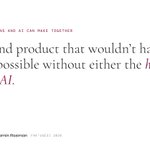





Dr Ben Rosman’s best argument for AI at #Fakugesi - human asks the question, an AI does “this huge search over the space of the possible”, then a human decides what to make of it. The result is "an end product that wouldn’t have been possible without either the human or the AI"

I always enjoy when Ben Rosman speaks. At #Fakugesi this year in Jobug he says - AI inequality is no longer access. It is “are we shaped by AI or are we shaping AI?” Being in the training data is representation. Leading and inventing is the real job, but Africa isn't there yet.

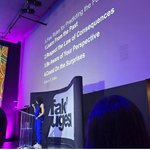
Rosman put three questions to AI and creativity: Possibility, who gets to create? Authorship, whose creativity is it built on? Power, who controls and benefits? Authorship is a provenance question. If you can’t trace the source, you can’t answer the other two.


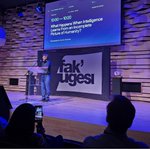
Prof Sennay Ghebreab at Fak’ugesi asked what happens when intelligence learns from an incomplete picture of humanity. His frame - AI is the biggest mirror we have built, and it is missing most of us. Good reflection feeds introspection, and introspection feeds imagination.

Just wrangled a business delegate ticket for the #AIExpoAfrica later this week. I attempted to go last year but they never approved my clearly relevant media credentials, so got bounced. But now, a connected neighbour has come to the rescue. How delightful. See you there!
A mask taken from Cameroon in 1957 surfaced in a French museum 60 years later. It's absence destroyed a sacred festival, but now it's coming back with some changes. The point for this story is, the object matters for what it carries. That is provenance.

Provenance is not metadata. It is where something came from, who held it, what it was part of. I work with digital files. The principle holds.
Molemo's challenge was direct - protect the infrastructures of memory, and we have "a greater duty to inhabit them." #Fakugesi
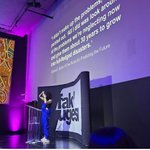
Octavia Butler never claimed to predict the future. She just said, "All I did was look around at the problems we're neglecting now and give them about 30 years to grow into full-fledged disasters." Molemo Moiloa put this on screen at Fak'ugesi.


Always a pleasure to see people I've known for the better part of 20 years delivering insighful talks on stage. At Fak'ugesi Molemo Moiloa opened with this- we are the future's ancestors. Whatever the world looks like in 100 years, "it's our fault." Bit of a tough one to swallow.

The last two weeks have been enlightening. Lots of movement around Johannesburg and rubbing shoulders with two of my favourite ecosystems - the creative technologists and the futurist enablers. Very different groups from a cultural perspective but so complimentary to each other.
All of us capturing our lives through hours of video and images and voice notes. We’ll need a better way to manage all that data. And it isn’t just storage. Storage is the default. A more interesting proposition is making those assets useful to your life.
This is the structural bottleneck I'm interested in for editorial institutions. The MAM market is growing fast because institutions are waking up to the fact that unstructured, unsearchable archives are money sitting in a box.