

Helping people create passive income the fast way. Time is more valuable than money. Set it free. Stock options seller NO financial advice, ask professionals
United States
Joined October 2023
- Tweets2.4K
- Following354
- Followers719
- Likes1.8K






Pinned Tweet
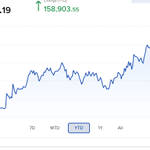
S&P 500 is up 11.97% over the last year - not bad.
Our option selling portfolio is up 66.72% over the same time frame.
What kind of return would you rather see in your portfolio?
Maybe it's a good time to learn more about option selling?


6
10
2,678
Most people think “options = gambling.”
I used to think that too… until I flipped the script and started selling them instead of buying.
Here are the 4 massive advantages almost nobody talks about:
You get paid UPFRONT — cash hits your account the moment you place the trade (not months or years later).
Time decay (theta) works FOR you — every single day the option loses value in your favor, even if the stock barely moves.
You win in 3 out of 4 market scenarios: stock goes up ✅ stock stays flat ✅ stock drops a little ✅ (only big drops hurt — and we pick strikes to make that rare).
You can generate 1–3% per week on capital at risk — that’s 50–150%+ annualized with compounding, all while owning stocks you believe in anyway.
I went from Forex blowups and flat TSLA bags to living completely off option premium in under 3 years.
This isn’t theory — it’s the exact system I lay out in my book Passive Income Fast Track and teach daily inside our communities.
Ready to turn your stagnant portfolio into a cash-flow machine?
Comment “GUIDE” below and I’ll send you my Cashflow Options Playbook PDF + invite to our next live training (100% free).
Your future self will thank you.
#FinancialFreedom #OptionIncome #SellOptions
Let’s get you collecting premium this week! 💰
1
45
Selling stock options can be compared to selling insurance.
Most insurance companies make money, many make a lot of it.
But like insurance companies, you cannot just take on any random risk and insure it.
You have to be very selective in what opportunities you accept and which ones you deny.
Even the ones you accept have to be priced well.
That's where limit orders for stock options come into play.
Why are most insurance companies very profitable?
Because they price their insurance to have the mathematical advantage.
You can do the same when selling stock options. Most of them expire worthless.
By selling them (selectively on risks you're willing to take) you have the mathematical advantage on your side.
Selling the same type of options often enough, over a long enough time horizon, almost guarantees the statistical advantage will work out in our favor.

42
Looks like the support level around $155 is holding pretty well for $NVDA so far.
Hard to imagine it could go much lower with earnings next week.
We would need a new, dramatic catalyst probably.

3
56
Looks like we dodged a bullet. The >5% in one day drop last week put significant pressure on our portfolio.
We even saw a few liquidations. My time was limited on some of the days with downward pressure. It was also interesting to see what positions IBKR would choose to liquidate in a scenario like this.
They targeted mostly shares and bought ITM calls. We ended up with a number of naked calls as a result.
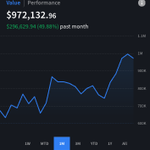
A portfolio that was close to $1m the week of Sep 25 dropped below $300k in value last week.
If the downward pressure had continued (or decides to come back) we might even have deployed some extra capital into the account.
Let's look at some numbers since Sep 25:
-$27,089 realized P/L from stocks
$28,325 realized P/L from options (very similar to September)
$34,997 in proceeds (collected net premium) from options (a bit on the high side)
No major changes in the port since this event. Just trimmed a few positions and restored some of the long exposure from the liquidation (mostly via calls instead of shares).
Do I wish I had trimmed more positions when we were close to seven figures to increase buying power?
Yes.
Did I learn a ton from this?
Yes, much more than if we were just sailing smoothly.
Can we get back to $1m anytime soon?
Maybe, depends on the market. I plan to slow down the growth when we get closer next time and simplify some of the positions.
Sector diversification is great in general. But when you have to manage a lot of different positions during a strong correction or crash it increases the time spent significantly.
It is a fun learning experience, but I can think of better ways to invest my time.
I'm thankful I took ~$50k out in the months leading up to the $950k+ high. Might put some or all of it back if we head lower significantly.

1
69
Have you ever thought I need to pay off all my debt before investing a single dollar?
This all or nothing thinking cost me tens of thousands in potential wealth. Here's why:
While focusing exclusively on my mortgage, I missed years of market returns which average 8 to 10%.
Here's the smart approach to the debt versus investing:
- High interest debt, like credit cards at 15% plus should be tackled first.
- Low interest debt, like a mortgage at 3 to 6% is something you can pay down slowly while investing.
- Money is a tool that works best when you're strategic, not emotional.
I started investing just with just a few hundreds while still paying off my car loan.
Seven years later, my investments have grown while my debt has shrunk.
You can do both. You should do both, but with the right debt.
What's your debt situation and how is it affecting your investment plans.
2
1
105
Some wisdom from Tony Robbins: “If we don’t celebrate our victories, our brain decides the effort isn’t worth it.”
At 17, Tony's original teacher, Jim Rohn, told him "Every day, stand guard at the door of your mind. Miss a meal, but don't miss 30 minutes of reading."
We don't want to live by default. We want to live with intention and fulfill our purpose for being on earth.
1
54
I ignored options for 7 full years because I thought “leverage = danger.”
My portfolio? Basically flat the entire time — some stocks up, some down, barely beating inflation.
Then I discovered the truth most people never hear:
Selling options actually REDUCES risk when you do it on stocks you’re happy to own forever.
Here’s what changed everything:
Instead of praying a stock goes up, I started collecting cash upfront every week by selling puts below the price on companies I love (NVDA, SOFI, TSLA, etc.).
If the stock stays flat or goes up → I keep 100% of the premium (1–2% per week).
If it dips and I get assigned → I now own an amazing company at a discount AND immediately sell a covered call to collect even more premium while I wait for the rebound.
Result?
My portfolio went from dead money to 40-70% consistent annual returns with far less stress than buy-and-hope ever gave me.
Same stocks. Same market. Totally different strategy.
Want the exact 5-step wheel strategy I use + the watchlist our community is crushing right now?
DM me “WHEEL” or grab the free guide in my bio → saltmoneyoptions.com
Stop leaving money on the table. Start getting paid to wait.
#OptionSelling #PassiveIncome #WealthBuilding
1
1
80
Insights & Portfolio Review: Oct 29 - AAL, TSLL, SPY, ... teapawt.org/i/broadcasts/1wGWjlemA…

30
Ever feel like taxes are the silent thief stealing your options trading gains? 😤
You're crushing it selling puts & calls on $SOFI (or any blue-chip you love owning long-term)—collecting 1%+ weekly premiums, compounding to 50%+ ROI annually. But Uncle Sam wants his cut.
Here's the hack: Backdoor Roth conversions let *anyone* compound tax-free forever.
Sure, it's a tax hit upfront (on your non-deductible IRA contribution), but imagine your portfolio ballooning 32x faster than average investors—*without* future tax drag eating your freedom.
Why pay now? Because in high-earning years, you're in a bracket anyway.
Deferring just means bigger bites later when you're *finally* living that passive life. (Pro tip: Employ yourself via C-Corp to slash brackets, or borrow against assets tax-free.)
This mindset shift turned my flatlined portfolio into massive growth.
Want the full strategy? Grab our free Cashflow Options Playbook + join our community to double returns safely: saltmoneyoptions.com
What's your tax ninja move? Drop it below—let's build wealth that lasts. 💪
#OptionsTrading #FinancialFreedom #PassiveIncome
1
1
101
Most of us get discouraged and stop when we have one significant loss on a stock investment.
But letting that stop us is like Neo giving up on Kung Fu when he could not figure out how to hit Morpheus initially.
We all get better with reading the matrix over time. If we don't give up and keep learning, the results will show.
The important thing is to choose playing fields that matter and have big outcomes.
The stock market is a great example of that, because consistent results scale extremely well.

38
Every new financial concept brings more financial freedom.
I did not understand it, when I first heard this. But the more concepts I'm exposed to, the more profound the meaning of this statement becomes.
This is true about investing, tax filing, owning a business, and related topics.
Understanding does not come from hearing a concept once. We tend to forget easily. Most of us also don't pay 100% attention all the time.
To deeply understand something, three steps are a game-changer:
1. Ask good questions
2. Connect new concepts with others we already understand
3. Apply what we learn (the most important one)
Every topic appears boring at the surface level. But the more we allow our curiosity to dive in, the more interesting it becomes.
When we put a concept into action that we deeply understand, we scratch the surface of mastery.
Masterful execution of any skill is beautiful.
1
1
46

If I was trying to earn passive income from real estate today, I would look for an affordable property, maybe a condo which is just good enough for me to live there.
I would find a way to buy it for a good deal and rent all rooms except for mine out to roommates.
There are two strategic reasons for doing it this way.
1. Banks are more likely to give you a good loan on a property you plan to occupy yourself.
2. Roommates help with freeing up cash flow.
36
Let me share a brief story that reveals the #1 move I would make today in the age of AI.
A few decades ago I had a big problem.
I really wanted to buy a new computer. But I did not have the money to do so. I was also unable to find employment. I was around 14 years old and Germany has some laws against child labor.
A neighbor would pay me 2.5 Euros (5 DM) to mow his lawn (inflation is real). But with that kind of weekly income it would take forever to afford the computer I needed (to play a recently released game).
I decided to try something out of the box. I had learned how to work with wood from helping my dad build housing for our pet rabbits.
After looking at the cost of some material in a local home improvement store and the price people asked for to sell a dog house in the classifieds, I was pretty confident I could make some money off the difference.
The first house I could actually build with my dad's supplies. I sold it for around 100 Euros. This was 40 times more than I earned from mowing my neighbor's lawn. It only took me about twice the time to complete the task.
I could see light at the end of the tunnel. The profit from the next dog house was not as high, since I also had to buy the raw materials first. But I was able to raise the price slightly and still sell it.
After creating several more iterations of the dog house, tweaking the design a bit, and optimizing the cost of the materials, I had earned enough to buy the new computer.
I had also gained a valuable skill: I experienced how to solve problems through entrepreneurship. I had made several successful transactions in the marketplace, after identifying an opportunity.
Entrepreneurship is becoming more important in the age of AI
It's already much more affordable to start and run a business than just a few years ago.
The cost of intelligence will continue to go down. AI employees and soon robots will become the norm. Humans will still be a part of the changing workforce. But jobs and roles will shift a lot.
If we lean into resourcefulness, and build our skillset as a business owner, we will be able to really benefit from the leverage of AI.
I know that requires a shift in mindset. Most of us are so used to the 9-to-5 employment rhythm.
But stepping outside of what we're used to is absolutely worth it.
What does that mean practically?
If we're unable to find a job today, creating a business should be our go-to. You can learn all the skills needed to do so by watching YouTube videos and talking with AI.
If we have a job today, but are not sure it will exist in five years it's a great time to start a business on the side. This is also a great option if we want more financial freedom or would like to be better prepared for the future.
We might have to learn and work harder for a season, but the investment in ourselves always results in the highest returns.
Entrepreneurial experience also increases our value in the marketplace. Business owners love to hire employees who think like owners and problem solvers.
69
Portfolio Review: July 27 - RKT and TSLL, SPY is Winning teapawt.org/i/broadcasts/1rGmqpYer…

50
Will be interesting to see how $SPCX does next week with the history-making starship launch.
Insider sales unlock from this week went pretty well so far. The slight correction was much needed.
Three covered calls expired worthless today at $152.50 and $160.
119
It's been a month since our last portfolio update, so let's take a look.
The recovery of BTC and $META really helped our portfolio make new ATHs.
Even though our largest positions are still significantly below ATHs, the portfolio overall keeps marching forward.
That's the power of proven option selling strategies combined with a bull or sideways moving market.
$10,299 realized P/L from stocks
$28,379 realized P/L from options
$26,798 in proceeds (collected net premium) from options
S&P 500 and Nasdaq are both near or at all-time highs. It's a good time to take some profits and prepare for some rainy days ahead. NFA.
These numbers are from Wednesday. Post failed to publish initially due to too many tagged tickers.

1
2
118