

Head of Research @bitcoinpolicy | Fmr Senior Advisor & Chief Speechwriter to @SecScottBessent | @Forbes Contributor | @PrincetonSPIA alum
Washington, DC
Joined June 2022
- Tweets1.4K
- Following1K
- Followers9.7K
- Likes39K




Sam Lyman retweeted

Britain has a Bitcoin opportunity. 🇬🇧
New research from Conner Brown and Joey Garcia explains how the UK can build on its strong legal foundations with practical changes to banking, tax, and market access.
The paper also looks at protecting self-custody, handling seized Bitcoin after victims are compensated, and testing how mining could use otherwise wasted energy.
Read the report: btcpolicy.org/articles/brita…


Sam Lyman retweeted

Go to a meeting on AI issues on Capitol Hill, and you inevitably either immediately precede or follow another meeting with one of the myriad of EA-funded groups flooding Hill staffers with very particular AI Safety messages. Potentially losing Nvidia as an active player in the policy space would be a tremendous loss.
Nvidia’s advocacy helped prevent the emergence of a uni-party Safety movement. And those risks are very real. Even several right-coded groups have dipped their toes in the Safety waters. The members of the White House Task Force are largely open model aligned, but we are facing a strong pro Safety majority in Congress.
And yes, I have started capitalizing Safety, as we need to call it what it is - a coordinated movement of connected organizations that often share funding sources advancing a specific political and social agenda.


Sam Lyman retweeted

ICYMI: a banger report on AI safety, EA, and their connections to a crypto pump scheme.

NEW: The most powerful AI safety think tank in America is 94% funded by foreign money.
The Future of Life Institute built the intellectual foundation for the most stringent anti-AI legislation to come before Congress this year: the Data Center Moratorium Act and the Ban Superintelligence Act.
But the organization is bankrolled almost entirely by foreign billionaires, including one who expressed that China could be “the grown-up in the room” on AI policy and described China as being in a “much better position to regulate” advanced technology than the US.
And that’s only half the story.
Almost the entirety of FLI’s funding comes from a crypto memecoin pushed by Sam Bankman-Fried. Vitalik Buterin donated $665 million in Shiba Inu to FLI in May 2021. SBF, who had a yearslong relationship with FLI’s cofounder, listed Shiba Inu on FTX that same month, helping provide exit liquidity for FLI’s Shiba Inu donation that allowed it to cash out at a rate 20x higher than even Vitalik expected.
Effective altruists not only orchestrated this historic gift but have been at the forefront of leveraging it to shape AI safety regulation in the US in a direction that leans towards authoritarianism – so much so that Vitalik himself has since criticized FLI’s use of his donation.
American AI policy should be made by Americans. But to an alarming degree, it is funded by foreign billionaires whose allegiance is to a transnational ideology that puts US national and economic security second.

Sam Lyman retweeted
Undue foreign influence on AI is top of mind. A report from @SamLyman33 has new findings on that topic, with a special focus on one of the most powerful and well-funded "AI safety" think tanks in the world. And there's a crypto scam/SBF angle. Must-read. Link below.

NEW: The most powerful AI safety think tank in America is 94% funded by foreign money.
The Future of Life Institute built the intellectual foundation for the most stringent anti-AI legislation to come before Congress this year: the Data Center Moratorium Act and the Ban Superintelligence Act.
But the organization is bankrolled almost entirely by foreign billionaires, including one who expressed that China could be “the grown-up in the room” on AI policy and described China as being in a “much better position to regulate” advanced technology than the US.
And that’s only half the story.
Almost the entirety of FLI’s funding comes from a crypto memecoin pushed by Sam Bankman-Fried. Vitalik Buterin donated $665 million in Shiba Inu to FLI in May 2021. SBF, who had a yearslong relationship with FLI’s cofounder, listed Shiba Inu on FTX that same month, helping provide exit liquidity for FLI’s Shiba Inu donation that allowed it to cash out at a rate 20x higher than even Vitalik expected.
Effective altruists not only orchestrated this historic gift but have been at the forefront of leveraging it to shape AI safety regulation in the US in a direction that leans towards authoritarianism – so much so that Vitalik himself has since criticized FLI’s use of his donation.
American AI policy should be made by Americans. But to an alarming degree, it is funded by foreign billionaires whose allegiance is to a transnational ideology that puts US national and economic security second.
Sam Lyman retweeted

The ghost of Sam Bankman-Fried looms large over DC AI policy.
We are deeply concerned about FLIs growing influence in Washington. Even their original supporter, @VitalikButerin, now considers their recent policy turn “authoritarian and fragile.”
Check out our new research from Sam to learn more.
NEW: The most powerful AI safety think tank in America is 94% funded by foreign money.
The Future of Life Institute built the intellectual foundation for the most stringent anti-AI legislation to come before Congress this year: the Data Center Moratorium Act and the Ban Superintelligence Act.
But the organization is bankrolled almost entirely by foreign billionaires, including one who expressed that China could be “the grown-up in the room” on AI policy and described China as being in a “much better position to regulate” advanced technology than the US.
And that’s only half the story.
Almost the entirety of FLI’s funding comes from a crypto memecoin pushed by Sam Bankman-Fried. Vitalik Buterin donated $665 million in Shiba Inu to FLI in May 2021. SBF, who had a yearslong relationship with FLI’s cofounder, listed Shiba Inu on FTX that same month, helping provide exit liquidity for FLI’s Shiba Inu donation that allowed it to cash out at a rate 20x higher than even Vitalik expected.
Effective altruists not only orchestrated this historic gift but have been at the forefront of leveraging it to shape AI safety regulation in the US in a direction that leans towards authoritarianism – so much so that Vitalik himself has since criticized FLI’s use of his donation.
American AI policy should be made by Americans. But to an alarming degree, it is funded by foreign billionaires whose allegiance is to a transnational ideology that puts US national and economic security second.
Sam Lyman retweeted

BPI's Zack Cohen on how a de minimis tax exemption could get Americans spending Bitcoin:
"Every time they buy a coffee, they don't have to keep track of the transaction."
"We would see a lot of Bitcoins come out of this state of just being held and move through the economy and actually stimulate the economy."
Sam Lyman retweeted

great write up by @SamLyman33
btcpolicy.org/articles/data-…
sam shows that each GW of compute (located in the average rural county) can support yearly transfers, or credits, worth thousands of dollars for each resident AFTER general fiscal priorities have been covered, all while NOT needing to impose any NEW TAXES on operators
this is a generational opportunity for rural america on a number of dimensions, with this being just one very tangible and direct expression of them

Sam Lyman retweeted
American AI leadership requires U.S. open-source technology as the foundation other countries build on. As China pairs open models with affordable infrastructure and training, America needs competitive alternatives, writes BPI's Head of Government Affairs Ken Egan @Bayman11771 in @thecipherbrief.
That means capable open models, affordable hardware, financing, and support that give partners control over their AI systems.
Read more: thecipherbrief.com/how-ameri…

Sam Lyman retweeted

“You can remit about $5,000 to $9,000 a year per household in a rural county just from the excess taxes generated by data centers.”
@SamLyman33 explains the dividends Trump is backing: fund local services first, then send surplus taxes to families.
teapawt.org/tftc21/status/21061332…

President Trump just endorsed BPI's Data Center Dividend proposal, 20 days after it was published.
Counties that host data centers send a fixed share of property tax revenue directly to local households. No new taxes.
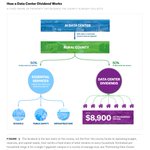
BPI estimates the average rural family could receive up to $8,900 a year.
Trump: "The data centers are making an absolute fortune. But now, the people are going to benefit directly."
Sam Lyman retweeted
Just 20 days after publishing our Data Center Dividends report, President Trump backed the concept surrounded by the world's AI leaders.
teapawt.org/SamLyman33/status/2106…

NEW: President Trump has endorsed BPI’s original proposal of a Data Center Dividend.
POTUS: “The data centers are making an absolute fortune. But now, the people are going to benefit directly, whether it’s teachers that get paid a bonus [or] whether it’s people that live in the community that get paid a dividend.”
Our research, published just 3 weeks ago, introduced the idea of data center dividends, showing that the average family living in a rural data center town could receive up to $8,900 a year in dividend payments.
This is how you ensure that America's Heartland thrives in the AI age 🇺🇸
Sam Lyman retweeted
Her comments are not random.
This is part of a well funded and carefully organized campaign to demonize open models and our civil liberties in DC.
Multiple Senate staffers have told me that outside groups are requesting meetings to provide “demonstrations” where open source models are used to attack simulated hospital websites and demand bitcoin as ransom.
These are cheap scare tactics funded by groups seeking to control open systems. In reality, cyber defenders rely on open models daily to find critical vulnerabilities before attackers get there first.
If these groups are successful, we will all be poorer, less free, and more vulnerable to adversaries with increasingly capable systems.

We're used to thinking of open-source models as an unadulterated good. But in the case of AI, they can actually pose additional dangers, as @ReidHoffman and I got into at #CGI2026. I appreciated this nuanced discussion.
Sam Lyman retweeted

Alaska pays its residents to live there. Rural counties could be next.
@SamLyman33 explains why AI infrastructure is the new oil fund.
Sam Lyman retweeted
The anti-data center crowd claims to stand up for the working class. The unions disagree.
@SamLyman33 explains why 40+ labor groups are fighting against data center regulations.
Sam Lyman retweeted
WATCH: BPI Head of Research @SamLyman33's opening testimony before Congress on foreign influence campaigns targeting American data centers.
Sam Lyman retweeted
The @bitcoinpolicy's own @SamLyman33 will be testifying before Congress at 14:00 Eastern on Chinese influence in American data center debates. It should air live here:
youtube.com/watch?v=2rtiKQ6R…
Sam Lyman retweeted
PRESENTING: Data Center Dividends
Rural households could receive annual payments or credits from existing data center tax revenue, without new taxes or added developer costs.
Check out the full report: btcpolicy.org/articles/data-…
teapawt.org/SamLyman33/status/2097…
NEW: Surplus tax revenues from a single AI data center could pay every family in a rural county up to $8,900 a year in the form of a “data center dividend.”
BPI’s new research applies the sovereign wealth fund model to America’s rural counties to make the case for data center dividends, which are payments or credits provided every year to every household in a county that hosts a data center.
Our financial model borrows from the logic of the Alaska Permanent Fund, which for the last decade, has paid every Alaskan family about $3,900 a year in dividends earned from investing oil revenues. By comparison, we estimate that data center dividends could pay families between $4,500 to $8,900 a year in the average rural county, and even more than $11,000 a year in places like Louisiana.
These payments or credits would be funded by a fixed share of the property tax revenue the county already collects from that data center while still leaving ample funds to finance schools, police departments, and public works projects.
By hosting hundreds of data centers, America’s rural counties have helped usher in the greatest technological revolution of our lifetimes. The men and women who live in these counties deserve to share in the massive economic prosperity being unlocked by AI. Data center dividends make this possible.


Sam Lyman retweeted
FREEDOM TECH POLICY HOUR 🎥 🇺🇸
AI Data Centers are experiencing unprecedented opposition across the United States.
This week @zackcohen_ and @Bayman11771 are joined by special guest @SamLyman33 to dig into the nature of the opposition and what it takes to build support.
During the episode, Sam introduces the idea of data center dividends: a policy proposal to take a portion of the property and sales taxes these facilities pay to local jurisdictions and send it to individuals as a yearly check. In some rural counties, the early estimates work out to $5,000 to $10,000 per household every year.
Chapters:
0:00 Planting the flag on Freedom Tech Policy Hour
0:43 Bessent's buybacks and backdoor QE
8:13 The $2 trillion build-out needs cheap money
16:46 The blue collar boom
31:58 Beijing's fingerprints on the data center protests
43:34 The fix: data center dividends
46:22 $5,000 to $10,000 a year per household
51:32 Making AI human again


