

SaxRevolutions: Adolphe Sax's life by José-Modesto Diago Ortega. Saxophonist/Researcher.
www.elisehall.com
Joined January 2014
- Tweets1K
- Following1.3K
- Followers916
- Likes1K




Pinned Tweet
Do you want to know about the biggest and most merciless judicial battle in culture and industrial property in 19th century, the echoes of which still ring today? Please, check my 📘 The Battle for Control of the Brass and Instruments Business in the French Industrial Revolution

Hoy, 25N. Y todos los días. 💜
Voz propia. Sin miedo. Sin violencia.
#25N #EliseHall #EligeTuPropiaVoz

26
Mañana no hay jornada de reflexión. Hay que seguir haciéndose oír. 💜
Contra la violencia hacia las mujeres.
#25N #EliseHall

15

Sí, lo vamos a repetir: voz propia. Las veces que haga falta.
Y si nos quieres echar una mano y saber más de la apasionante historia de Elise Hall, elisehall.com/Shop/
#25N #EliseHall

32
Nuestra candidata trae el saxofón. Y ninguna intención de pedir permiso para hacerse oír. 😉🎷
Voz propia. Por una vida libre de violencia.
#25N #EliseHall #EligeTuPropiaVoz

1
23
Cambia el color del cartel. Las ideas, las mismas: igualdad, libertad y voz propia. 😉🎷
#25N #EliseHall

1
24
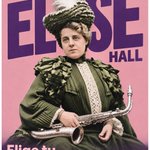
Entre tanto cartel electoral y con el 25N a la vuelta de la esquina… presentamos nuestra propia candidata. 😉🎷
Elise Hall entra en campaña: «Elige tu propia voz».
Un guiño electoral por el derecho de las mujeres a vivir sin violencia.
#25N #EliseHall #EligeTuPropiaVoz

1
39
𝐖𝐡𝐚𝐭 𝐝𝐨 𝐩𝐥𝐮𝐦𝐛𝐞𝐫𝐬 𝐡𝐚𝐯𝐞 𝐭𝐨 𝐝𝐨 𝐰𝐢𝐭𝐡 𝐛𝐫𝐚𝐬𝐬 𝐢𝐧𝐬𝐭𝐫𝐮𝐦𝐞𝐧𝐭𝐬?
More than you might think.
During the Industrial Revolution, engineers, mechanics and instrument makers faced a similar problem: how to control the flow of air or liquid through a...

1
1
36
system of pipes.
The valve did not simply transform industry and plumbing. Applied to brass instruments, it allowed players to redirect the air through additional lengths of tubing—and opened up a new chromatic world.
Different purposes. The same mechanical principle.
1
1
18

Happy 212th birthday, Mr Sax.
Adolphe Sax was born in Dinant on 6 November 1814. More than two centuries later, his instruments—and the controversies surrounding them—continue to resonate.
#AdolpheSax #SaxophoneHistory #MusicHistory #Organology #SaxRevolutions

4
71
The instruments were not the only thing on display.
Two years after the Dublin International Exhibition, the Paris Exposition Universelle of 1867 brought nations, manufacturers and visitors together on an even greater stage.


1
47
International exhibitions displayed more than manufactured objects. They also presented institutions, uniforms, discipline and national identity—and the musical ensembles that transformed new instruments into public sound.
The instruments were on display.
1
20
𝗦𝗼 𝘄𝗲𝗿𝗲 𝘁𝗵𝗲 𝗺𝘂𝘀𝗶𝗰𝗶𝗮𝗻𝘀 𝘄𝗵𝗼 𝗴𝗮𝘃𝗲 𝘁𝗵𝗲𝗺 𝗺𝗲𝗮𝗻𝗶𝗻𝗴.
Paris, 1867. Photograph by Léon & Lévy · Archives Nationales, Paris.
#MusicHistory #Organology #BrassInstruments #MilitaryBands
#ExpositionUniverselle
13
𝗪𝗵𝗮𝘁 𝗱𝗶𝗱 𝗶𝗻𝗱𝘂𝘀𝘁𝗿𝗶𝗮𝗹 𝗽𝗿𝗼𝗴𝗿𝗲𝘀𝘀 𝘀𝗼𝘂𝗻𝗱 𝗹𝗶𝗸𝗲?
At the Dublin International Exhibition of 1865, clocks, textiles, ceramics and manufactured goods filled an immense iron-and-glass hall.
But look more closely.
1
1
50
At the centre of this contemporary view stands a band, surrounded by brass instruments, music stands and visitors.
International exhibitions were not silent displays of objects. Music helped transform industry into public spectacle
1
1
32
Twelve years later, Queen Victoria sketched the band again.
In 1843, she had drawn French military musicians during her visit to King Louis-Philippe. By 1855, France had a new regime and a new ruler: Napoleon III.
On 25 August, while visiting the Château de la Muette, Victoria

1
1
42
𝗧𝗵𝗲 𝗿𝗲𝗴𝗶𝗺𝗲 𝗵𝗮𝗱 𝗰𝗵𝗮𝗻𝗴𝗲𝗱. 𝗧𝗵𝗲 𝗱𝗶𝗽𝗹𝗼𝗺𝗮𝘁𝗶𝗰 𝗿𝗼𝗹𝗲 𝗼𝗳 𝗺𝗶𝗹𝗶𝘁𝗮𝗿𝘆 𝗺𝘂𝘀𝗶𝗰 𝗵𝗮𝗱 𝗻𝗼𝘁.
That relationship between bands, political power and the brass-instrument industry lies at the heart of
1
1
12
📘 𝘛𝘩𝘦 𝘉𝘢𝘵𝘵𝘭𝘦 𝘧𝘰𝘳 𝘊𝘰𝘯𝘵𝘳𝘰𝘭 𝘰𝘧 𝘵𝘩𝘦 𝘉𝘳𝘢𝘴𝘴 𝘢𝘯𝘥 𝘐𝘯𝘴𝘵𝘳𝘶𝘮𝘦𝘯𝘵𝘴 𝘉𝘶𝘴𝘪𝘯𝘦𝘴𝘴 𝘪𝘯 𝘵𝘩𝘦 𝘍𝘳𝘦𝘯𝘤𝘩 𝘐𝘯𝘥𝘶𝘴𝘵𝘳𝘪𝘢𝘭 𝘙𝘦𝘷𝘰𝘭𝘶𝘵𝘪𝘰𝘯. Oxford University Press, 2024.
#brass #bands #power #brassbands #QueenVictoria
1
11