

Develop innovative AI and wet lab approaches in biomedical science | MD, PhD, MBA | Medical Geneticist https://xitter.cf/t.co/Ns5PX9MmKJ
Hamburg, GER
Joined June 2022
- Tweets157
- Following197
- Followers234
- Likes338




AI can work for you - and now it can even shop and pay for you. Agents may have access to all your data and full control of your system. We believe these agents need broad permissions and the freedom to work efficiently, but only with the data and control you choose to grant them. We give the autonomous agents of your choice (Claude, GPT, Ollama, …) a safe home.
The reproducibility crisis has a supplier.
More than 18,000 questionable images were found this week across the antibody catalogues of 15 companies. Around 13,800 of them share seven identical backgrounds. That is a technical way of saying the experiment behind the figure was probably never run at all.
With doesitreproduce .com, we have spent the past year re-running the bioinformatic pipelines of more than 1,000 published papers, one paper at a time, just to see what actually comes out the other end. It taught us a great deal about where results break.
What we missed is that it starts getting difficult much earlier. We treated the paper as the beginning of the chain. We now learn: It isn't. The first piece of evidence is a figure on a product page: the one that decided which antibody was bought, which band was believed, which result ended up in the methods section we were so busy re-running. Nobody peer reviews that figure.
It's not a result that fails to reproduce. It's a figure that was never produced.
nature.com/articles/d41586-0…
It's free for non-commercial purposes. Get your workday back today
🔗 get.brainarbeit.com

Stop clicking.
brainbox builds the spreadsheets, the report, the slides, the presenter notes, even a briefing video - all while you're gone.
What's left is the part that always needed you: deciding whether it's right, and doing the work that matters.
Germany calculates how long its own paperwork should take. For this stack of forms: 37 working days.
Brainbox did it in 13 minutes. No API - it just fills the same forms a human would, at scale.
What would you do with your day if you never had to fill out a form again?
Running code is one thing. Turning that work into a watchable split-screen explainer - pacing, music, the cut, no human on the timeline - is another. The model that can't win chess can direct a film about not winning chess. That got me. Sealed in brainbox: get.brainarbeit.com 🧵5/5
The moment you let it write code, the search moves out of its head and into a tool. It stops guessing and starts calculating - and wins on the first try. The skill was never playing chess. It was coding - and Fable 5 can really code. 🧵4/5
A language model predicts plausible moves. It doesn't hold an exact board or search the game tree - so it drifts, forgets the position, and plays moves that look right and lose. A program from 1991 just calculates. BAM! 🧵3/5
Honest admission: I set this up half-expecting Fable 5 to just play decent chess. It didn't - and in hindsight that was naive. A frontier model losing 0-5 here was the predictable outcome, not the surprise. 🧵2/5
Anthropic's frontier model Fable 5 lost 0-5 to a chess program from 1991. Then it stopped playing and started building.
We ran a session in brainbox with Fable 5 and gave it one task: produce a video that explains itself - by autonomously installing a chess program, playing against it, and showing its work. The results were intriguing. 🧵1/5
Right? Maybe a 12yo can produce the thesis now. Judging whether it holds up is still the PhD 🎓 … or only the next frontier model away?
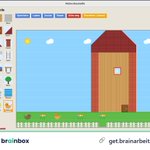
Quick note on the setup: A Linux thin client, kids account. You talk to it like a chat, it builds, and hands back the result - here, a game. That client goes open source soon. Stay tuned. 👀
No joke - my 7yo and his friend built their own video games, then debugged them until each one played exactly how they wanted.
I was amazed - they typed only a few things. Mostly, they just talked, via brainbox's local voice control (Whisper).
Every session runs sealed, and I can approve each step. Safe both ways: my kids, and my machine.
Here's what the first one looked like. Today they've built many more. Football, card games, drums. I wish I'd had this when I was his age.

Exactly. Once the conclusion itself might be machine-made, checking the code will not be enough. And human-written conclusions were never safe either of course. AI didn't create this problem, it just scaled it.
People used to debug code. Now people debug conclusions. That is a harder job, and a far more human one.
AI has quietly removed code errors and the pipeline that used to die now runs to completion. We can re-run a pipeline and check whether it works.
Comparing pipelines from mid 2026 with those from a few years ago, we are starting to see the problem shifting quietly: from "does not reproduce at all" to "technically reproduces, but is not plausible."

🚀 AI agents can do real work now. Which is exactly why I won't let one loose on my actual computer: Give every AI agent its own computer.
We have built an operating system that makes autonomous agents work better: they operate programs, write code and pipelines, fill in forms, make your job easier.
And because every session is sealed inside its own virtual machine, your system and your data stay protected.
It's open now: 🔗 get.brainarbeit.com - Install the image on a virtual machine, a spare computer, or Raspberry Pi 5
