

A collaborative music score editor for creating, editing, and sharing sheet music online.
Music score
Joined December 2024
- Tweets379
- Following421
- Followers384
- Likes4.8K






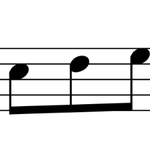

Dvořák wrote eight Humoresques for piano in 1894, on a summer break home in Bohemia during his years in America. No. 7 became one of the best-known tunes in classical music, and violinists love it as much as pianists do. Free score: scoretail.com/en/sheet-music…

3
ScoreTail -A Collaborative Sheet Music Editor- retweeted

Pourquoi donc la musique de Rameau n’est-elle pas plus jouée par les pianistes ? Que de merveilles.


pp means pianissimo, very soft. ff means fortissimo, very loud. Most music stays somewhere between those. But composers sometimes stack extra letters: in his Sixth Symphony, Tchaikovsky marked one quiet clarinet passage pppppp. Six p's: barely there at all.
Brahms's Hungarian Dance No. 5 is the most famous of his 21. The twist: its main tune isn't a folk song. It comes from a csárdás by Béla Kéler, a composer of Brahms's own day, and Brahms believed it was folk music. Free score: scoretail.com/en/sheet-music…

1
120
D.S. stands for dal segno, Italian for "from the sign". Unlike D.C., it doesn't send you back to the very beginning. You jump back to the segno, a curly S with a slash and two dots, so a long intro doesn't have to be played twice.
2
3
145
Tchaikovsky wrote his Children's Album (1878) for his young nephew: 24 short piano pieces, from a morning prayer to a sick doll, a wooden soldiers' march and songs from other countries. Simple enough for young players. Free score: scoretail.com/en/sheet-music…

1
115
Not every word in a score is about speed or volume. Dolce means "sweetly". Cantabile means "in a singing way". Espressivo means "with expression". These words tell you the mood, how the music should feel, and that's often harder to get right than the notes.
1
1
113
Grieg's Morning Mood is the go-to music for sunrises, and it sounds like dawn over a Norwegian fjord. But in Ibsen's play Peer Gynt, the scene it opens is set in the Moroccan desert, with Peer greeting the morning far from home. Free score: scoretail.com/en/sheet-music…

2
3
135
"Rubato" is Italian for "stolen". When a score says tempo rubato, the player may stretch some notes and hurry others, bending the beat to make a phrase breathe. It's closely tied to Chopin's music. Too little sounds mechanical; too much sounds seasick.
84
Chopin's Berceuse (1844) is a piano lullaby. The left hand rocks back and forth with almost the same pattern from beginning to end, like a cradle, while the right hand keeps decorating a simple tune. His working title was "Variantes". Free score: scoretail.com/en/sheet-music…

1
2
110
A short flat line above a note is a tenuto mark: hold the note for its full length, maybe leaning on it a little. A sideways > in the same spot is an accent: play that note louder than the ones around it. Two tiny symbols, two very different instructions.
94
Debussy's The Girl with the Flaxen Hair (1910) is a short, gentle piano piece. A fun detail: in his Préludes, Debussy put each title at the end of the piece, not the top, so you hear the music before you're told what it's about. Free score: scoretail.com/en/sheet-music…

2
3
132
"rit." in a score is short for ritardando: gradually slow down. It usually shows up near the end of a phrase or piece, like easing off the gas. Then "a tempo" means back to the original speed. Slowing down is the easy part; getting the old tempo back is harder.
2
3
164
Saint-Saëns wrote The Carnival of the Animals (1886) as a musical joke and refused to let most of it be published while he was alive. The one exception was The Swan: a slow cello melody gliding over rippling piano. Now it's the suite's most famous part.
scoretail.com/en/sheet-music…

4
4
209
ScoreTail -A Collaborative Sheet Music Editor- retweeted
Fauré's Après un rêve ("After a Dream") is a song from the late 1870s: someone dreams of their beloved, then wakes up alone. Cellists borrowed the melody long ago, and today it's heard on the cello at least as often as it's sung. Cello version:
scoretail.com/en/sheet-music…

Flats in a key signature always appear in one fixed order: B E A D G C F. It's the sharp order (F C G D A E B) read backwards. Bonus: the first four flats spell BEAD, so if you see three flats, they're B, E and A.
1
2
144


Fauré's Après un rêve ("After a Dream") is a song from the late 1870s: someone dreams of their beloved, then wakes up alone. Cellists borrowed the melody long ago, and today it's heard on the cello at least as often as it's sung. Cello version:
scoretail.com/en/sheet-music…